Monodrama "Latvian Language Lessons"
A Performance That Asks Questions Instead of Giving Answers
Some performances leave audiences with a clear message. Others stay with them long after the final applause, provoking reflection, challenging assumptions, and inspiring conversation.
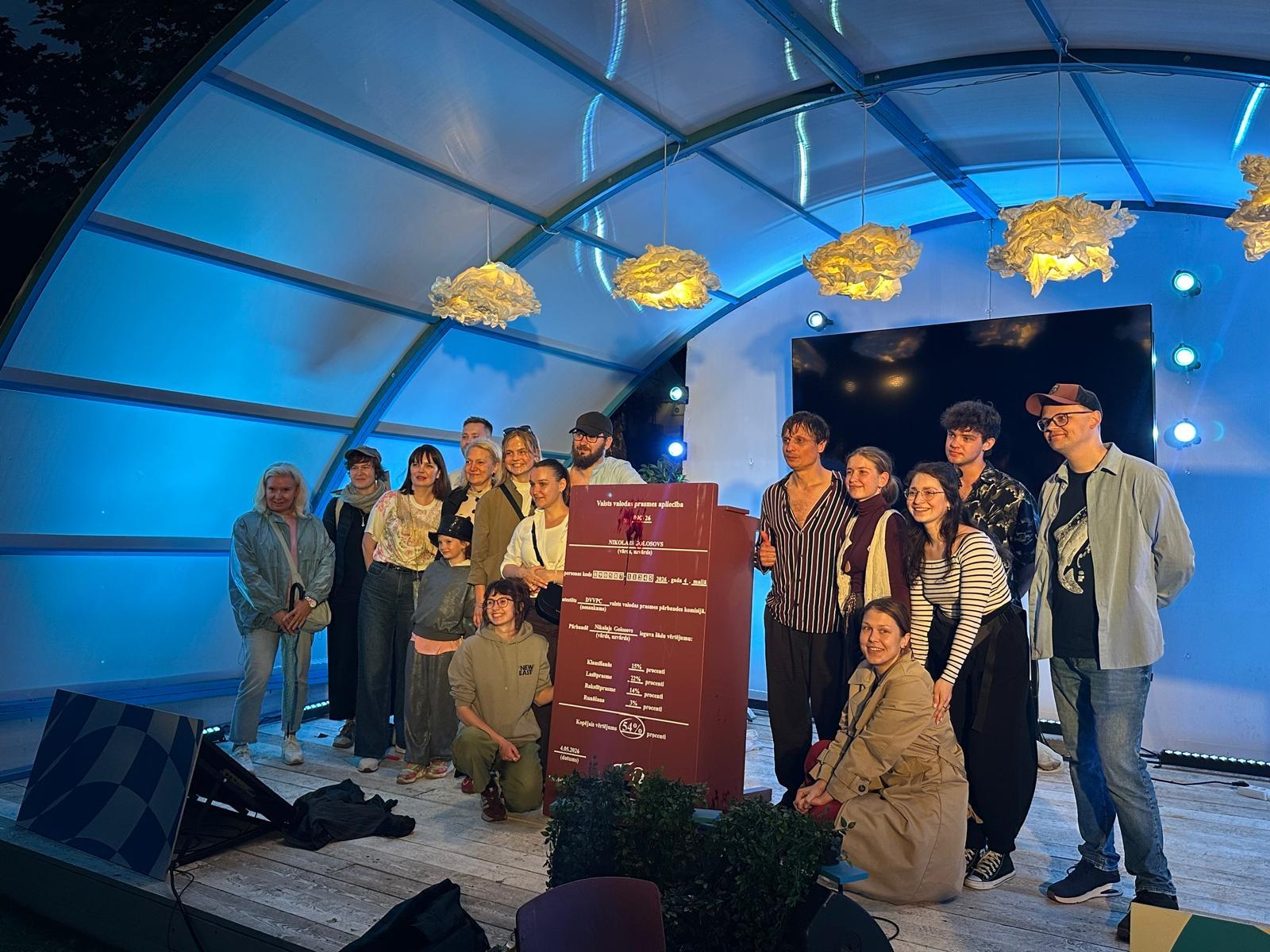
Such is the performance “Latvian Language Lessons”, which premiered on July 10 in Cēsis, at the LAMPA conversation festival.
Although its title suggests a story about language, this is not a play about grammar or a state language exam. It is a story about belonging, identity, and the deeply human desire to be accepted. It explores the experience of living in a constant state of examination – not only in the exam room, but in everyday life.
Through a precise, emotionally nuanced, and physically compelling performance, Vadims Bogdanovs brings the protagonist, Kolya, to life. His portrayal allows the audience to experience the character’s inner conflict, evoking empathy, discomfort, laughter, and moments of self-reflection.
The performance constantly shifts between humour and tension. It invites the audience to laugh, empathise, cringe, experience second-hand embarrassment, and return once again to compassion. This emotional range is precisely what makes the story so powerful.
Perhaps most importantly, the performance resists dividing society into those who are “right” and those who are “wrong”.
It offers no simple answers and avoids moralising. Instead, it encourages audiences to view complex social issues through the lens of lived human experience rather than political slogans.
Do we truly talk to one another? Are we capable of listening to someone whose life experience differs from our own? Can we honestly acknowledge our own emotions and prejudices? These questions inevitably become the audience’s own.
The performance is also a reminder that media literacy is not only about recognising disinformation. It is equally about critically evaluating narratives, listening to different perspectives, and fostering meaningful dialogue that strengthens society’s resilience against manipulation and information disorders.
The performance was developed by the New East Cultural Institute with the support of the Baltic Centre for Media Excellence as part of the Baltic Engagement Centre for Combating Information Disorders (BECID) project, demonstrating how art can become a powerful platform for exploring and discussing complex societal issues.