Baltic Shield Launch Events Bring Media Resilience Discussions Across the Baltics
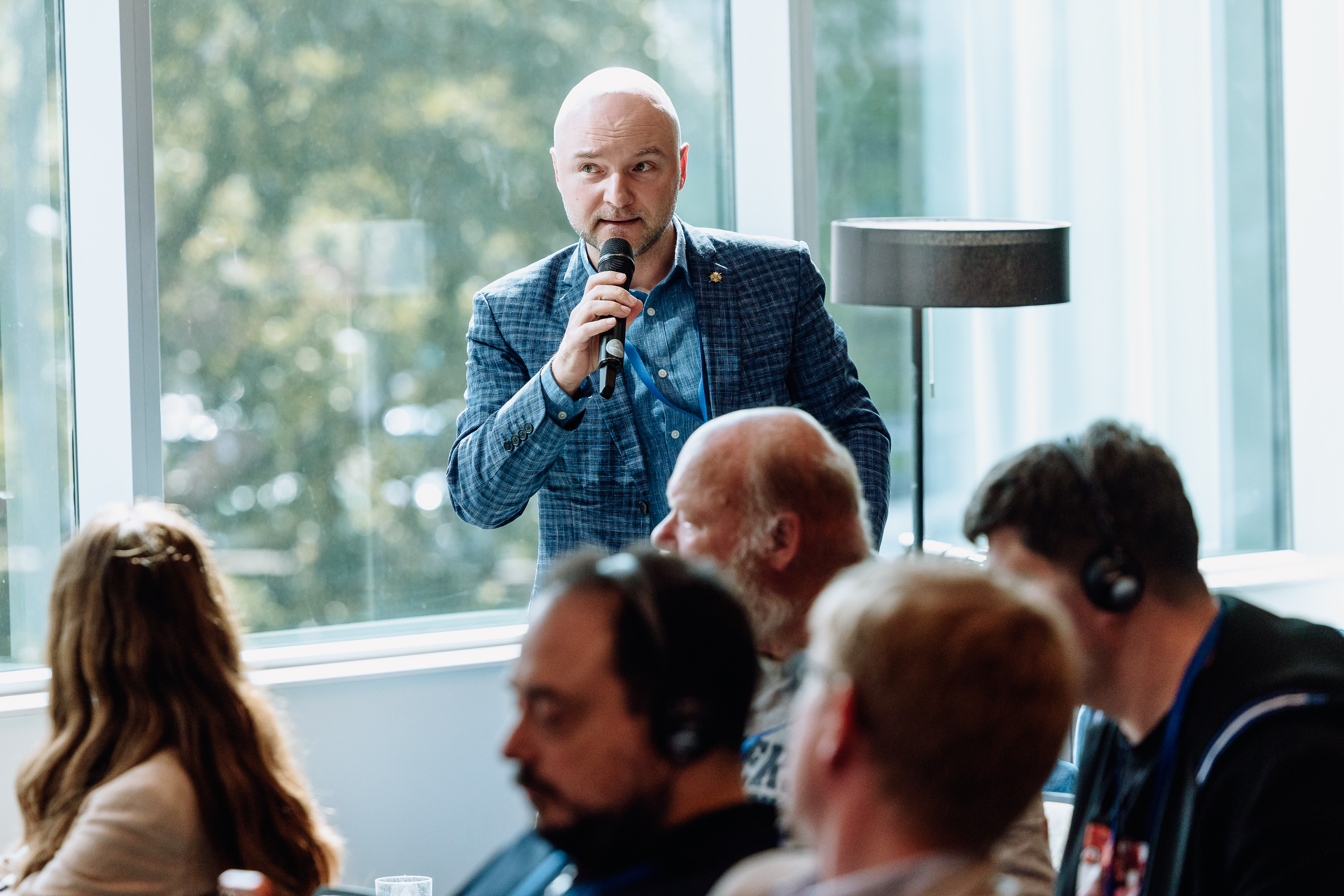
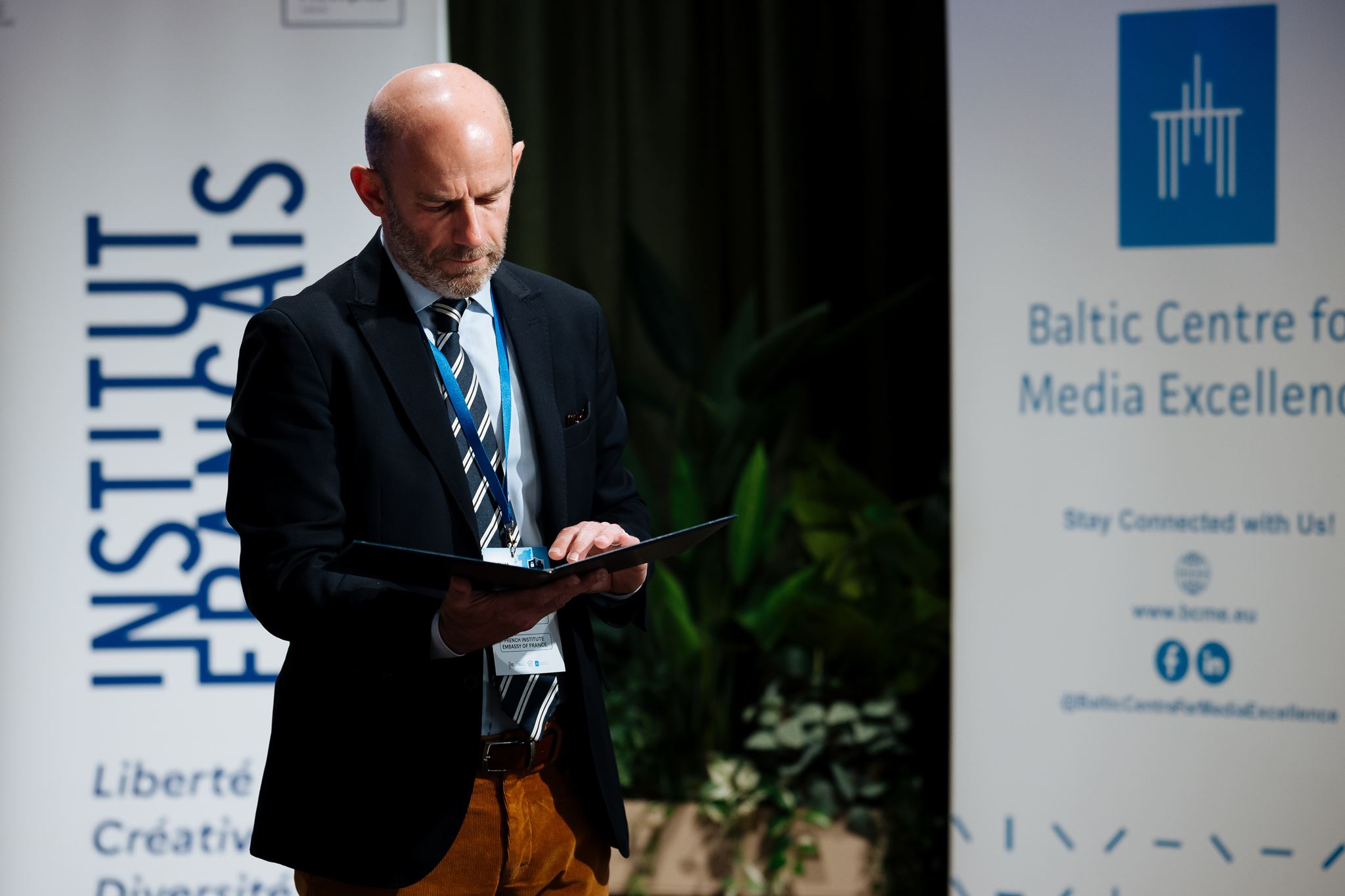
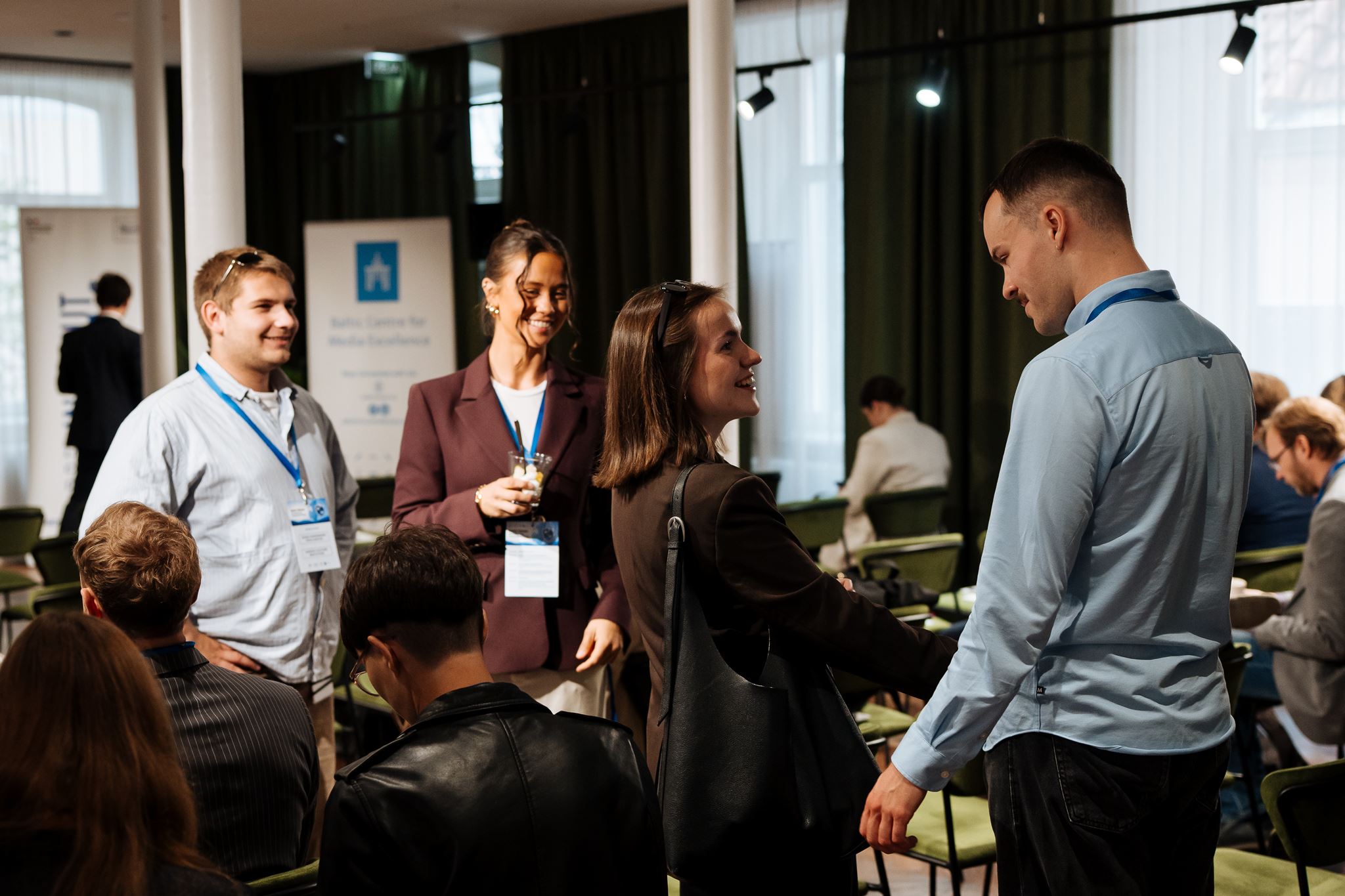
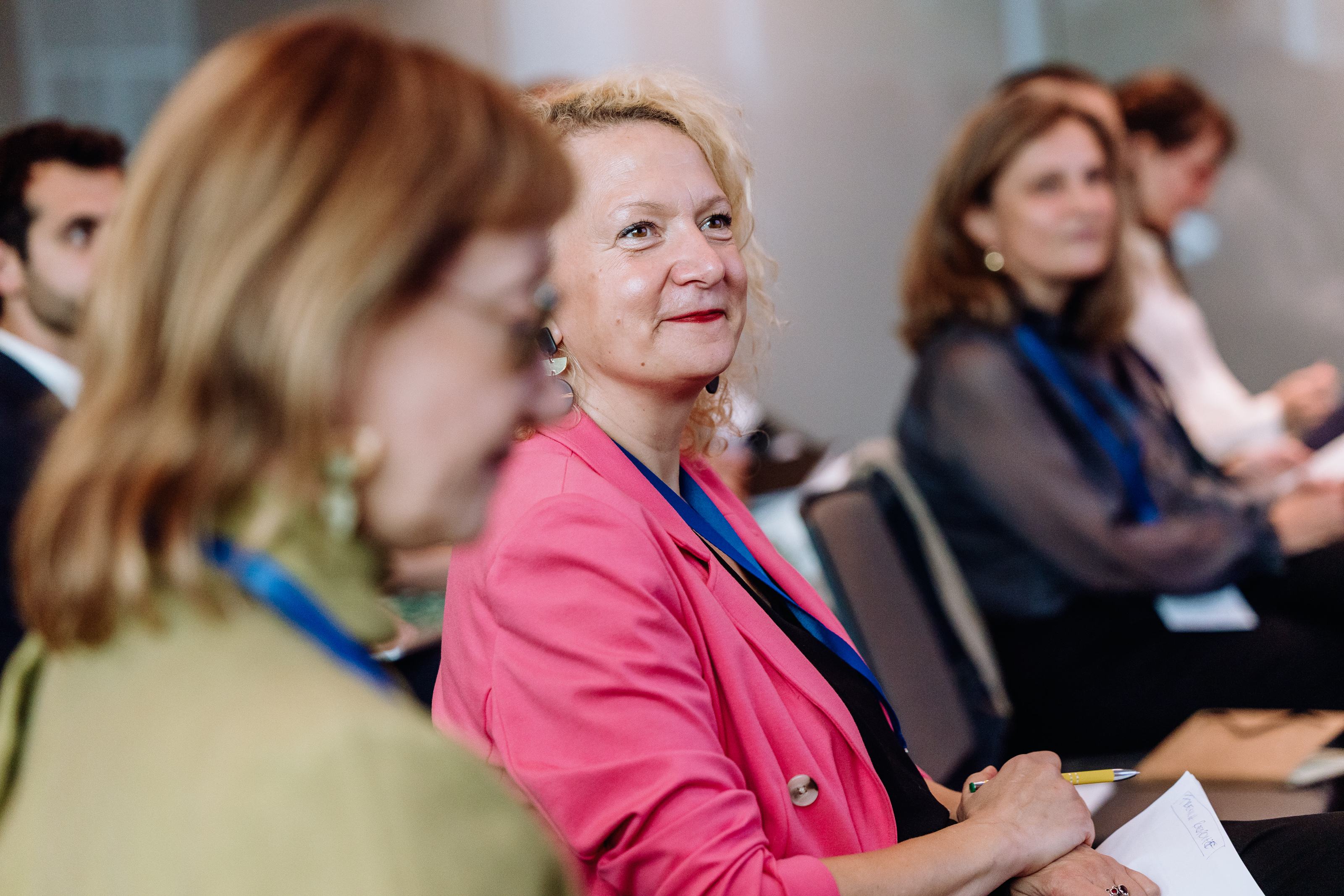
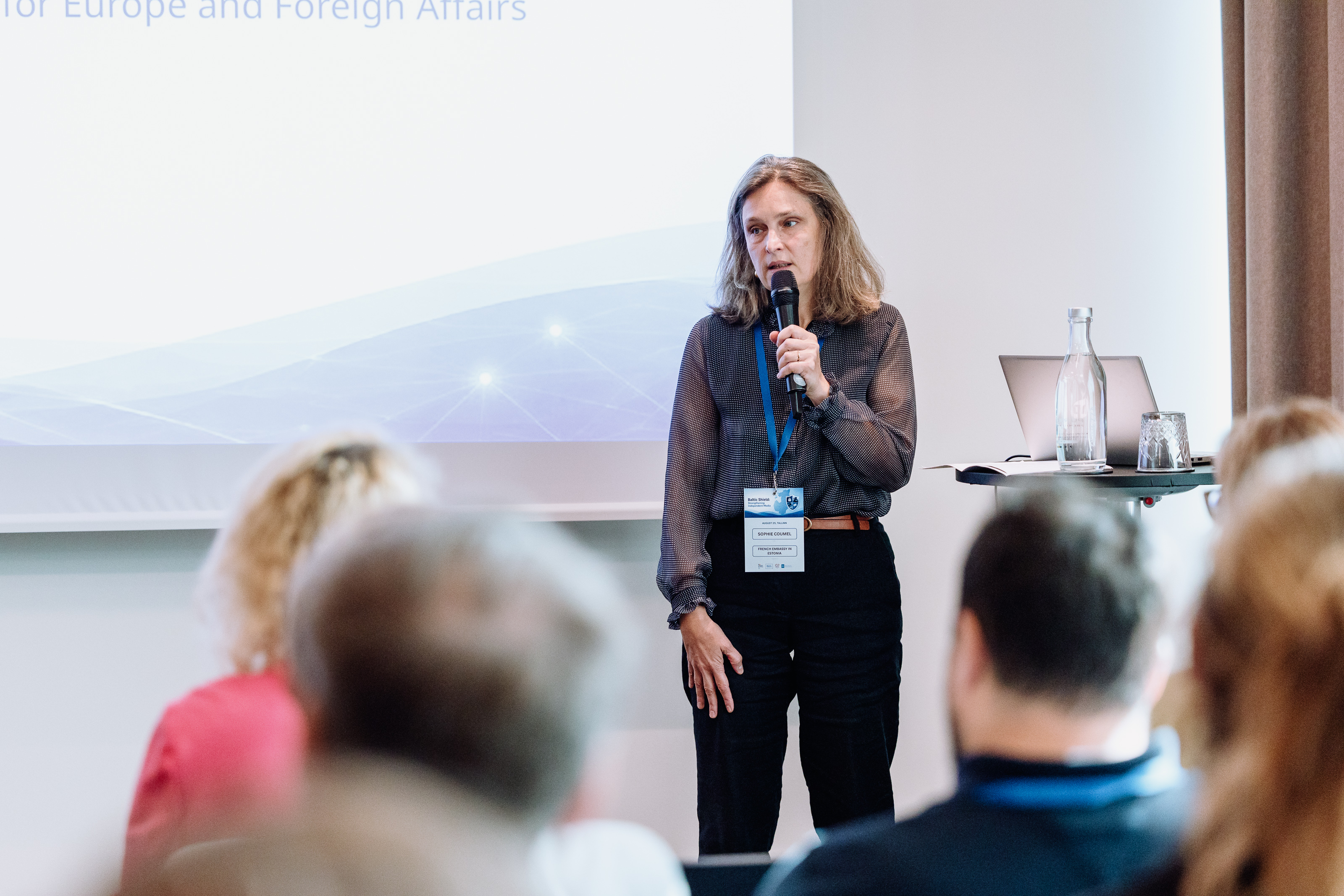
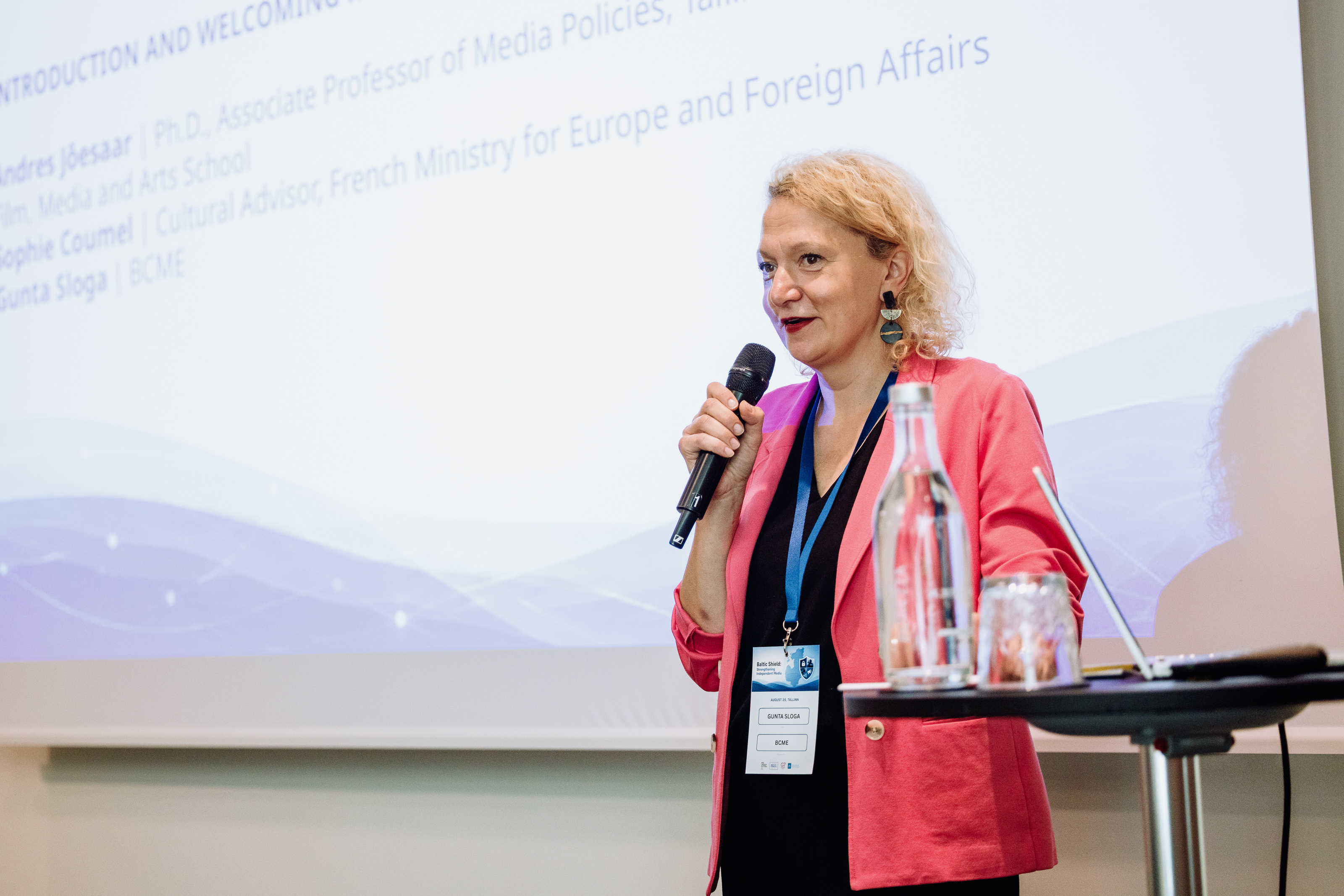
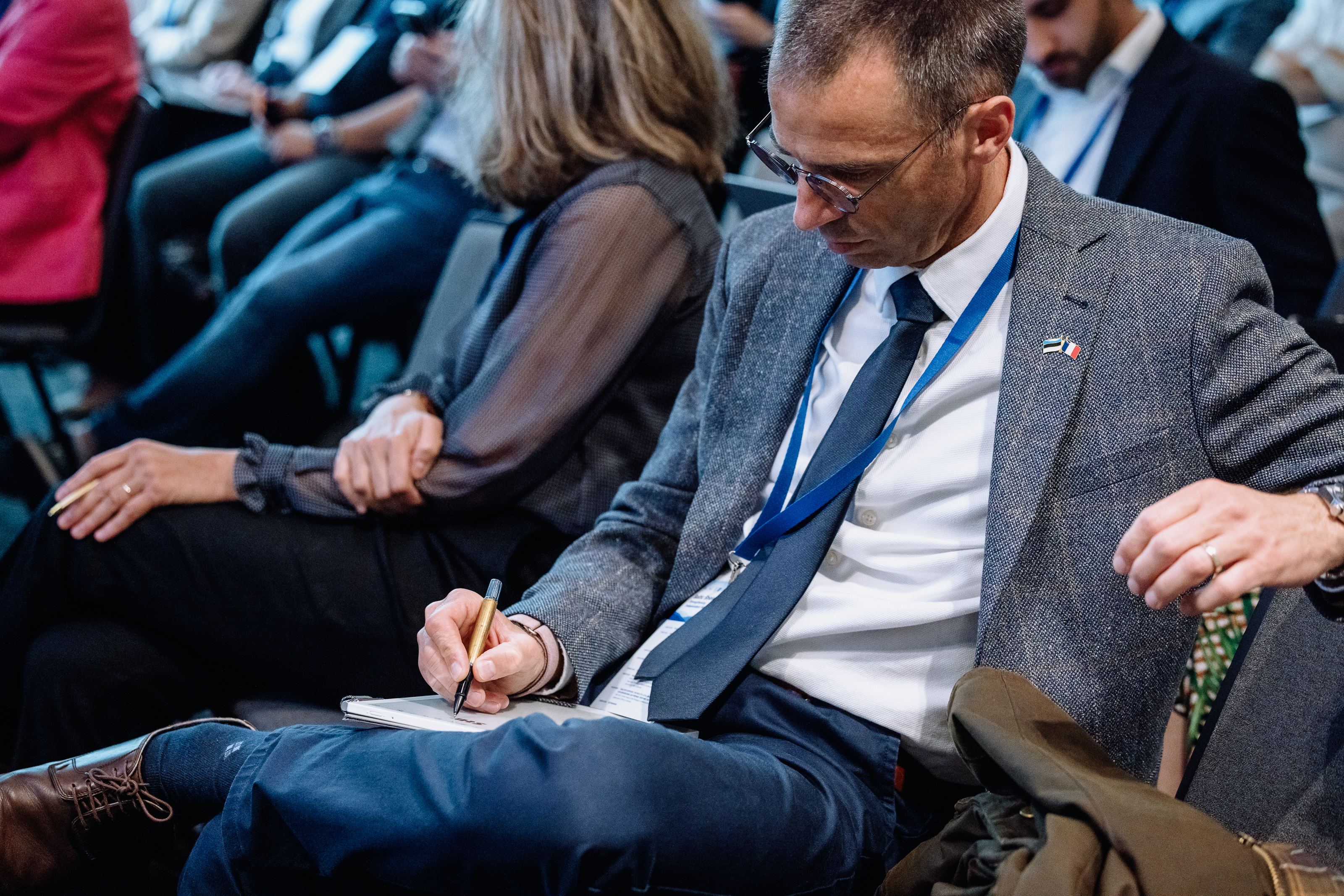
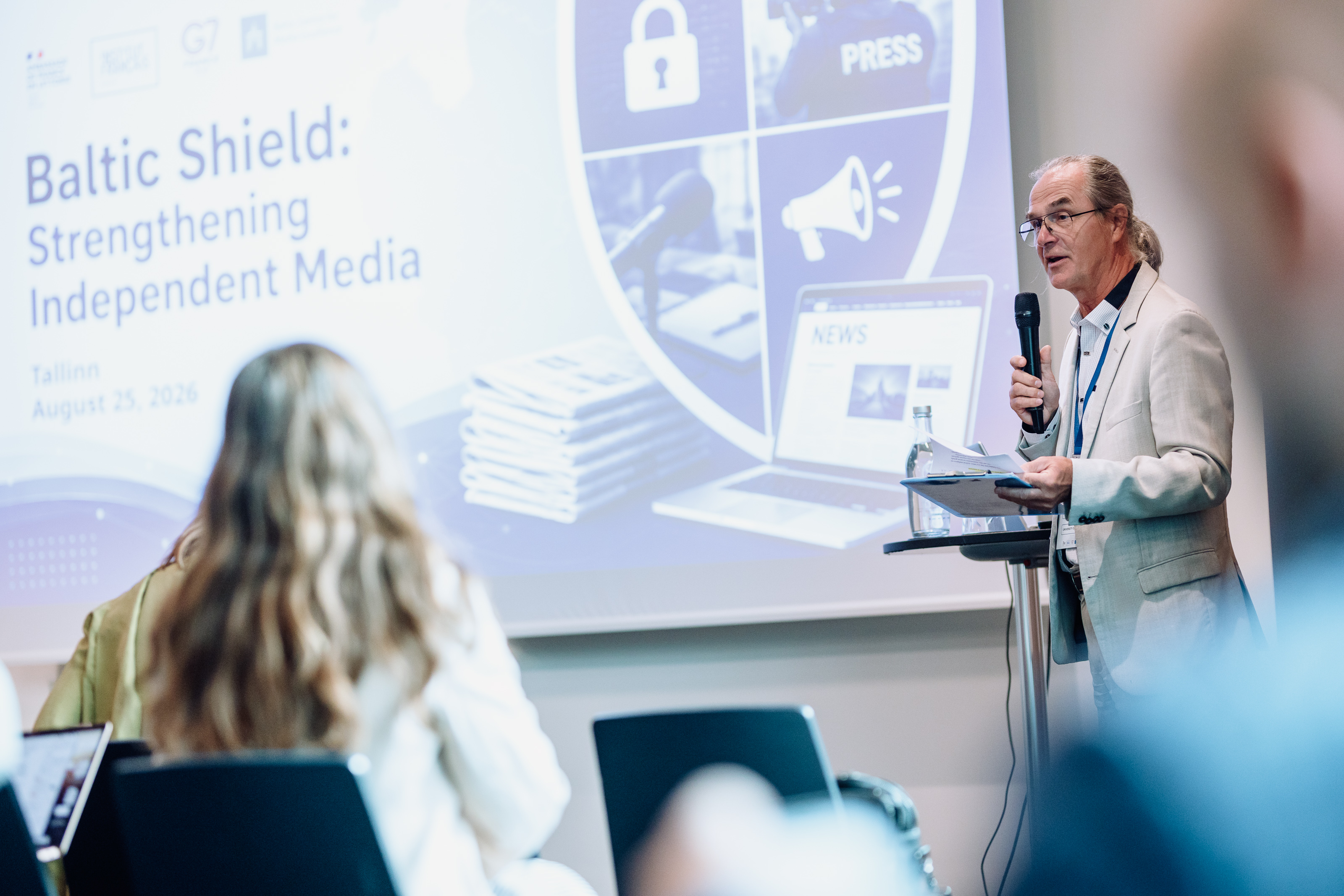
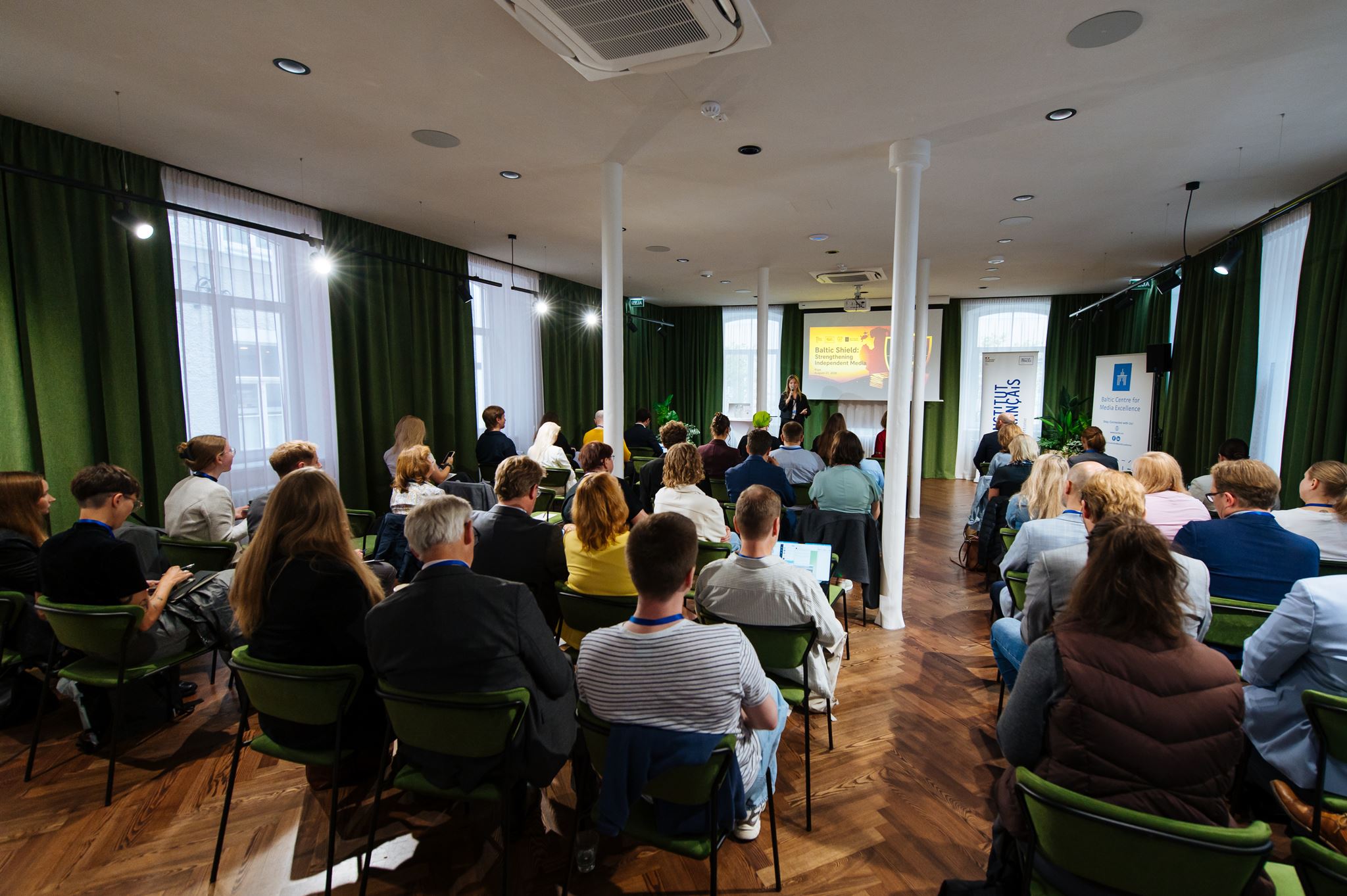
In August and September 2026, the Baltic Centre for Media Excellence (BCME) brought together journalists, media professionals, researchers, public institutions and experts in Tallinn, Riga and Vilnius for the launch events of Baltic Shield: Strengthening Independent Media.
The three events, held in Tallinn on August 25, Riga on August 27 and Vilnius on September 8, focused on the challenges facing independent media in an increasingly complex information environment. Through expert presentations, workshops, a tabletop exercise and a panel discussion, participants explored digital threats to newsrooms, technology-facilitated gender-based violence, social and informational resilience, crisis preparedness and the broader role of media in strengthening societal resilience.
The Changing Digital Threat Landscape
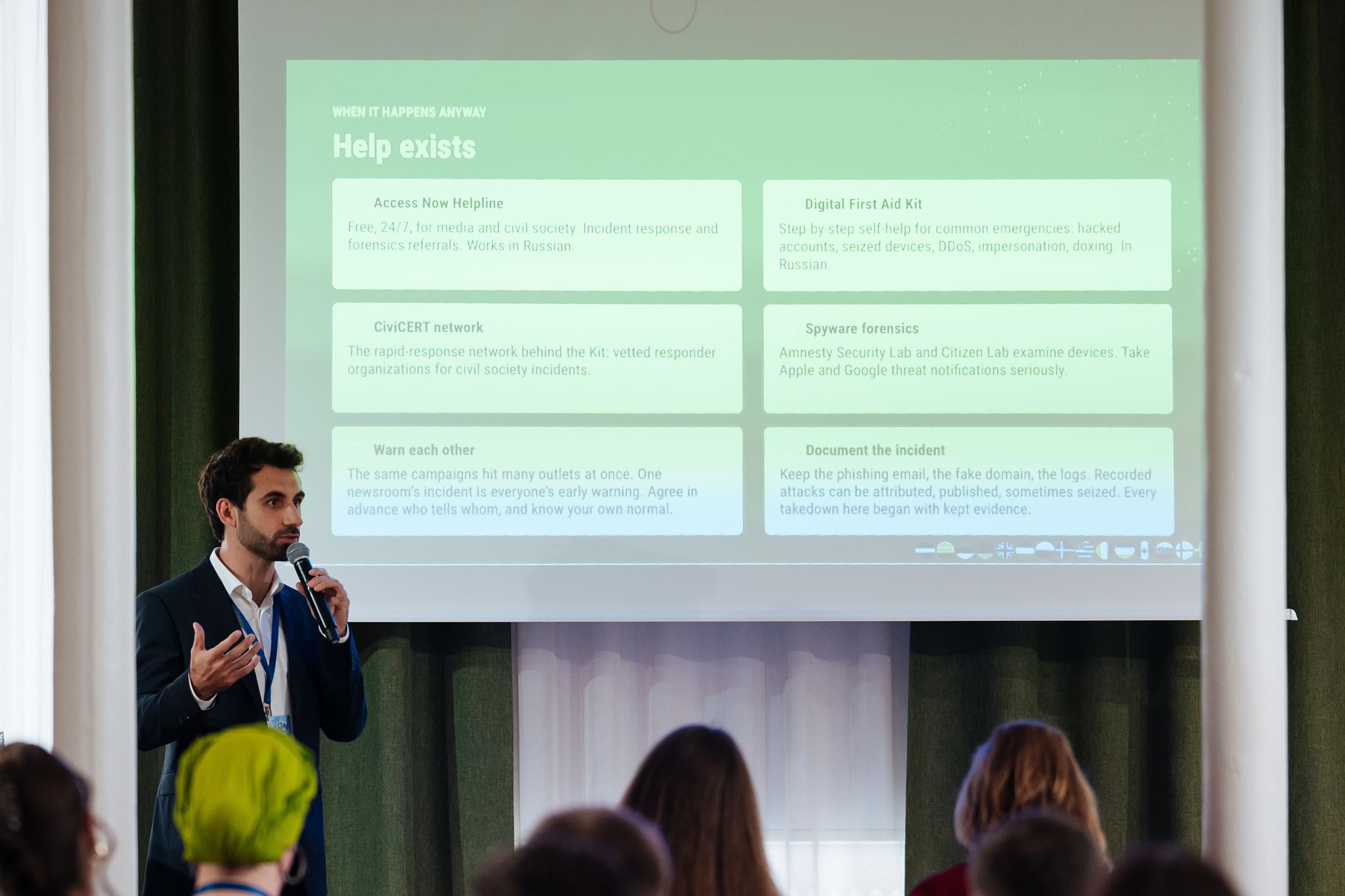
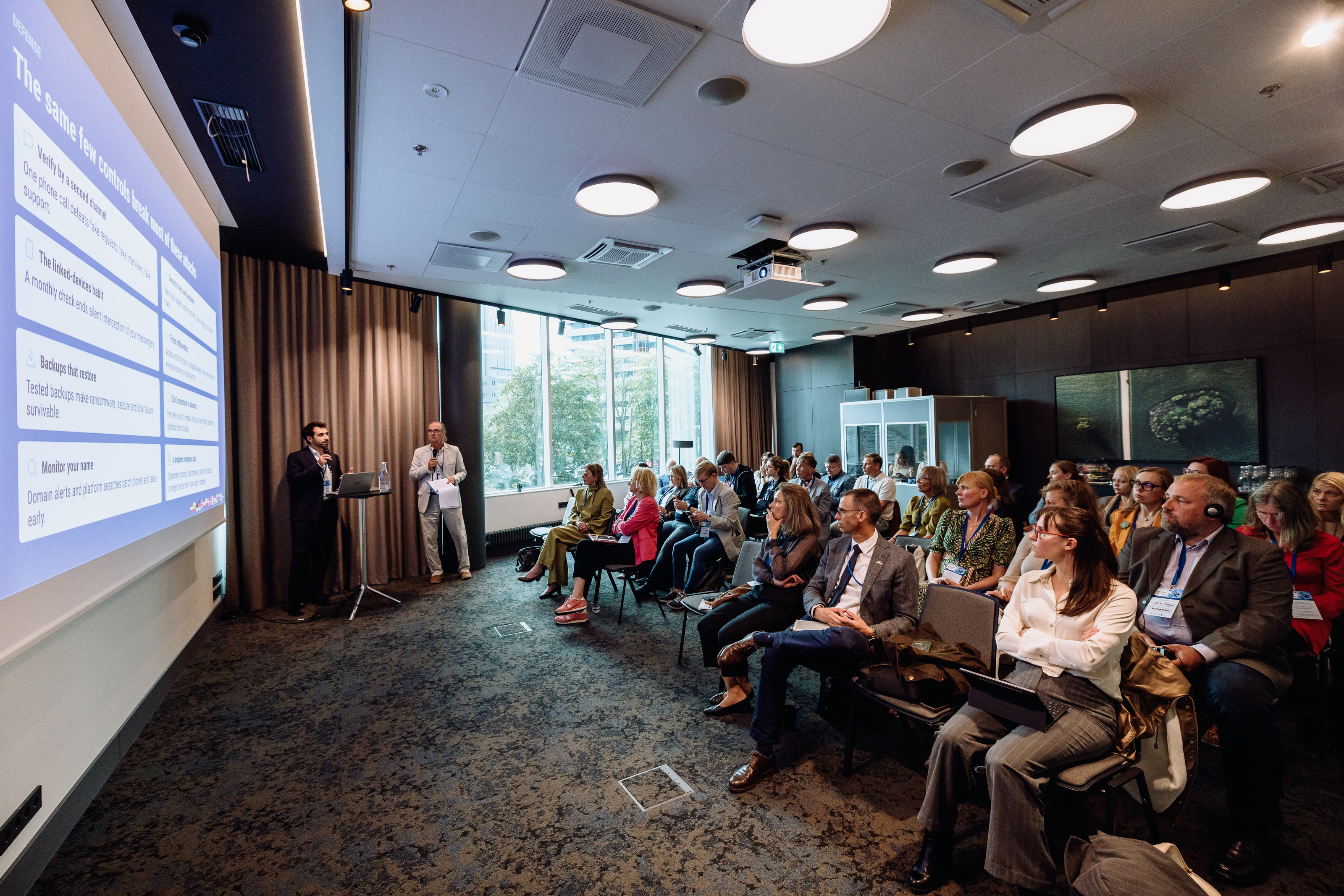
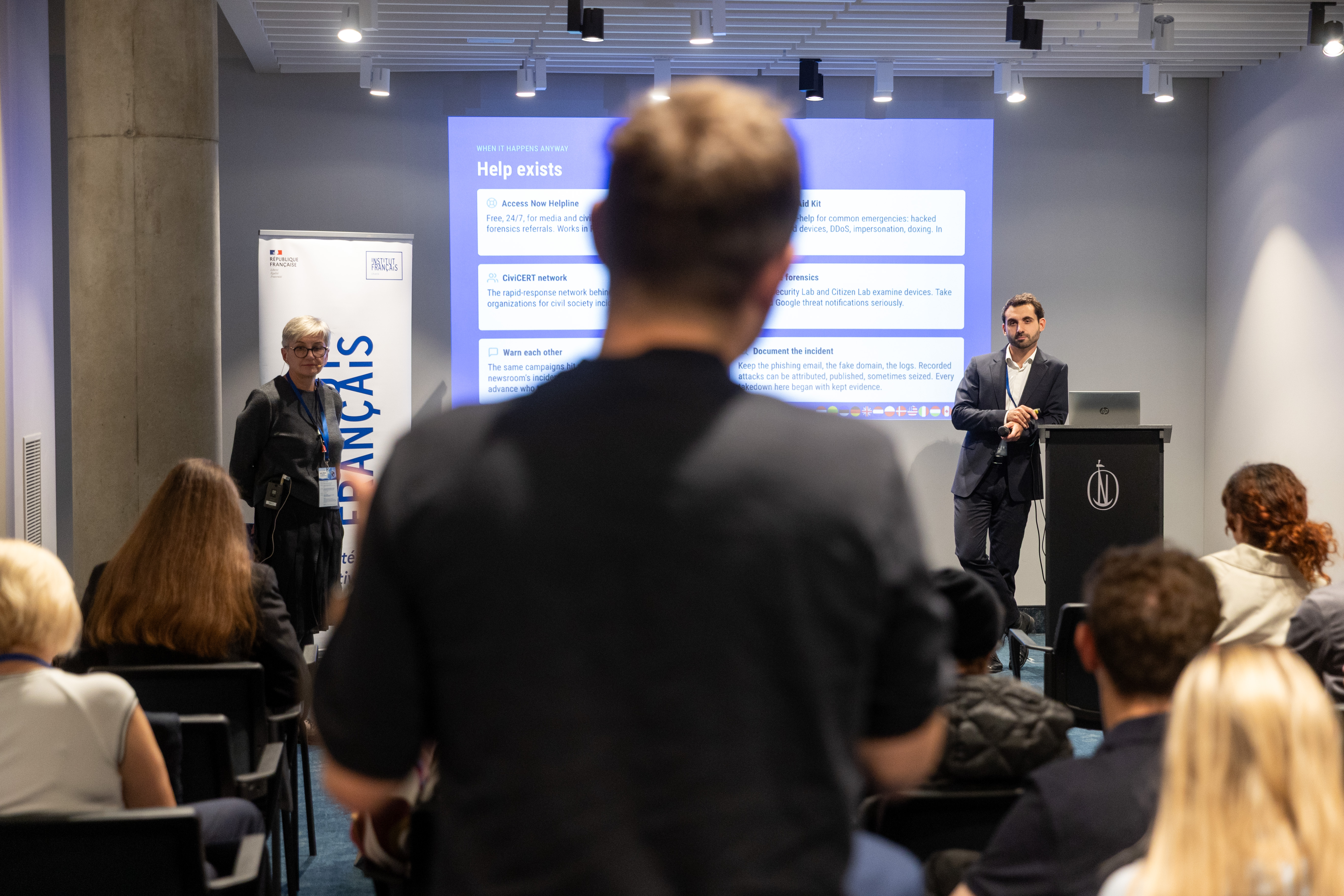
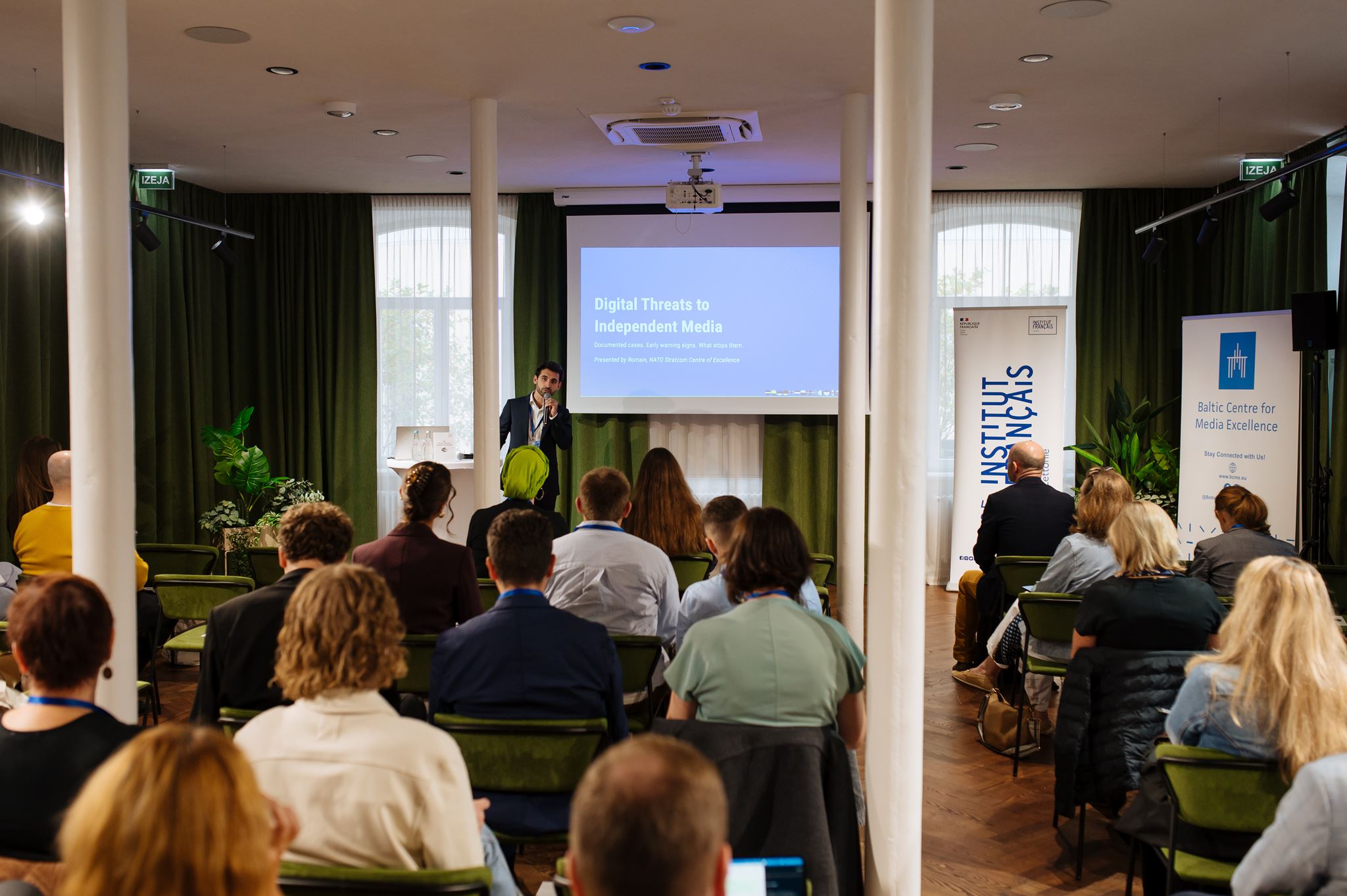
At all three events, Jean Romain Roy, Data Scientist at the AI Lab of the NATO Strategic Communications Centre of Excellence, presented The New Digital Threat Landscape.
The session examined how threats facing journalists and newsrooms are evolving. Alongside familiar cybersecurity vulnerabilities, media organisations increasingly have to contend with attacks involving synthetic audio, video and text, impersonation, fake websites and articles, harassment campaigns and attempts to compromise journalists’ relationships with their sources.
Using documented cases from Europe and beyond, the presentation focused on recognising early warning signs, understanding vulnerabilities and identifying practical measures that can make attacks more difficult and help media respond effectively.
Technology-Facilitated Gender-Based Violence
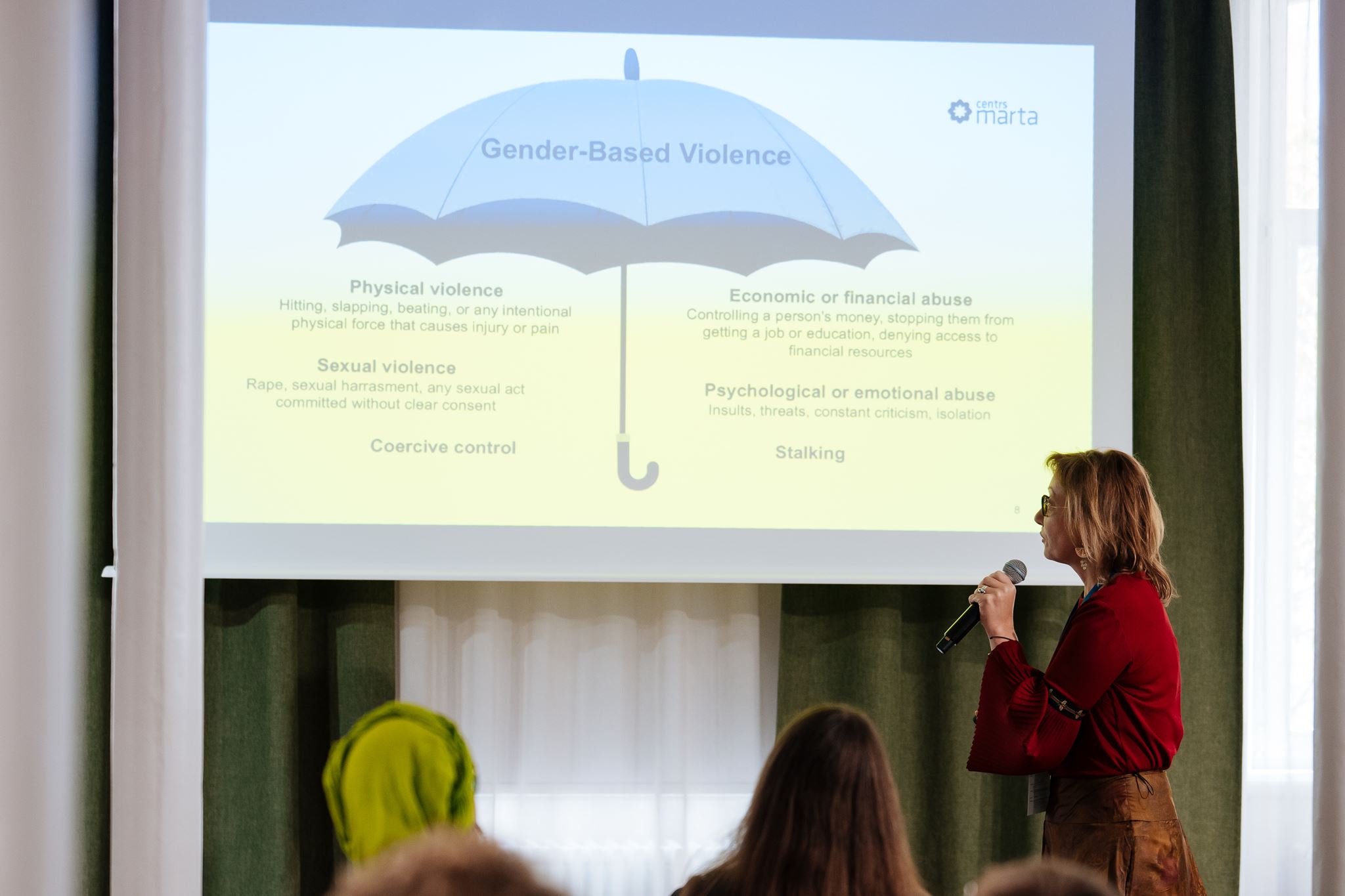
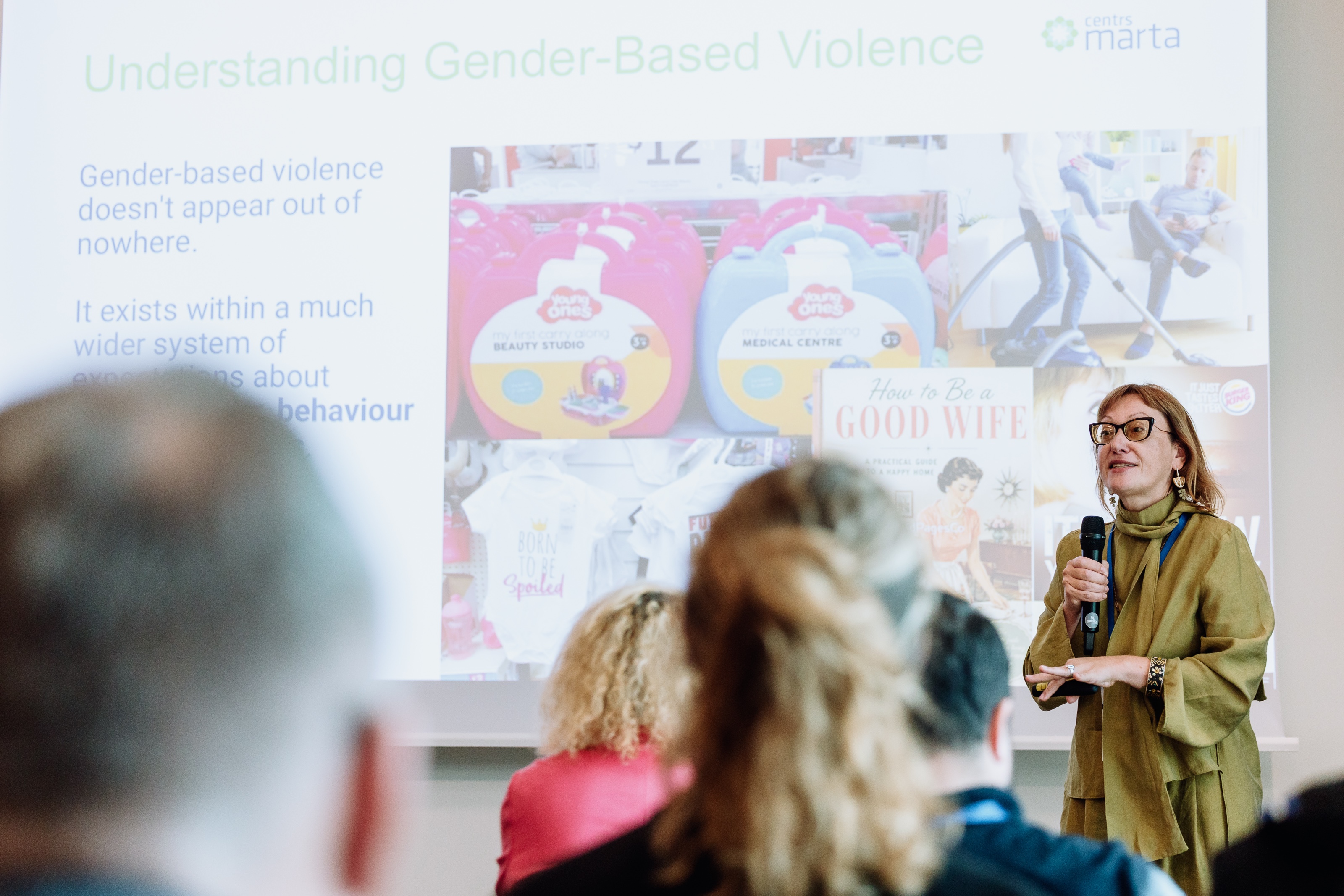
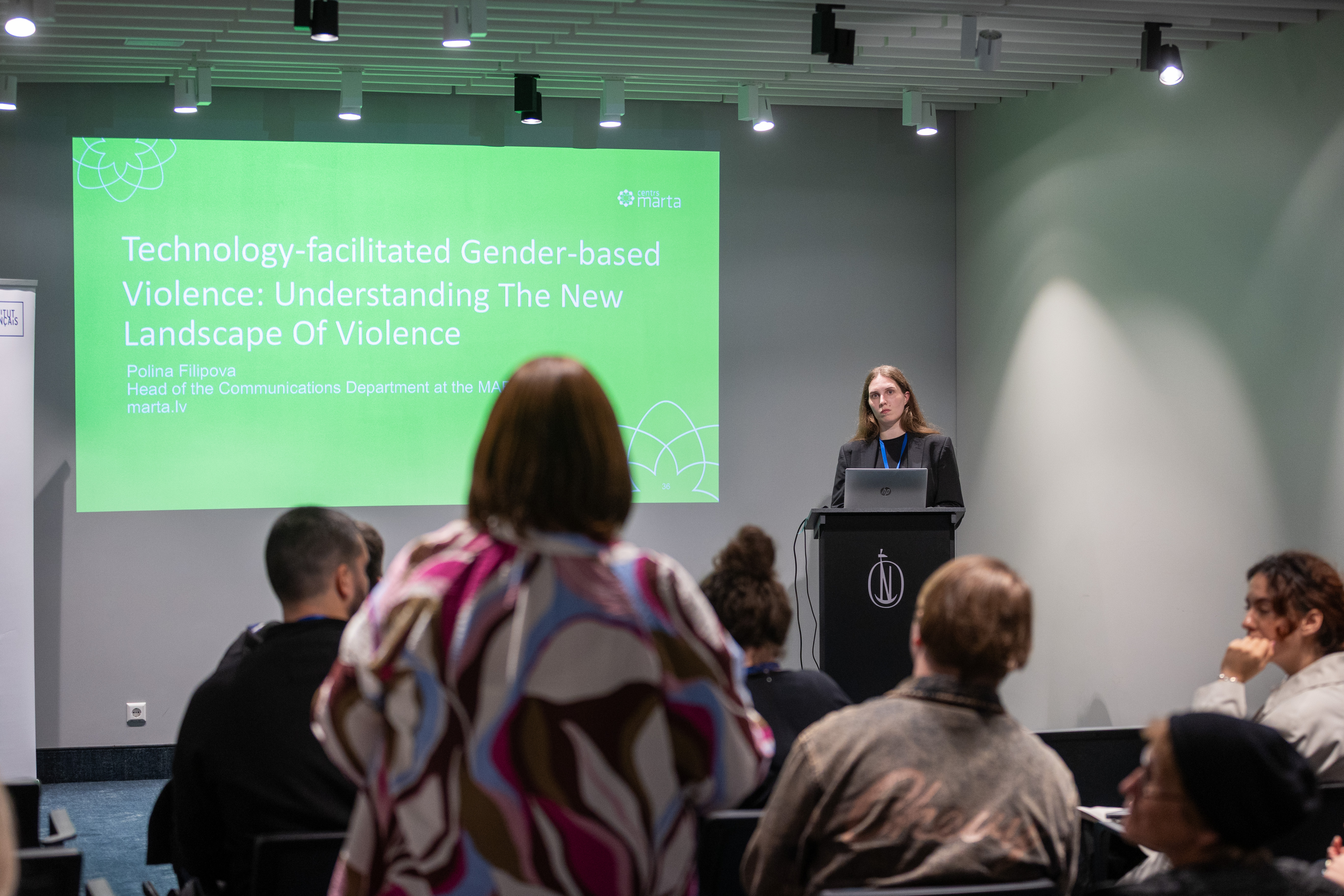
Another central topic across the three launch events was technology-facilitated gender-based violence and the ways digital technologies and artificial intelligence can amplify existing forms of abuse.
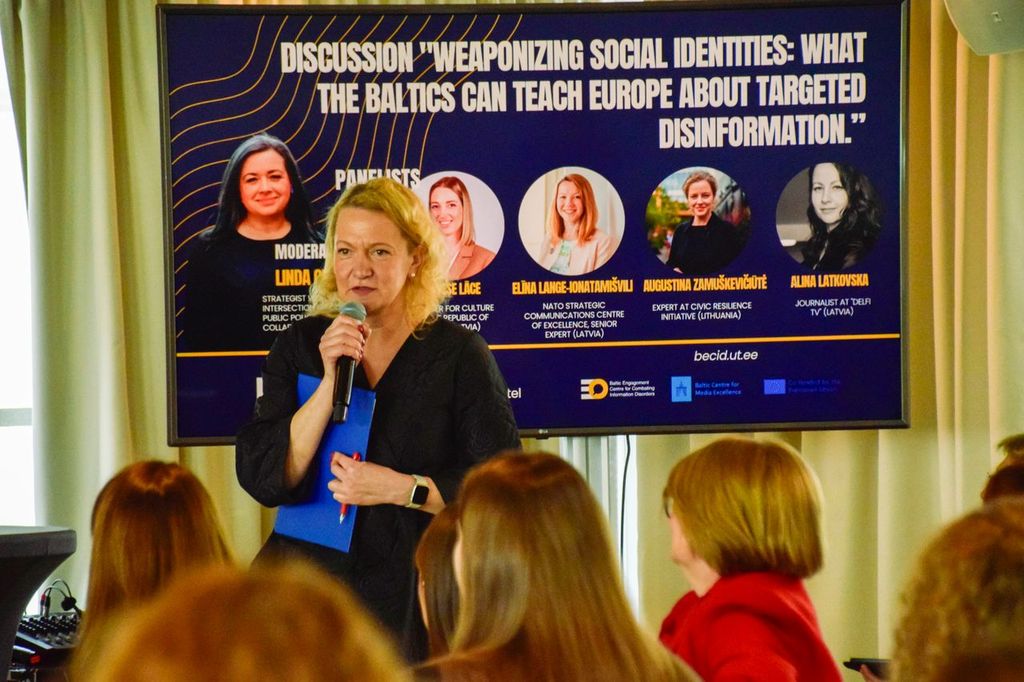
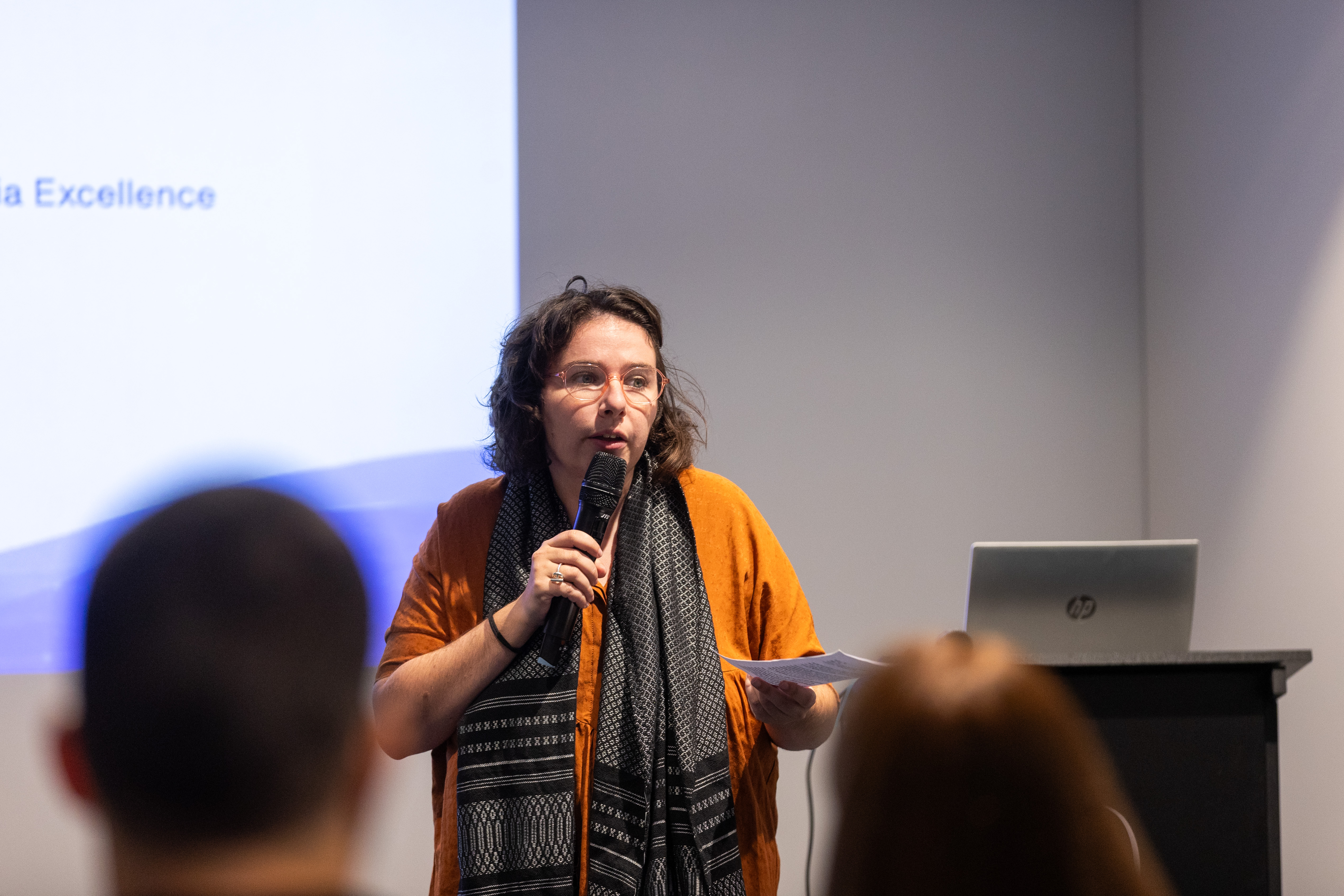
Iluta Lāce, Head of MARTA Centre, led the sessions in Tallinn and Riga, while Polīna Fiļipova, Head of Communications at MARTA Centre, presented the topic in Vilnius.
The sessions looked at digital abuse not only as an online safety or cybersecurity problem, but also as a human rights, gender equality and democratic participation issue. Participants explored forms of technology-facilitated violence including cyberstalking, image-based sexual abuse, AI-generated deepfakes, online sexual harassment, doxxing, digital surveillance and technology-assisted coercive control.
The presentations also addressed the responsibility of media when reporting on gender-based violence and discussed the European policy and legal framework shaping responses to these forms of abuse.
Building Social and Informational Resilience
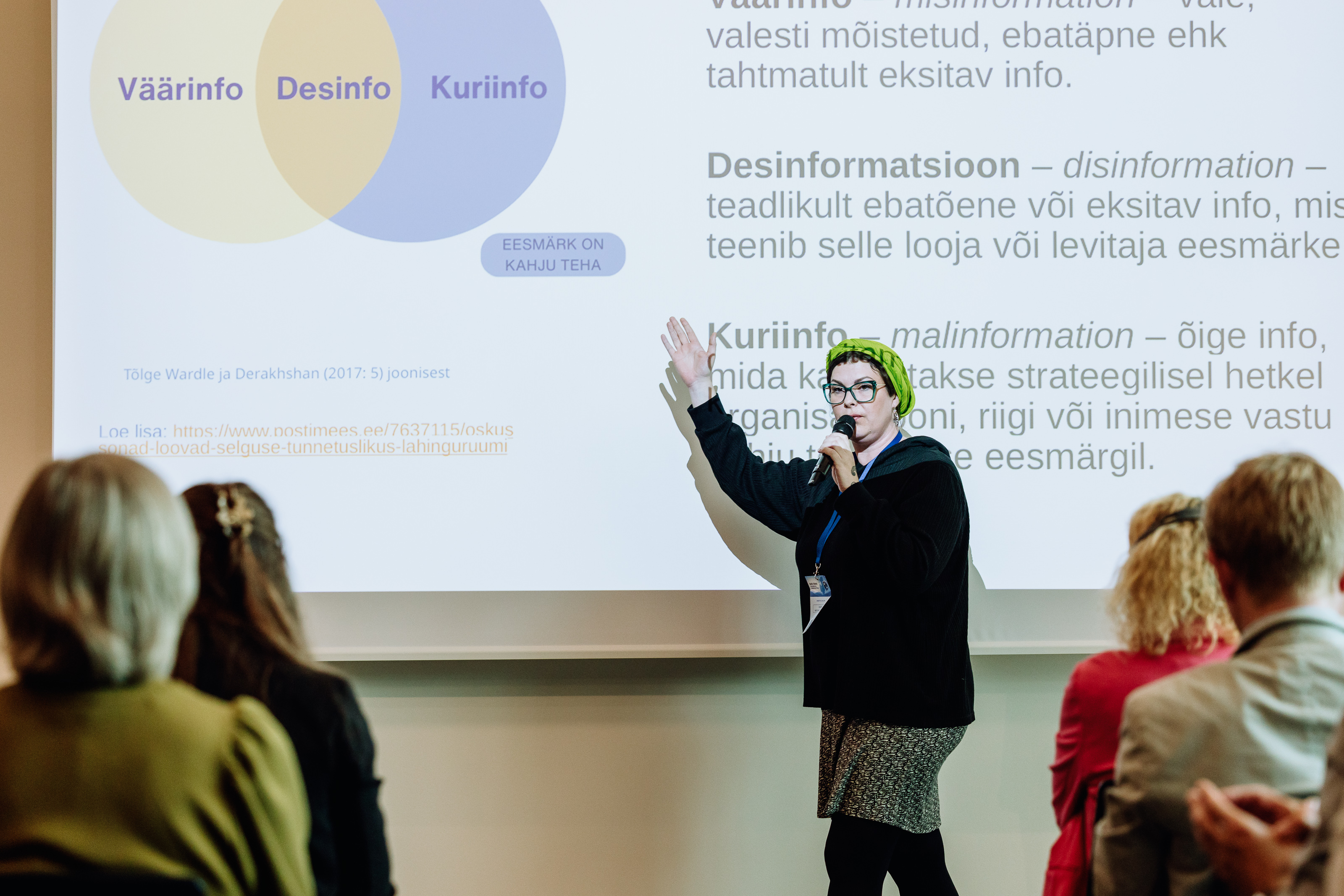
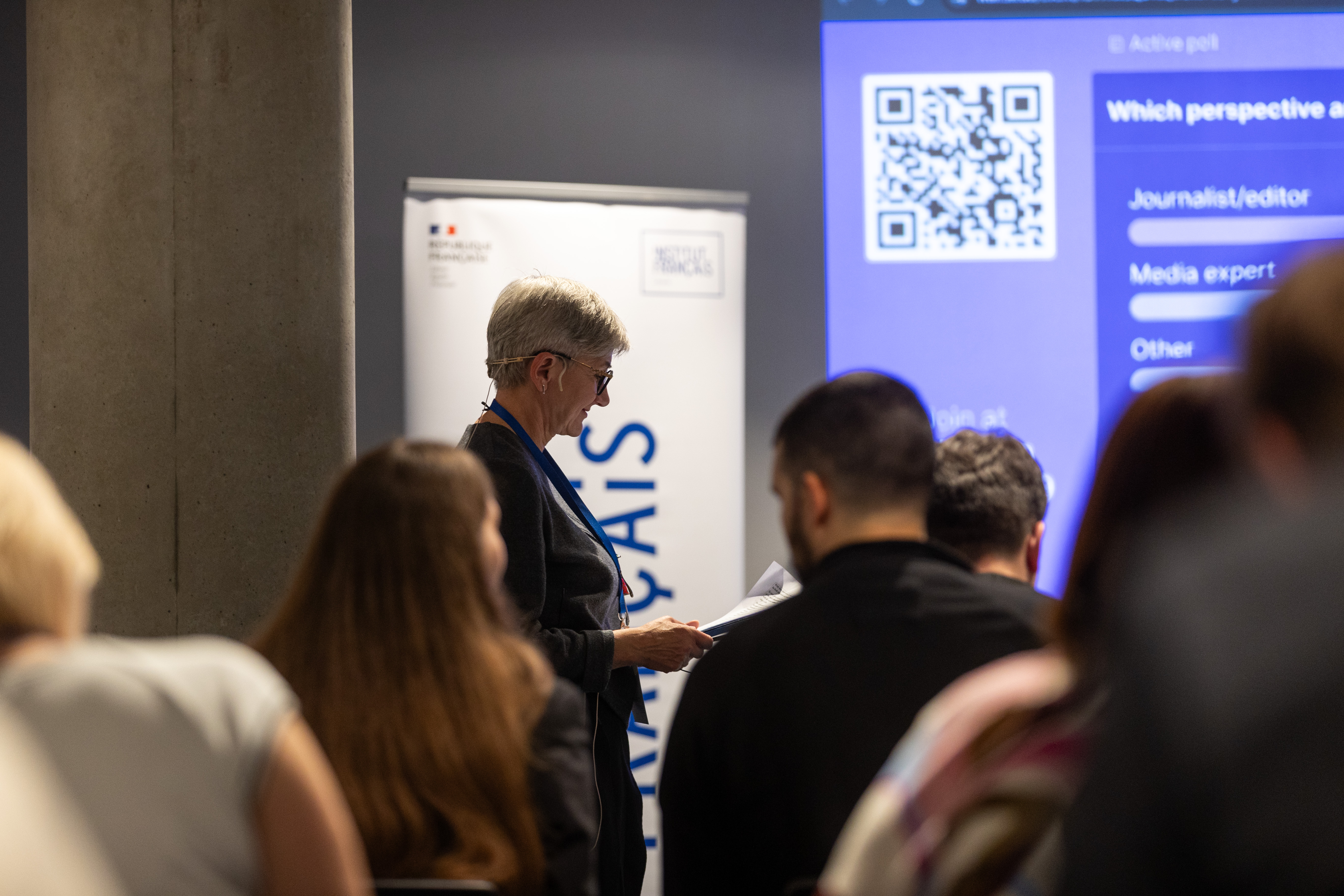
In Tallinn and Riga, Maria Murumaa-Mengel, Associate Professor of Media Studies at the Institute of Social Studies, University of Tartu, led a workshop on social and informational resilience.
Participants discussed the challenges created by today’s digital information environment, including scams, AI-generated low-quality content, misinformation, disinformation and malinformation, hostility online and problematic practices of major technology platforms.
Rather than concentrating only on the problems, the workshop invited participants to consider what can be done to strengthen resilience at different levels — for individuals, organisations, communities and society as a whole.
Preparing Local Media for Major Crises
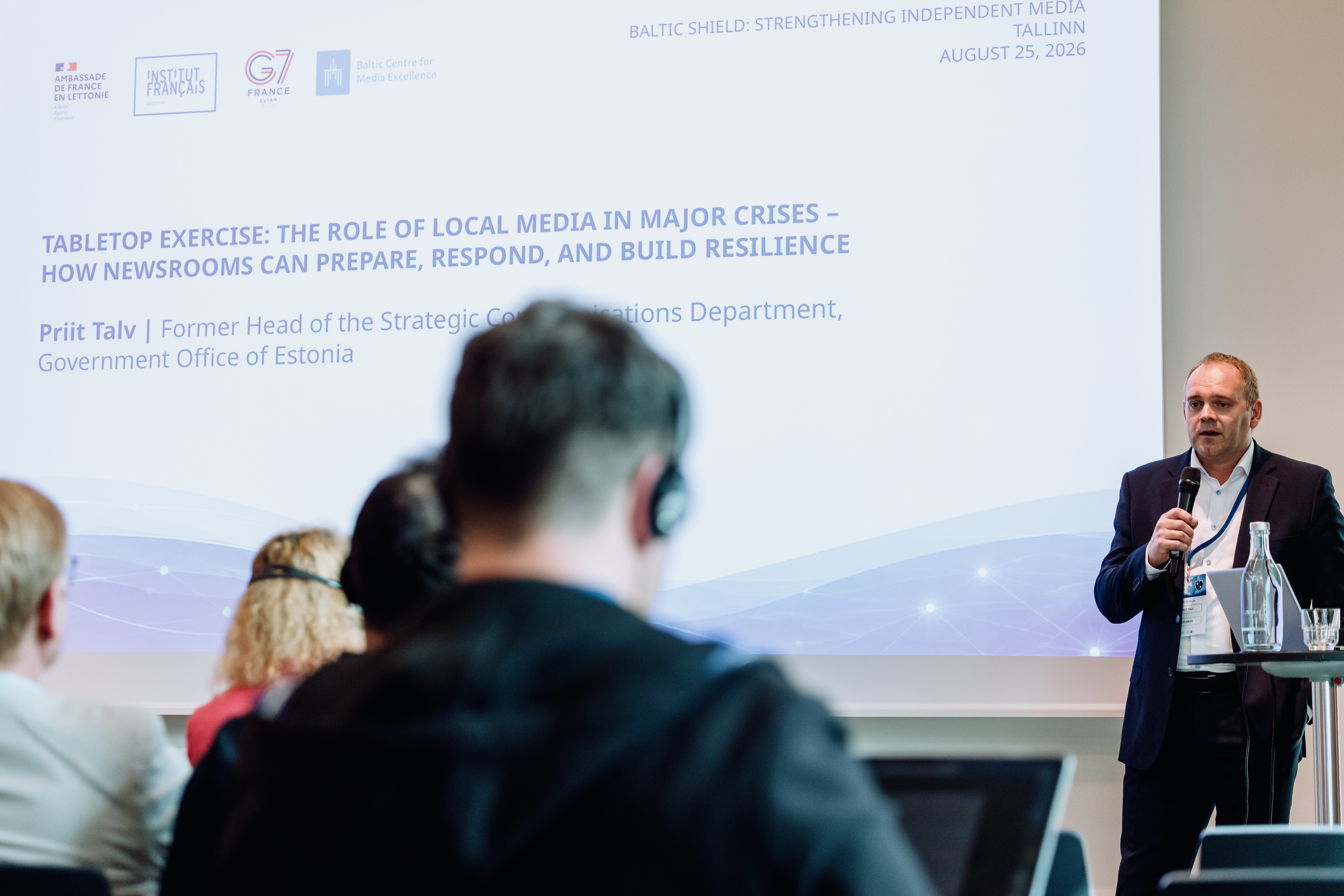
The Tallinn event also included a practical tabletop exercise led by Priit Talv, former Head of the Strategic Communications Department at the Government Office of Estonia.
The exercise examined the role of local media during major crises and highlighted their importance in reaching communities with timely and relevant information. At the same time, for media to fulfil this role during a crisis, newsrooms themselves need to be resilient enough to continue operating under difficult circumstances.
Participants worked through possible crisis scenarios, identified vulnerabilities and gaps, and discussed practical ways in which media organisations can improve their preparedness and resilience before a crisis occurs.
Media’s Role in Building Societal Resilience
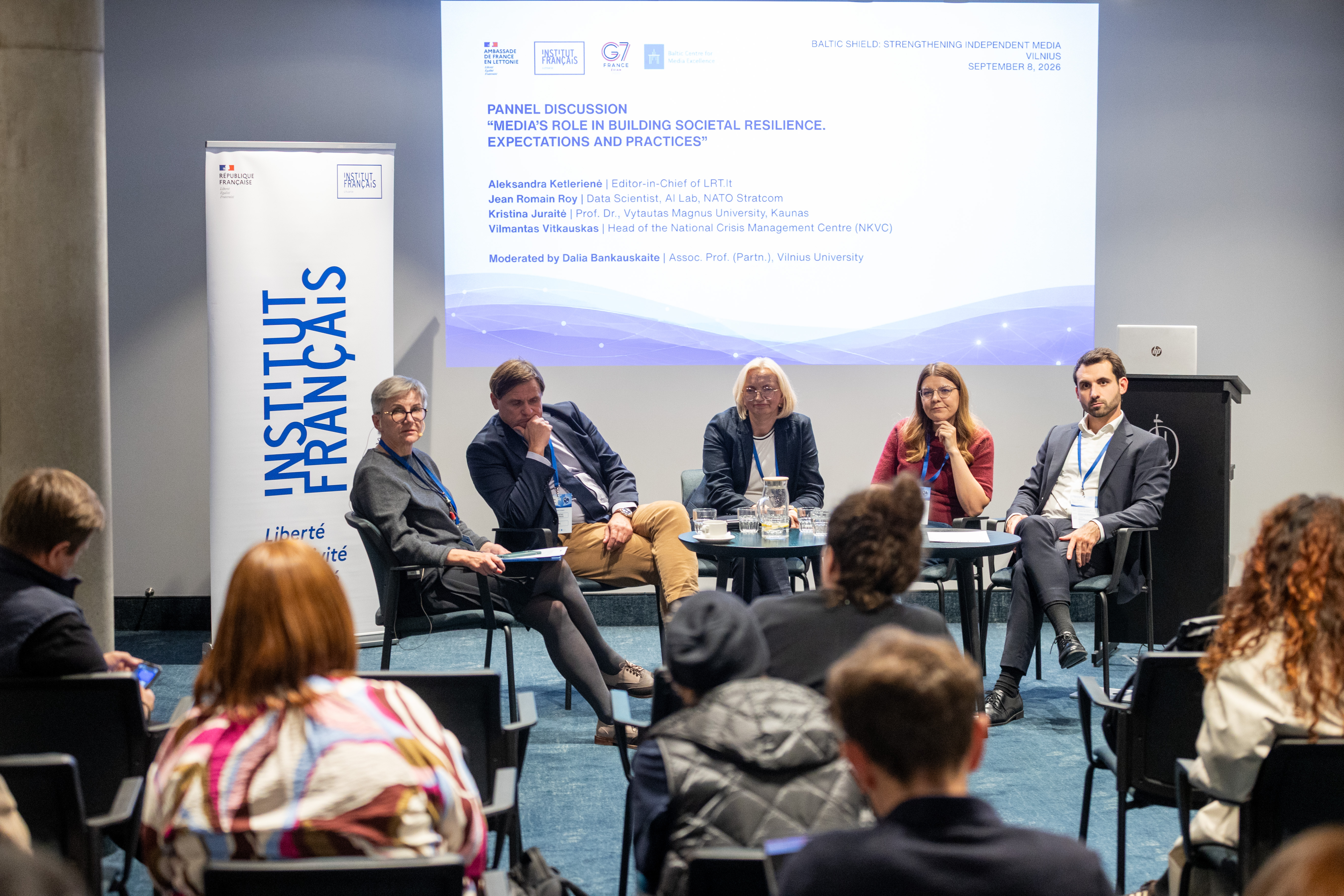
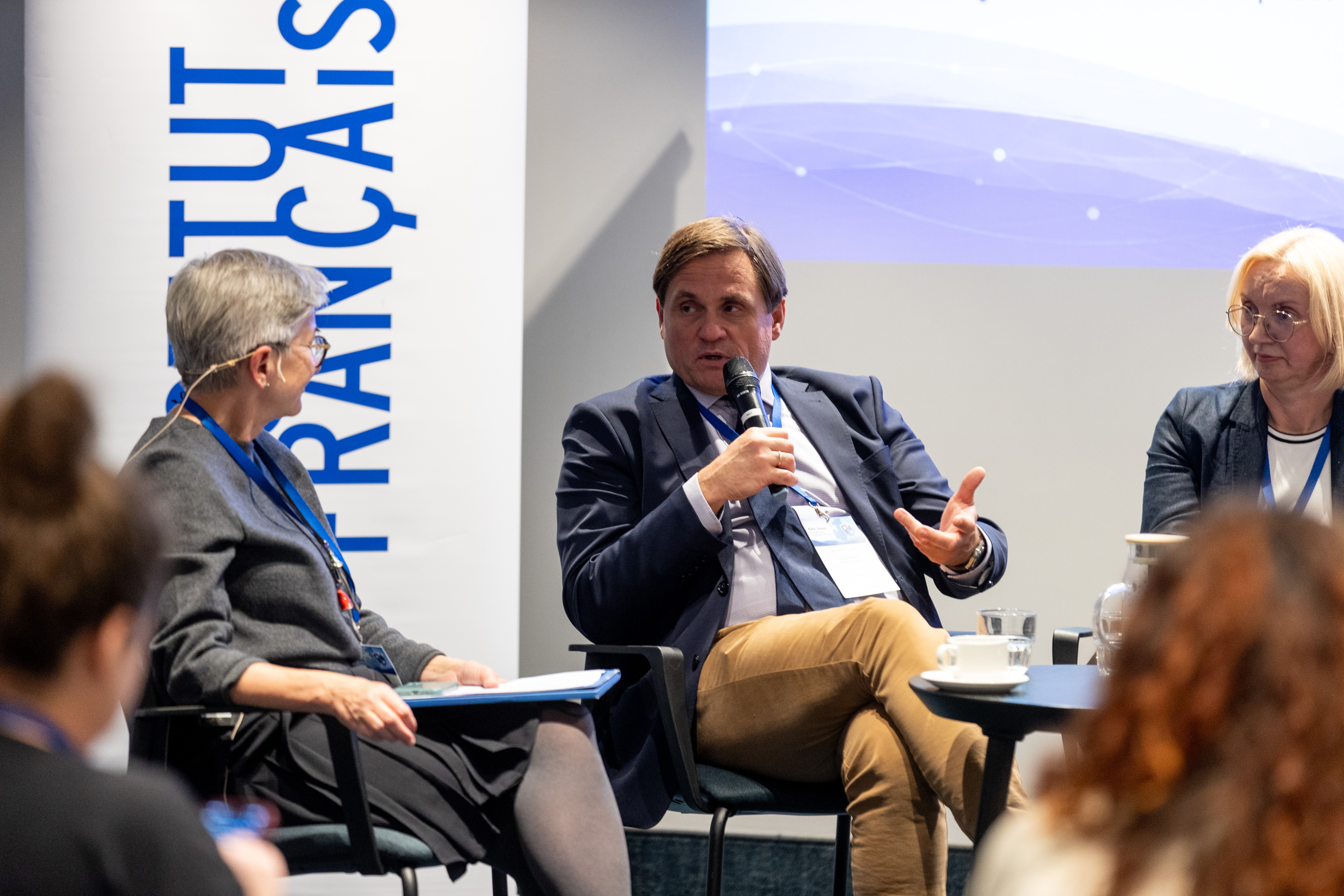
The series concluded in Vilnius with the panel discussion “Media’s Role in Building Societal Resilience: Expectations and Practices.”
The discussion brought together Aleksandra Ketlerienė, Deputy Editor-in-Chief of LRT.lt; Jean Romain Roy; Kristina Juraitė, Professor at Vytautas Magnus University; and Vilmantas Vitkauskas, Head of Lithuania’s National Crisis Management Centre (NKVC). The conversation was moderated by Dalia Bankauskaite, Associate Professor (Partner) at Vilnius University.
The panel explored what societies expect from media in building resilience, how journalists understand their responsibilities during prolonged uncertainty and crises, and how media and public institutions can cooperate in prevention, preparedness and crisis communication.
The discussion underlined a central theme connecting all three Baltic Shield events: resilient media are an essential part of a resilient society. In an information environment shaped by geopolitical volatility, AI-generated content, unverified information and growing polarisation, quality journalism has an important role in helping people understand risks and respond to crises effectively.
A Baltic Conversation on Media Resilience
The three launch events demonstrated that strengthening media resilience requires addressing challenges at several levels — from the digital security of individual journalists and newsrooms to organisational crisis preparedness and the wider relationship between media, institutions and society.
BCME would like to sincerely thank all the experts, speakers and moderators who contributed their knowledge and experience to the events: Andres Jõesaar, Jean Romain Roy, Iluta Lāce, Polīna Fiļipova, Maria Murumaa-Mengel, Priit Talv, Aleksandra Ketlerienė, Kristina Juraitė, Vilmantas Vitkauskas and Dalia Bankauskaite. We also thank everyone who joined the events in Tallinn, Riga and Vilnius and contributed their questions, experiences and perspectives to the discussions.
BCME is especially grateful to the French partners in Estonia, Latvia and Lithuania for their support in making the launch events possible.
The launch events mark the beginning of the Baltic Shield programme. The work now continues with media organisations across the Baltic region, with the shared goal of strengthening their ability to prepare for, withstand and respond to the challenges of an increasingly complex information environment.