





Key Insights from the Conference
Gendered and identity-based disinformation has become an increasingly visible challenge in democratic societies, particularly within the Baltic information environment. A recent conference brought together policymakers, journalists, researchers, and civil society representatives to examine how disinformation targeting gender and identity operates, how it affects democratic participation, and what strategies are needed to counter it.
Through keynote speeches, panel discussions, and expert presentations, the event highlighted how digital platforms, geopolitical narratives, and social stereotypes intersect to shape the spread of gendered disinformation. The discussions also emphasized the importance of strengthening media ecosystems, protecting journalists, supporting civil society, and promoting media literacy to safeguard democratic processes.
Gendered Disinformation as a Threat to Democracy
The conference opened with a keynote address by Hanah Lahe, the youngest Member of Parliament in Estonia and a political activist, who highlighted the growing impact of gendered disinformation on democratic governance and political participation.
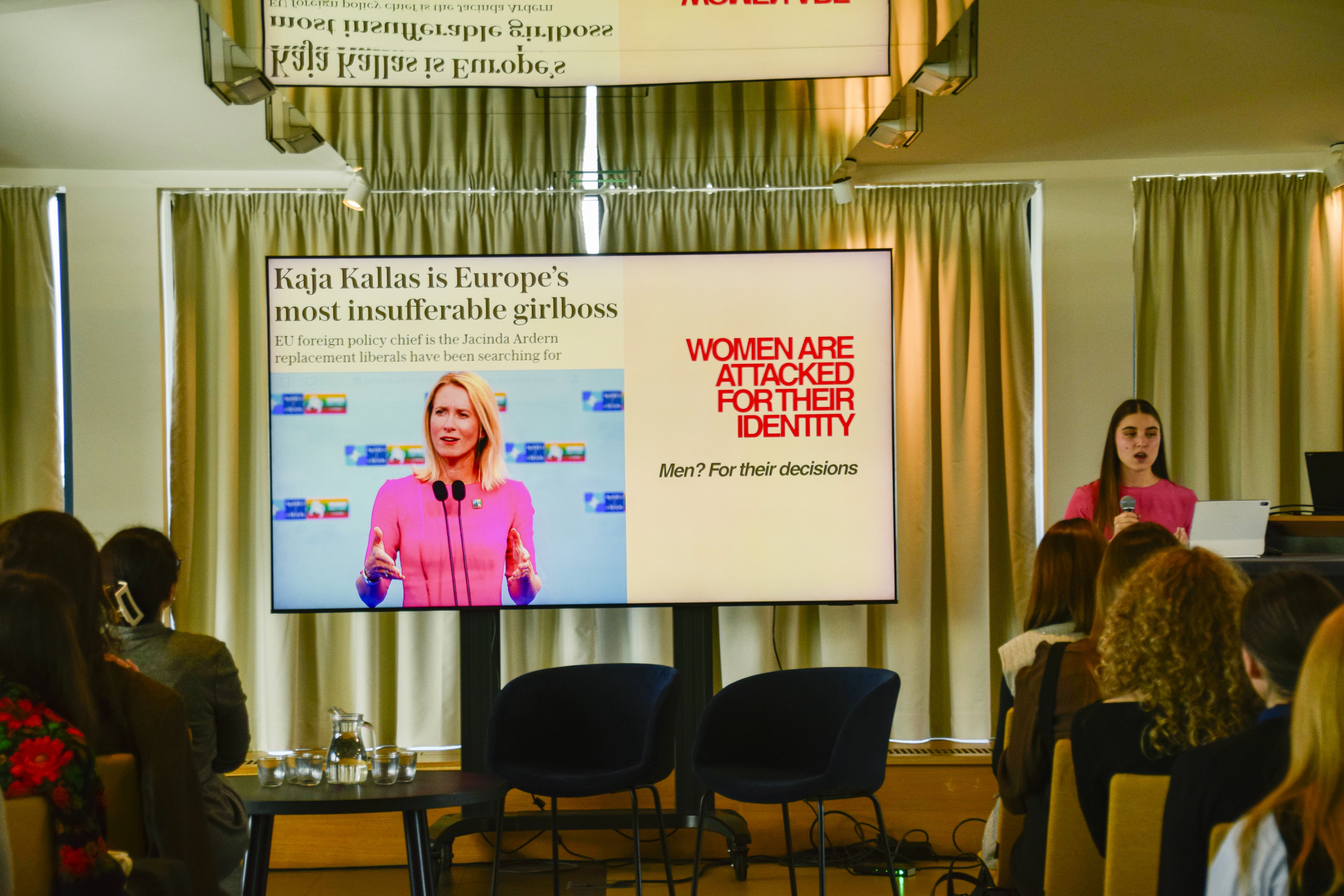
Lahe explained that gendered disinformation is not primarily intended to change political opinions. Instead, its purpose is often to silence and marginalize certain voices, particularly women in politics and public life. Women are frequently targeted through attacks on their identity, appearance, or personal lives, while men are more often criticized for their political decisions or actions. This distinction reveals how gendered disinformation functions as a political strategy aimed at undermining women’s credibility and legitimacy in public spaces.
Although gender-based attacks in politics are not new, Lahe emphasized that technological developments – especially artificial intelligence – have dramatically increased their scale and speed. AI-generated content and deepfake technologies enable the rapid production and dissemination of harmful material. According to research cited in the keynote, 98% of deepfake videos online are pornographic and 99% of the victims are women, demonstrating the disproportionate gendered impact of these technologies.
Lahe warned that policymakers and institutions may already be struggling to keep pace with technological developments. She stressed that gendered disinformation should therefore not be viewed solely as a gender equality issue, but as a broader governance challenge that threatens democratic participation, public trust, and the inclusiveness of political systems.
Gender, Identity, and Disinformation in the Baltic Information Space
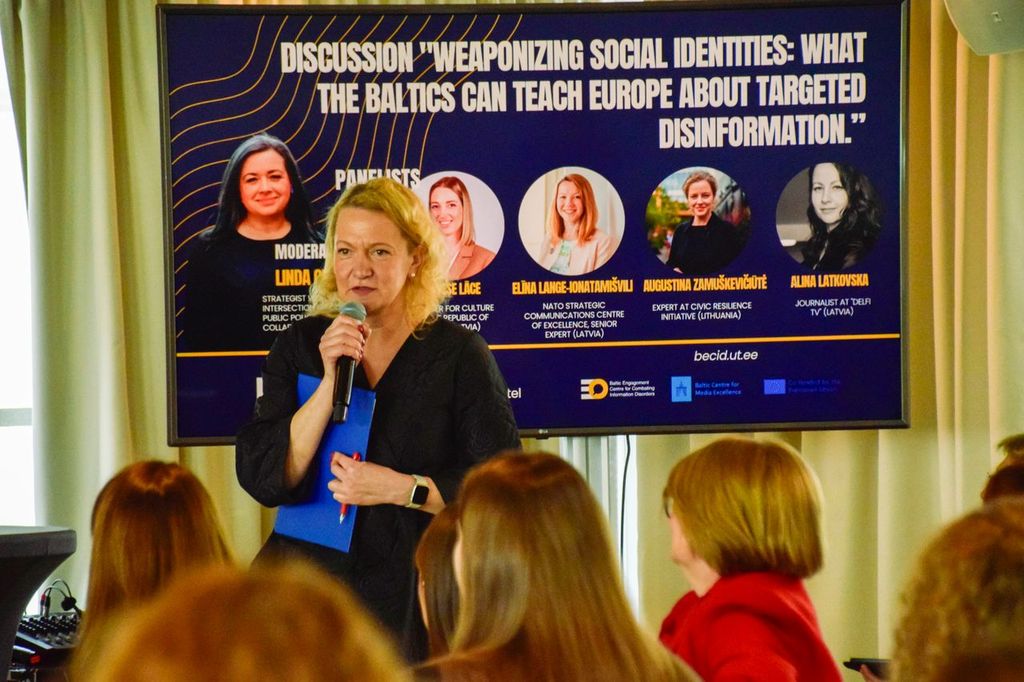
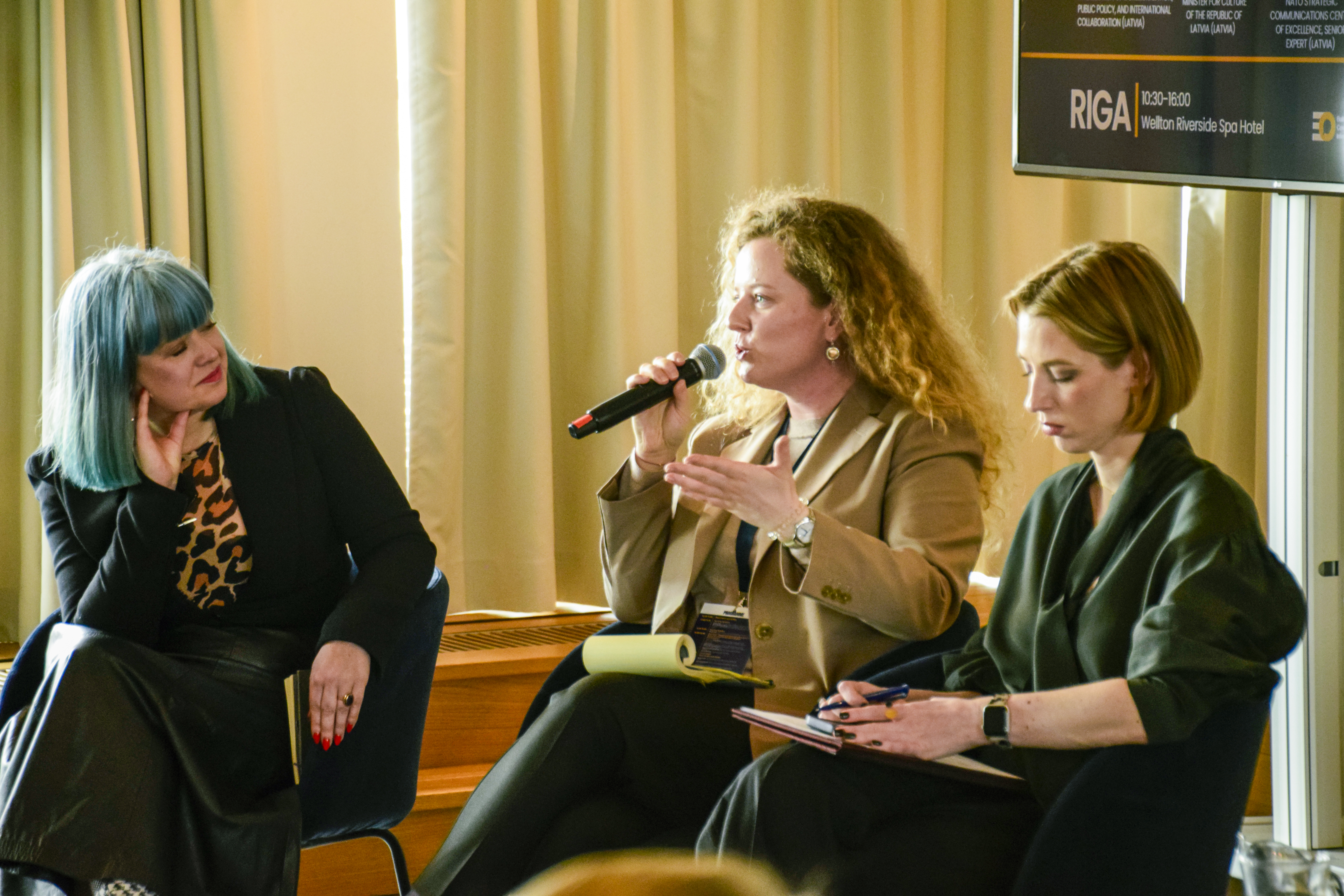
A panel discussion moderated by Linda Curika, a strategist working at the intersection of communication, public policy, and international collaboration, explored how gender- and identity-based narratives are increasingly used to polarize societies in the Baltic region. Participants examined the role of online harassment, hostile narratives, and social media dynamics in shaping the information environment.
Speakers highlighted that identity -particularly gender – has become a significant battleground in contemporary information warfare. Disinformation campaigns often exploit debates about “traditional values,” minority rights, and gender equality to deepen social divisions. These narratives frequently portray gender equality or LGBTQIA+ rights as threats to national identity and are amplified through social media networks.
Personal experiences shared by speakers illustrated how these dynamics affect public figures. Latvia’s Minister of Culture Agnese Lāce described how she faced personal criticism after appearing with her child during a public discussion, with attacks focusing on motherhood and professional credibility rather than policy issues. Delfi journalist Alina Lastovska shared similar experiences, noting that criticism directed at women often focuses on appearance, family status, or personal attributes instead of professional work.
Experts also stressed that disinformation and harassment are not driven solely by foreign actors or automated bot networks. According to Elīna Lange-Ionatamišvili, senior expert at the NATO Strategic Communications Centre of Excellence, a significant share of hostile content originates from authentic users, reflecting broader societal norms and the normalization of aggressive communication online.
Social media platforms further amplify these dynamics by enabling the rapid dissemination of hostile commentary and creating environments where vocal minorities dominate public conversations. Some public figures have therefore begun reducing their presence on platforms such as X (formerly Twitter), which are increasingly perceived as hostile spaces for constructive public debate.
The discussion also addressed policy initiatives aimed at strengthening the resilience of the information ecosystem. Measures discussed by policymakers include:
- Supporting independent, high-quality journalism and analytical media content
- Increasing investment in public broadcasting to strengthen reach and credibility
- Providing support for regional media outlets to counter local misinformation
- Expanding legal frameworks and cooperation with law enforcement to address threats against journalists and public figures
Participants emphasized that while regulatory responses are important, they must be accompanied by broader societal engagement and stronger protections for journalists, activists, and public figures who are often targeted by coordinated harassment campaigns.
Augustina Zamuškevičiūtė, expert at the Civic Resilience Initiative, highlighted programs that work with young people to strengthen media literacy, critical thinking, and awareness of how social media algorithms shape information flows. These initiatives also address stereotypes and identity-based narratives, helping students recognize manipulative messaging and disinformation tactics.
She stressed that media literacy should not be limited to standalone courses but integrated across educational subjects from an early age, enabling students to better understand digital information environments and develop responsible online behavior.
Civil Society Mobilization and the Istanbul Convention Debate
The conference also examined the role of civil society in responding to misinformation and defending democratic values.
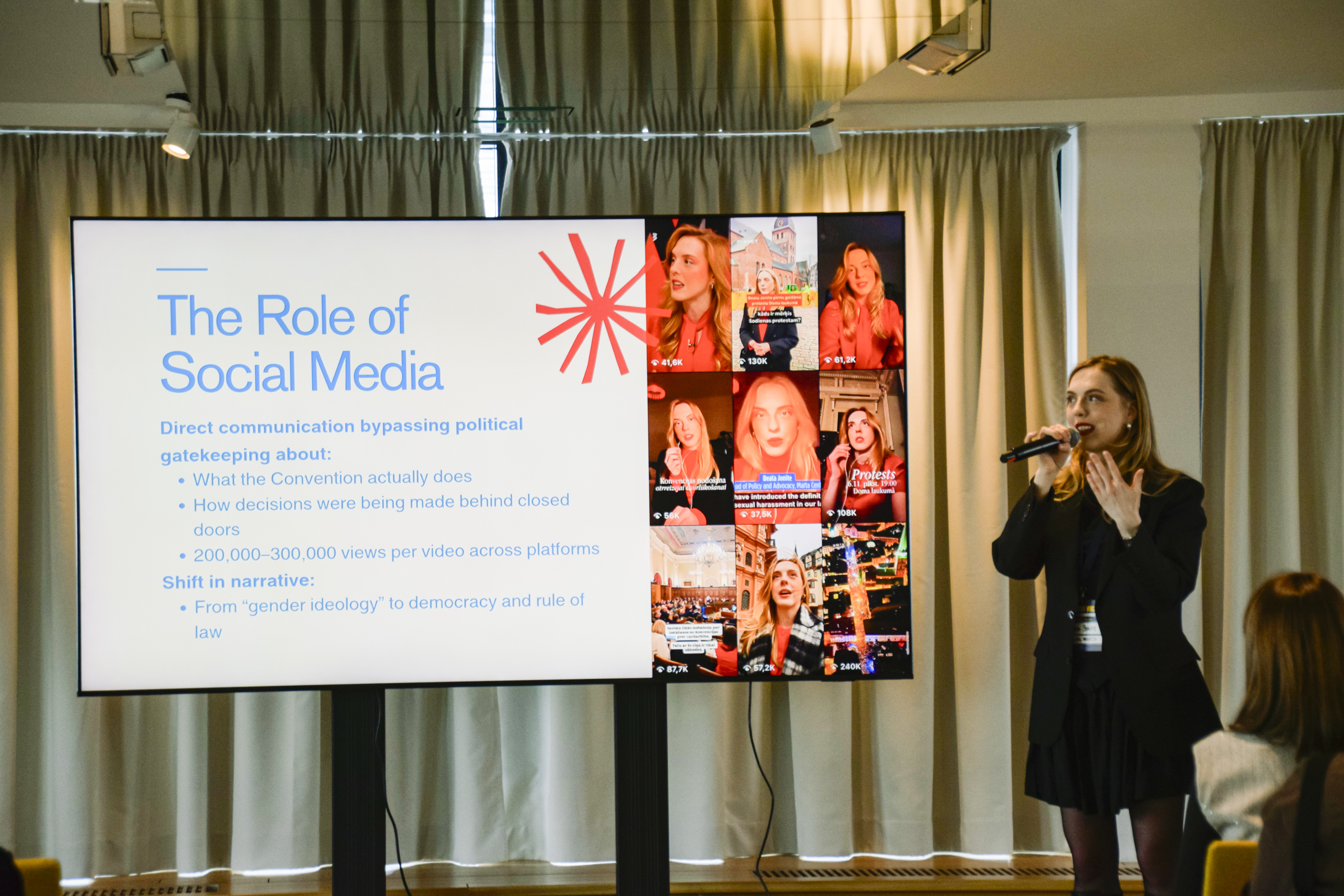
Beata Jonite, Head of Advocacy at the Latvian NGO Centrs MARTA, presented the organization’s work supporting victims of domestic violence, human trafficking, and gender-based violence. Established in 2000, Centrs MARTA provides social, psychological, and legal assistance while advocating for stronger national legislation on violence prevention and victim support.
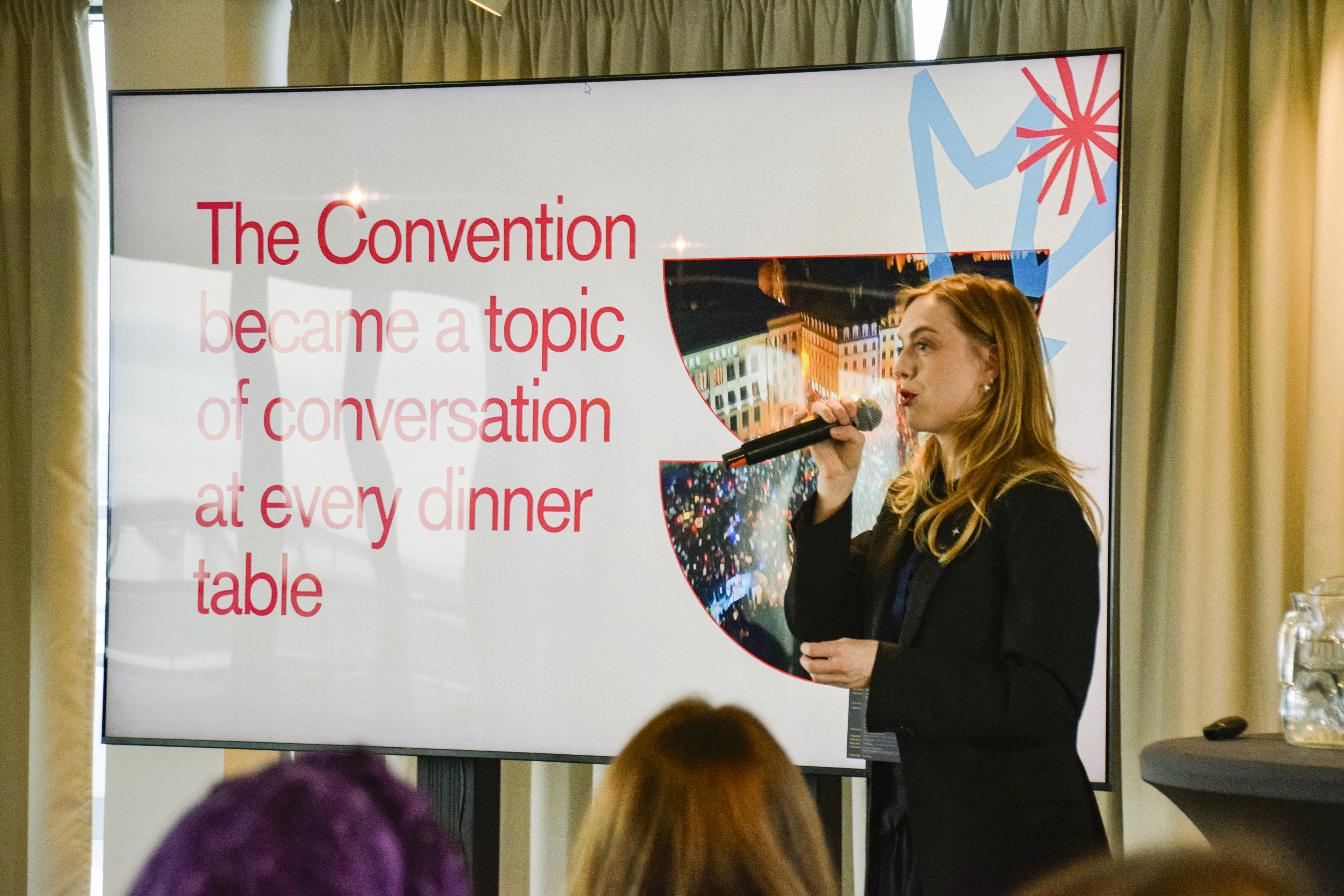
Jonite focused particularly on the public debate surrounding the Istanbul Convention, an international treaty designed to prevent and combat violence against women and domestic violence. In Latvia, the debate around the convention became highly polarized, with misinformation portraying the treaty as a threat to traditional values despite its focus on protecting victims of violence.
In response to political efforts to withdraw from the convention, civil society organizations mobilized extensively. Centrs MARTA joined 14 other NGOs to organize a series of protests between September and November. The largest demonstration, held on 6 November, became one of the most significant public mobilizations in Latvia since independence around issues of human rights and democratic values.
The movement gained significant public support. Within a few days, over 70,000 signatures were collected urging the President not to approve withdrawal from the convention. Ultimately, the President refused to sign the law.
Despite facing harassment and threats, Jonite emphasized that the mobilization demonstrated the strength and resilience of civil society in defending democratic values and preventing democratic backsliding.
Investigating Disinformation Networks and Hybrid Influence
The conference also highlighted the role of investigative journalism in uncovering coordinated disinformation networks.
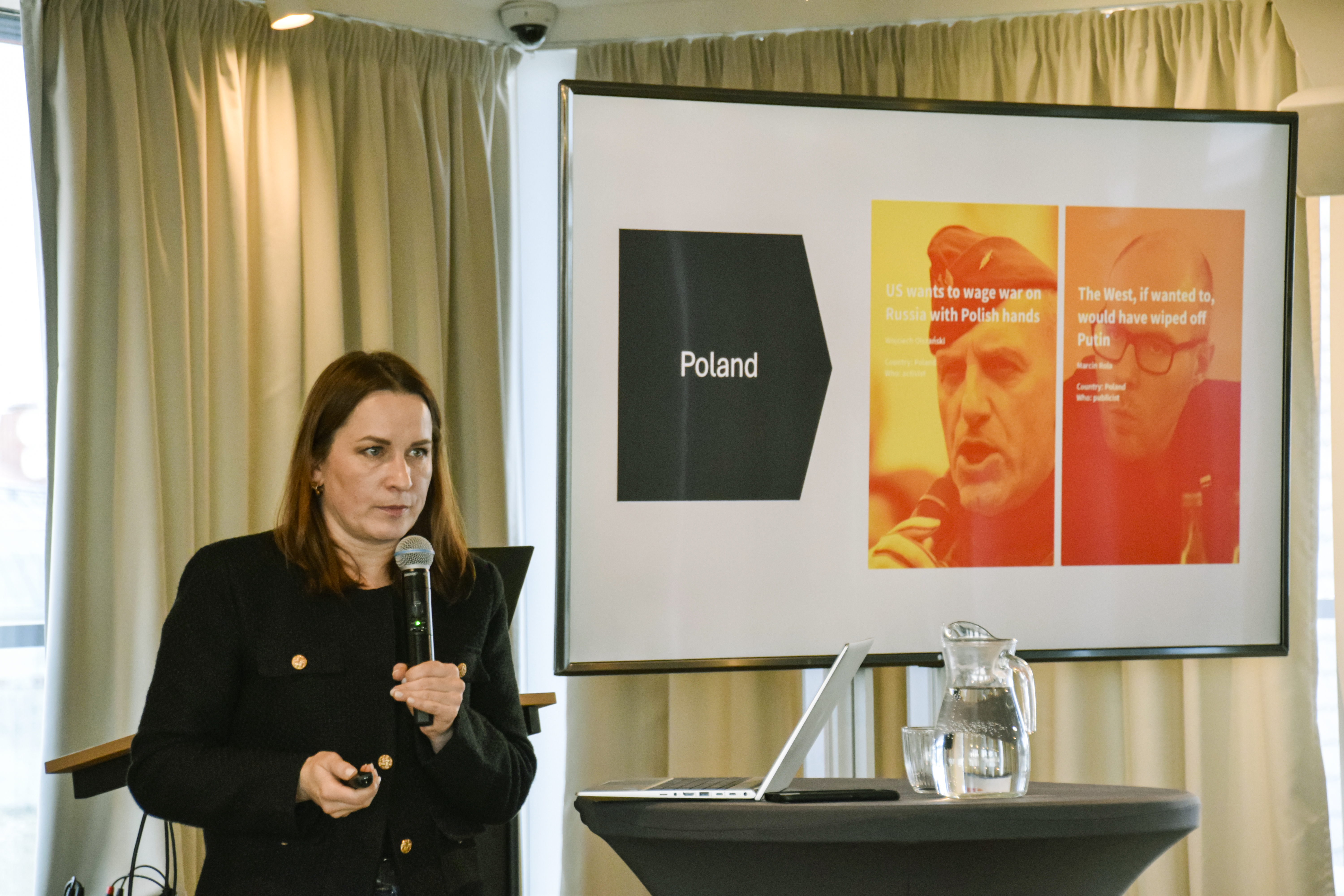
Indrė Makaraitytė, Head of the Research Department at Lithuanian public broadcaster LRT, presented investigative findings linking protest movements in Lithuania to pro-Kremlin influence networks.
Between 2018 and 2022, several protests – initially framed as demonstrations against COVID-19 restrictions, migration policies, or government decisions – were found to involve individuals connected to pro-Kremlin organizations. Investigative journalists documented these protests and identified recurring organizers promoting narratives aligned with Russian propaganda.
These narratives portrayed governments as illegitimate and suggested that elites had deprived citizens of political power. Similar messaging appeared across multiple countries, including Poland and other Baltic states, suggesting the presence of a broader regional influence campaign.
Makaraitytė also highlighted the use of bot networks and online manipulation to amplify disinformation narratives and attack political opponents. Journalists investigating these networks often faced hostility, harassment, and coordinated discrediting campaigns.
To address these challenges, Lithuanian media organizations have begun strengthening cooperation with law enforcement and developing mechanisms to improve protection for journalists. Such measures are considered essential to maintaining independent journalism in environments exposed to hybrid influence operations.
Understanding the Digital Dynamics of Gender Disinformation
Academic perspectives presented at the conference further explored how digital environments shape gender norms and enable gendered disinformation.
Researcher Jānis Šabanovs from Rīga Stradiņš University argued that gender in the digital age cannot be understood separately from online spaces. Digital media act as “gender technologies,” actively shaping social expectations and representations of gender identities.
Within this context, stereotypes serve as cognitive shortcuts that help people interpret social information. However, repeated and generalized stereotypes become prescriptive norms that regulate behavior and reinforce social hierarchies. Gender disinformation weaponizes these stereotypes in digital environments to harass and discredit individuals, particularly women.
Such practices may include trolling, doxing, harassment, and the spread of misleading narratives. These attacks can discourage women from participating in public debates and contribute to wider societal polarization.
Gendered Disinformation and Information Warfare
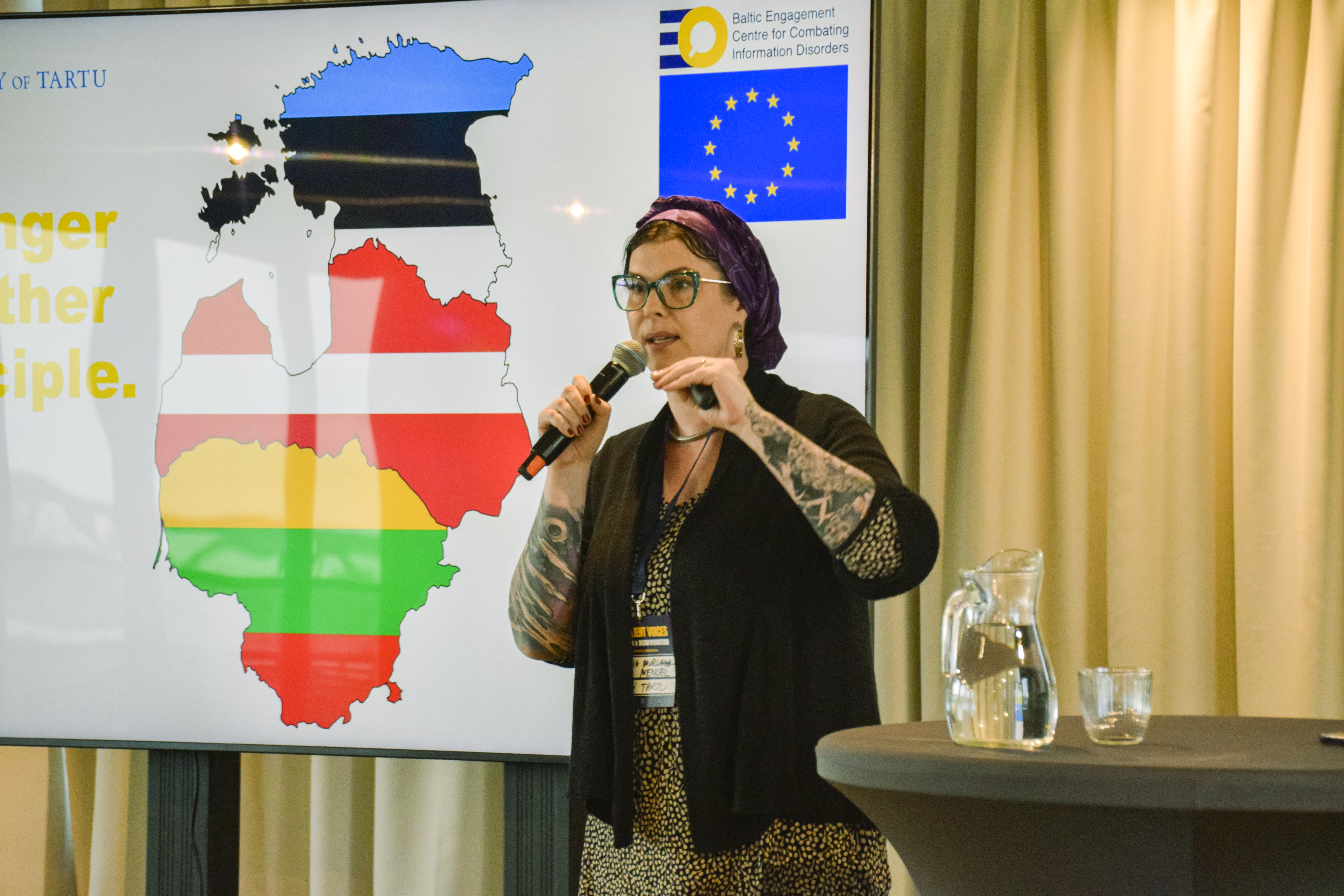
A presentation by Maria Murumaa-Mengel, Associate Professor of Media Studies at the University of Tartu, further examined the relationship between gender stereotypes, online communication, and geopolitical propaganda.
The presentation emphasized that many widely held beliefs about gender roles are socially constructed rather than biologically determined. These beliefs are reproduced through cultural practices, language, and media systems. In digital environments, emotionally charged communication – especially expressions of anger – spreads rapidly and increases susceptibility to manipulation.
Murumaa-Mengel also discussed the concept of social steganography, where hidden meanings are embedded in memes, emojis, and coded language. These messages may appear harmless to general audiences but convey discriminatory or extremist ideas to specific groups.
Gender narratives are also frequently weaponized in geopolitical propaganda. Pro-Kremlin disinformation campaigns often promote narratives about “traditional values,” portraying Western societies as morally corrupt. These narratives aim to provoke strong emotional reactions and deepen social divisions.
Common patterns in gendered disinformation campaigns include sexualized portrayals of women in politics, rumors about personal morality, and accusations that women leaders are foreign agents or “puppets” of Western influence.
A Collective Challenge for Democratic Societies
Across all discussions and presentations, a central conclusion emerged: gendered disinformation is not only a women’s issue but a systemic challenge to democratic governance.
By exploiting stereotypes, emotional narratives, and digital infrastructures, such campaigns seek to silence voices, weaken independent media, and undermine trust in democratic institutions. Addressing this problem requires coordinated efforts across multiple sectors.
Key responses highlighted during the conference include:
- Strengthening independent journalism and media ecosystems
- Improving legal protections for journalists and public figures
- Expanding media literacy and digital education
- Supporting civil society initiatives and grassroots mobilization
- Enhancing cooperation between governments, technology platforms, and researchers
Ultimately, building resilience against gendered disinformation depends not only on institutional responses but also on collective responsibility in shaping respectful and inclusive public discourse.
As speakers repeatedly emphasized throughout the conference, protecting democratic participation requires ensuring that all voices – regardless of gender or identity – can safely engage in public debate.
This article was prepared with the support of AI tools