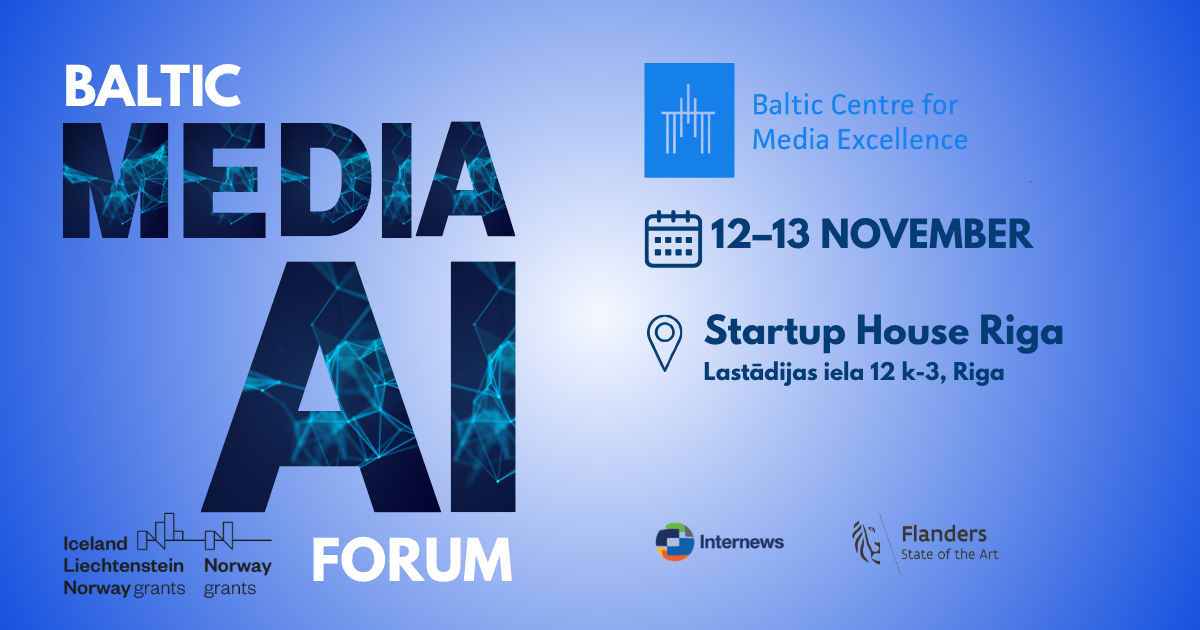
The Baltic Centre for Media Excellence (BCME) is organising the Baltic Media AI Forum 2026, bringing together media professionals, technology experts and innovators from across Europe to explore the opportunities, challenges and practical implications of artificial intelligence in journalism.
As AI becomes increasingly integrated into news production, research, fact-checking and editorial workflows, media organisations face important decisions about how to adopt new technologies while maintaining editorial independence, accuracy and public trust.
The two-day forum will provide a platform for sharing international experience, examining emerging risks and exploring practical AI solutions that can support journalism and strengthen the resilience of media organisations. The programme combines expert presentations, real-world case studies, a panel discussion and two hands-on workshops.
Baltic Media AI Forum 2026 Programme and Speakers
Day 1 | 12 November: AI Transformation, Innovation and Challenges for Journalism
The first day will focus on how artificial intelligence is changing the media industry, with particular attention to newsroom innovation, public service media, disinformation, verification and European technological sovereignty.
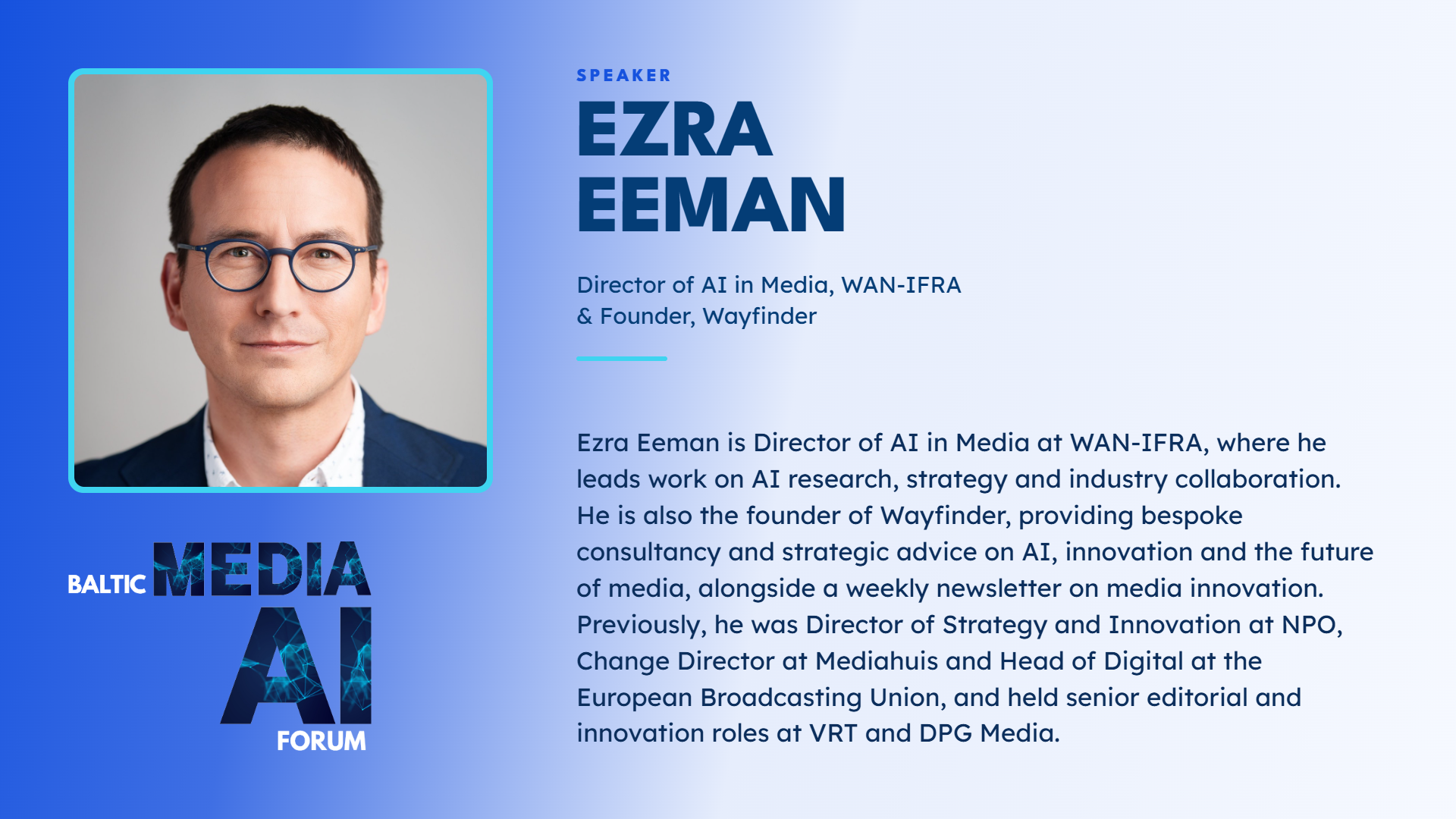
Ezra Eeman, Director of AI in Media at WAN-IFRA and founder of Wayfinder (the Netherlands), will open the programme with a keynote examining how AI is reconfiguring the media landscape and what these changes mean for journalism and
media organisations.
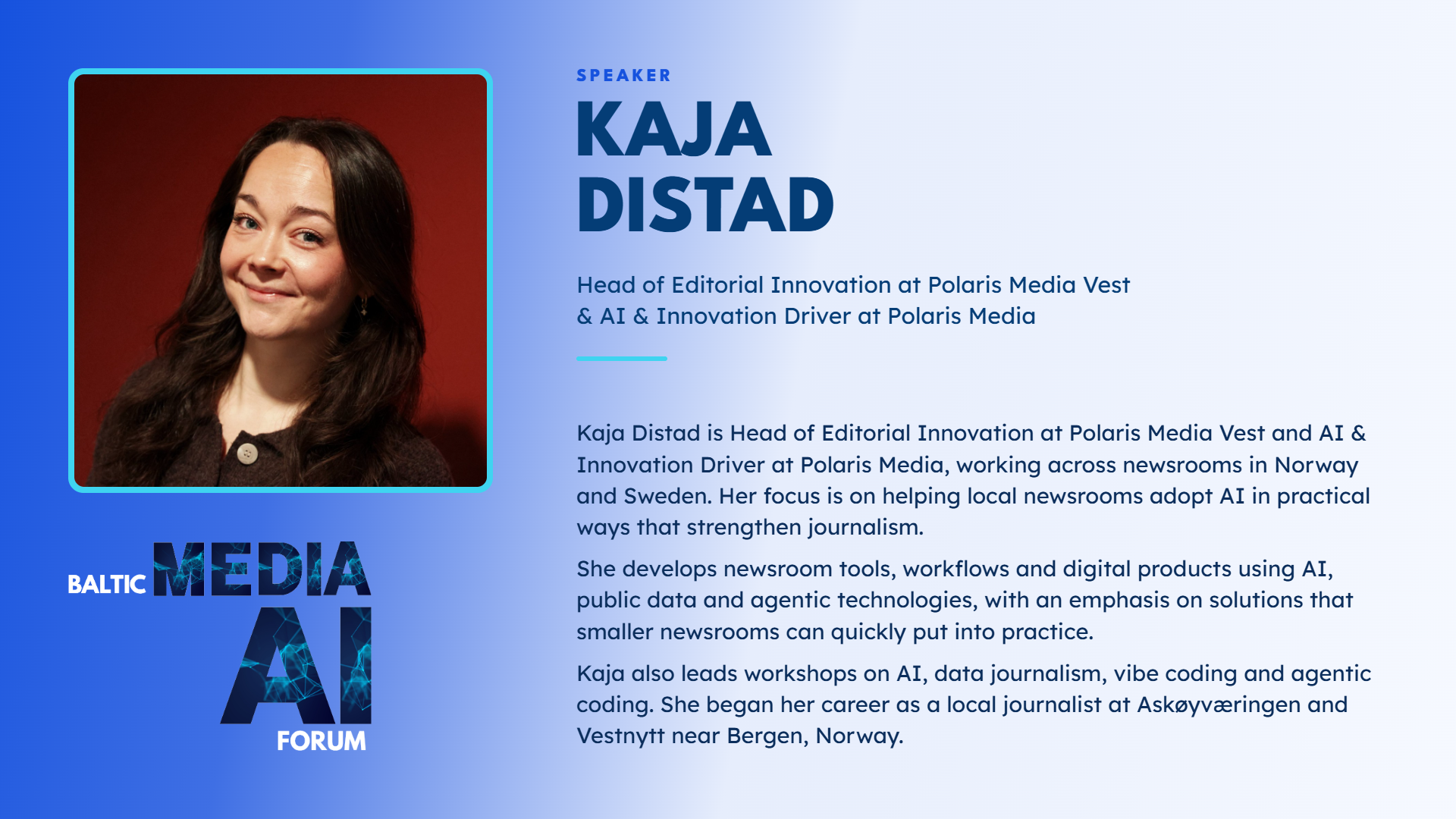
Kaja Distad, Head of Editorial Innovation at Polaris Media Vest and AI & Innovation Driver at Polaris Media (Norway), will explore how smaller newsrooms can use AI to address local needs, improve workflows and develop practical innovations despite limited resources.
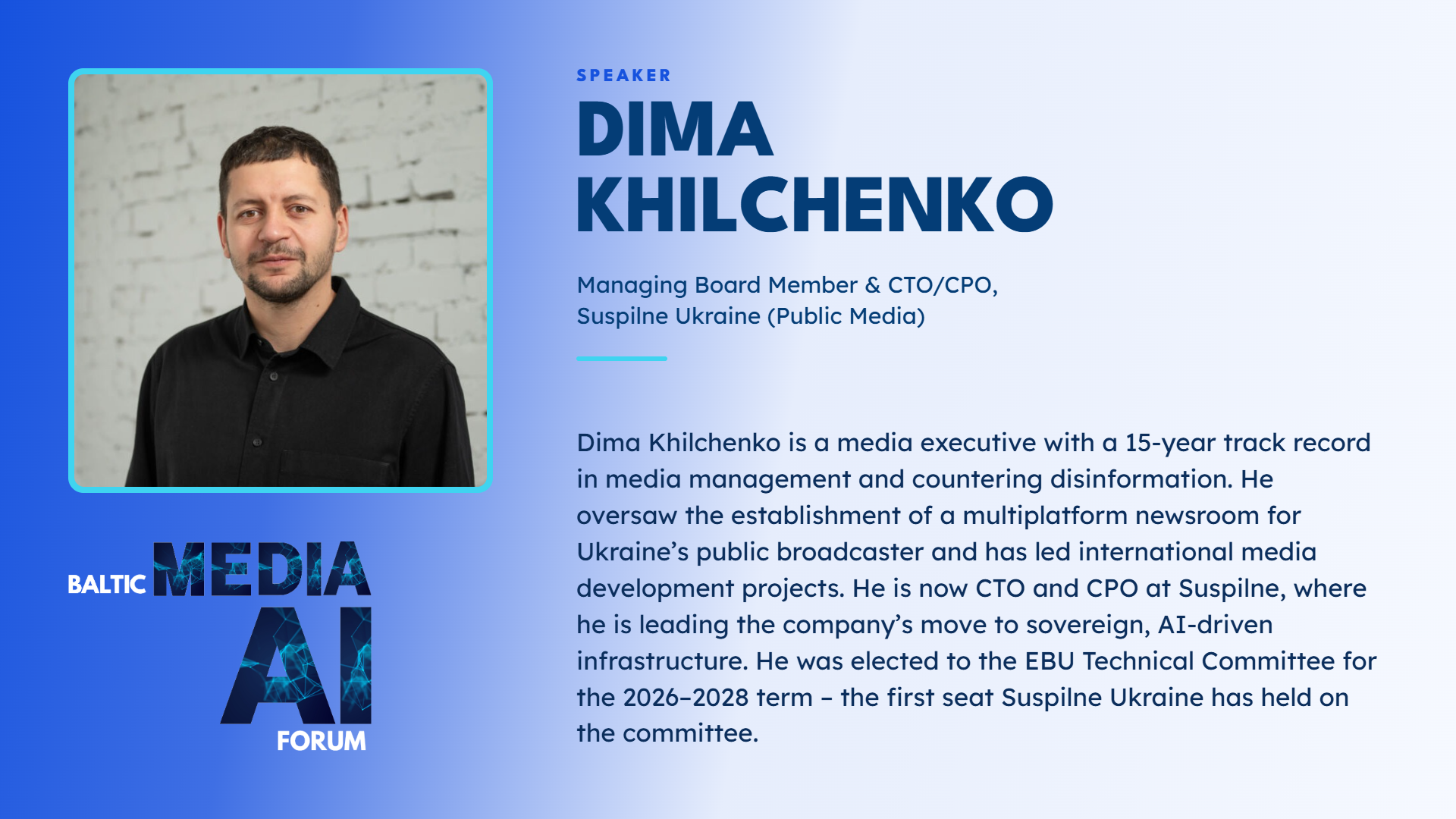
Drawing on Ukraine’s experience, Dima Khilchenko, Managing Board Member and CTO/CPO of Suspilne Ukraine, will present the Ukrainian public broadcaster’s AI strategy and digital transformation journey.
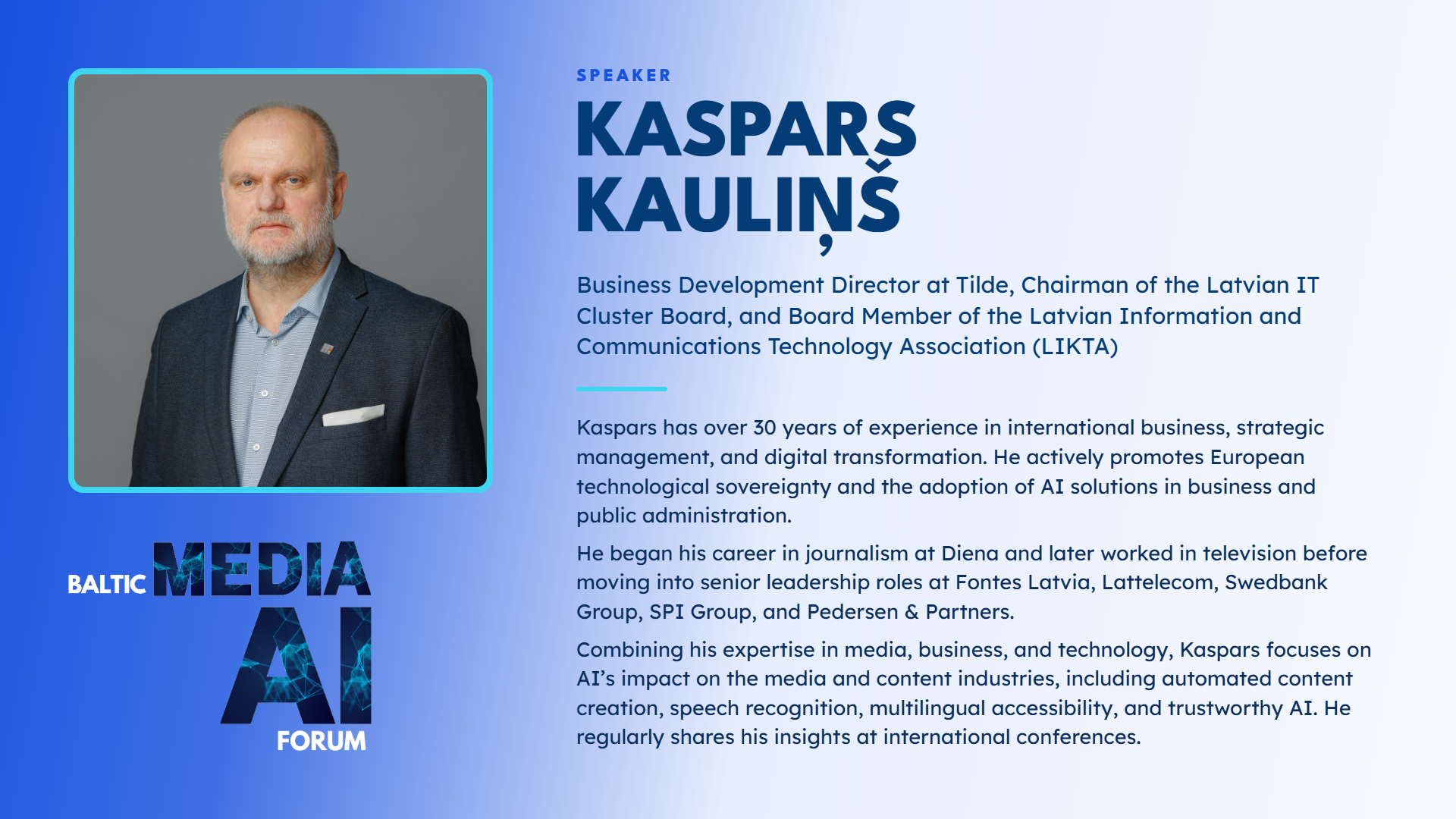
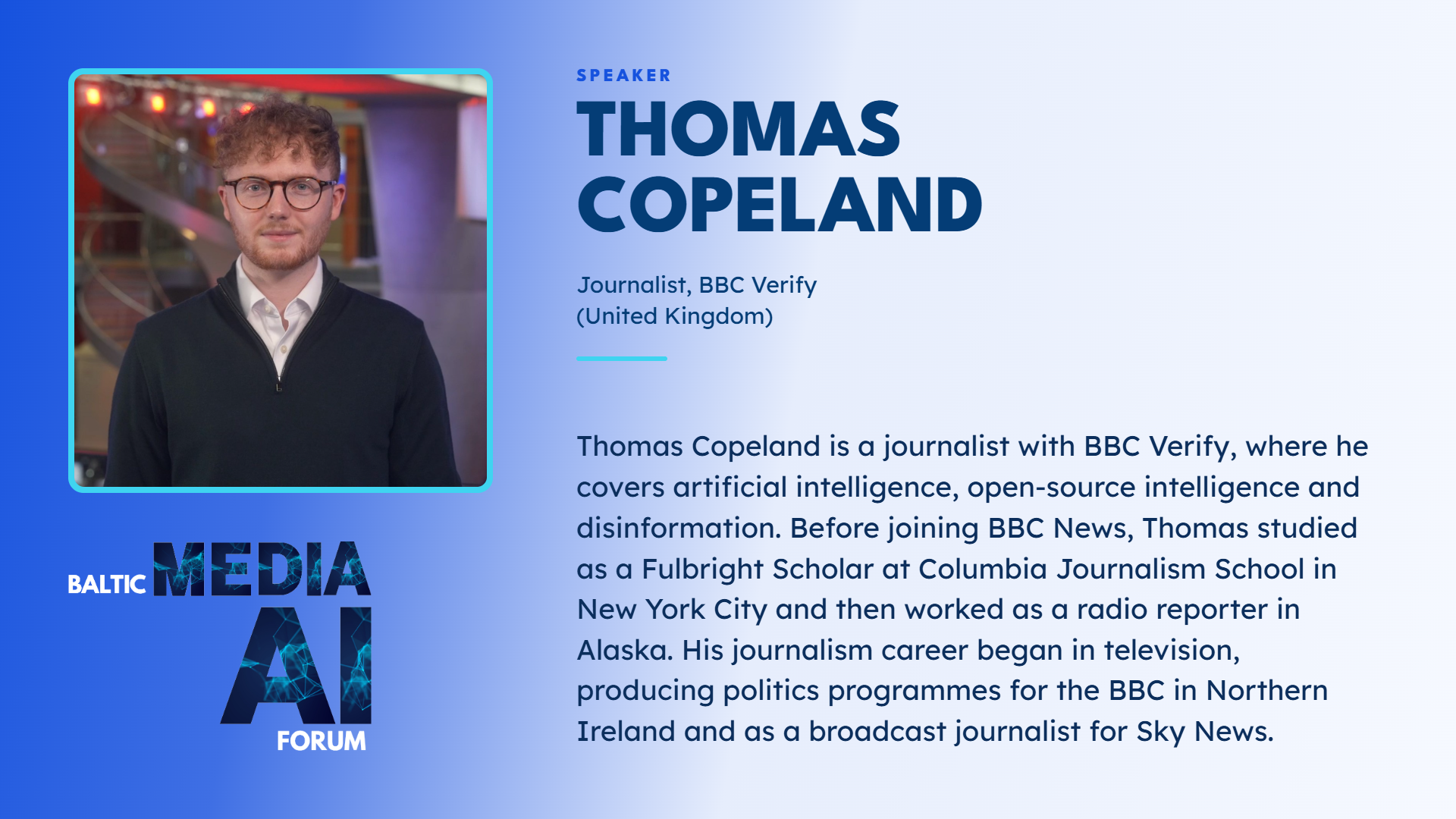
The programme will also examine the growing challenges of AI-generated misinformation and information manipulation. Thomas Copeland, a journalist with BBC Verify (United Kingdom), will address the detection of AI-generated misinformation during conflicts, while Kaspars Kauliņš,
Business Development Director at Tilde (Latvia), will discuss the importance of sovereign AI and European large language models for independent media.
Lasha Kavtaradze, Senior Researcher at Factiverse (Norway), will present a case study exploring the application of AI technologies in information verification.
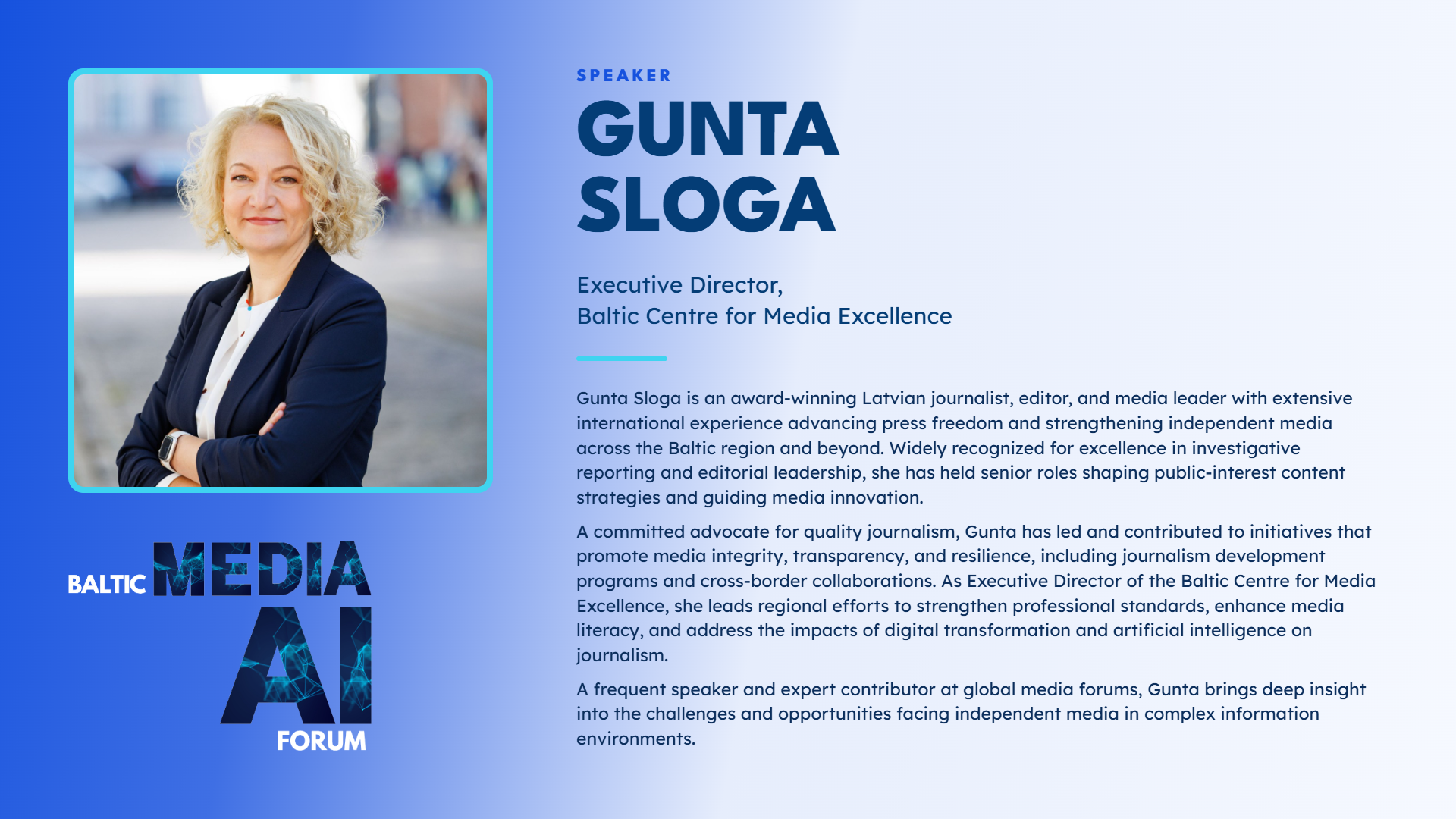
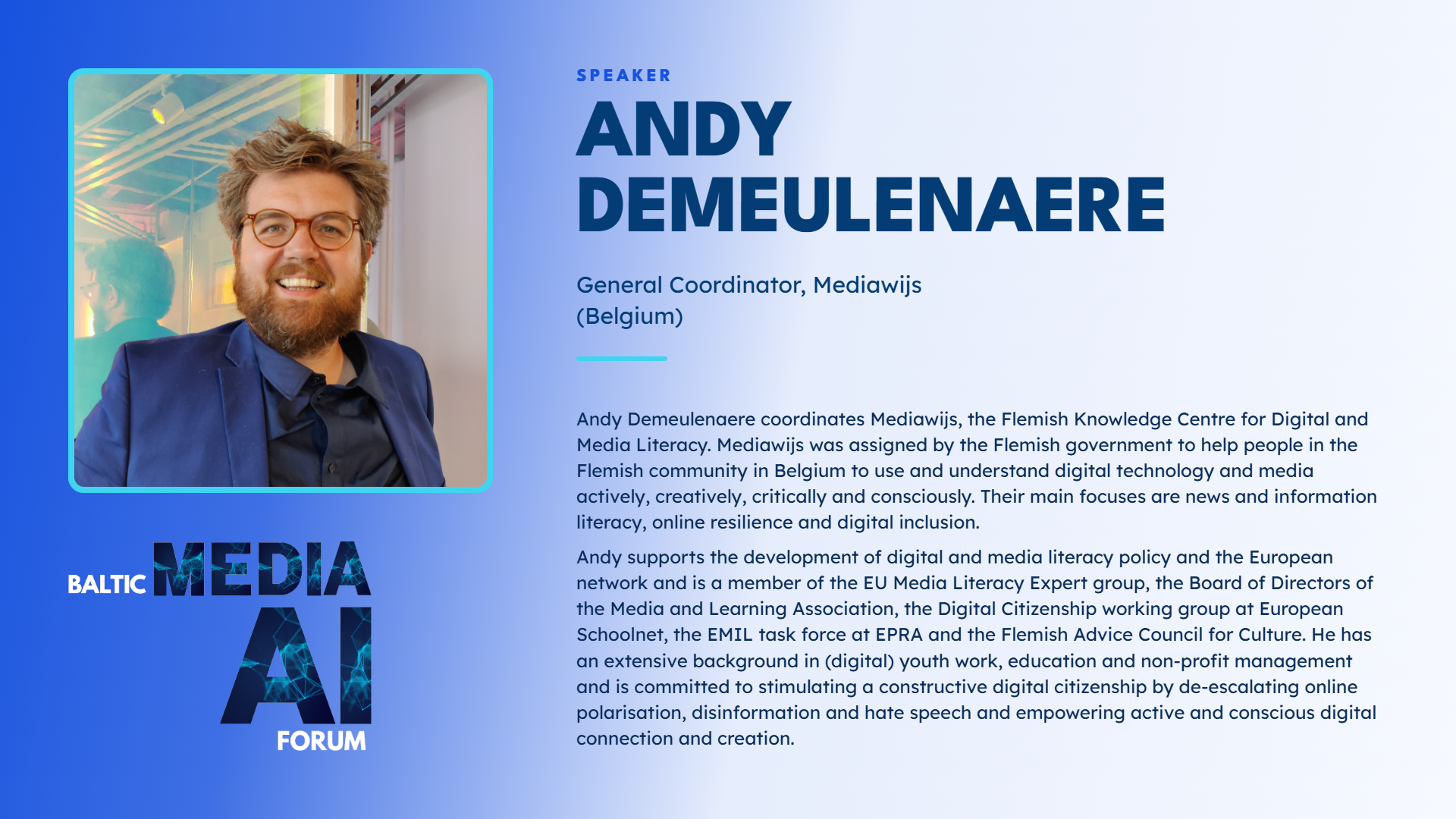
The day will conclude with a panel discussion, “How AI Amplifies Disinformation, Manipulation and Risks for Media and Society”, featuring Andy Demeulenaere, General Coordinator of Mediawijs, the Flemish Knowledge Centre for Digital and Media Literacy (Belgium), and Daniel Vaarik, founder of Levila (Estonia). The discussion will be moderated by Gunta Sloga, Executive Director of BCME. The panel will examine the implications of AI-driven disinformation and manipulation for journalism, media literacy and society, as well as the challenges of maintaining public trust in an increasingly complex information environment.
The first day will conclude with an informal networking event, providing an opportunity for participants and speakers to exchange experiences and establish new professional connections.
Day 2 | 13 November: Practical AI Skills for Media Professionals
The second day will focus on practical applications of AI, with two interactive workshops designed to help media professionals experiment with emerging technologies and develop skills relevant to their daily work.
Workshop 1: Vibe Coding — This Is Where You Start
Led by Kaja Distad, Polaris Media (Norway)
09:30–11:30
This beginner-friendly workshop will introduce participants to vibe coding — an approach that uses AI tools to help create digital solutions without requiring traditional programming skills. Participants will explore how to use AI to visualise data, develop interactive
experiences and prototype simple applications that can support everyday newsroom tasks.
By the end of the workshop, participants will have gained hands-on experience and created a basic data visualisation, interactive experience or application prototype.
No programming experience is required.
Participants should bring their own laptops and have an active account with an AI tool such as ChatGPT, Claude or Gemini.
Workshop 2: Superintelligence in Action — A Safe Sandbox for AI Agents in Media
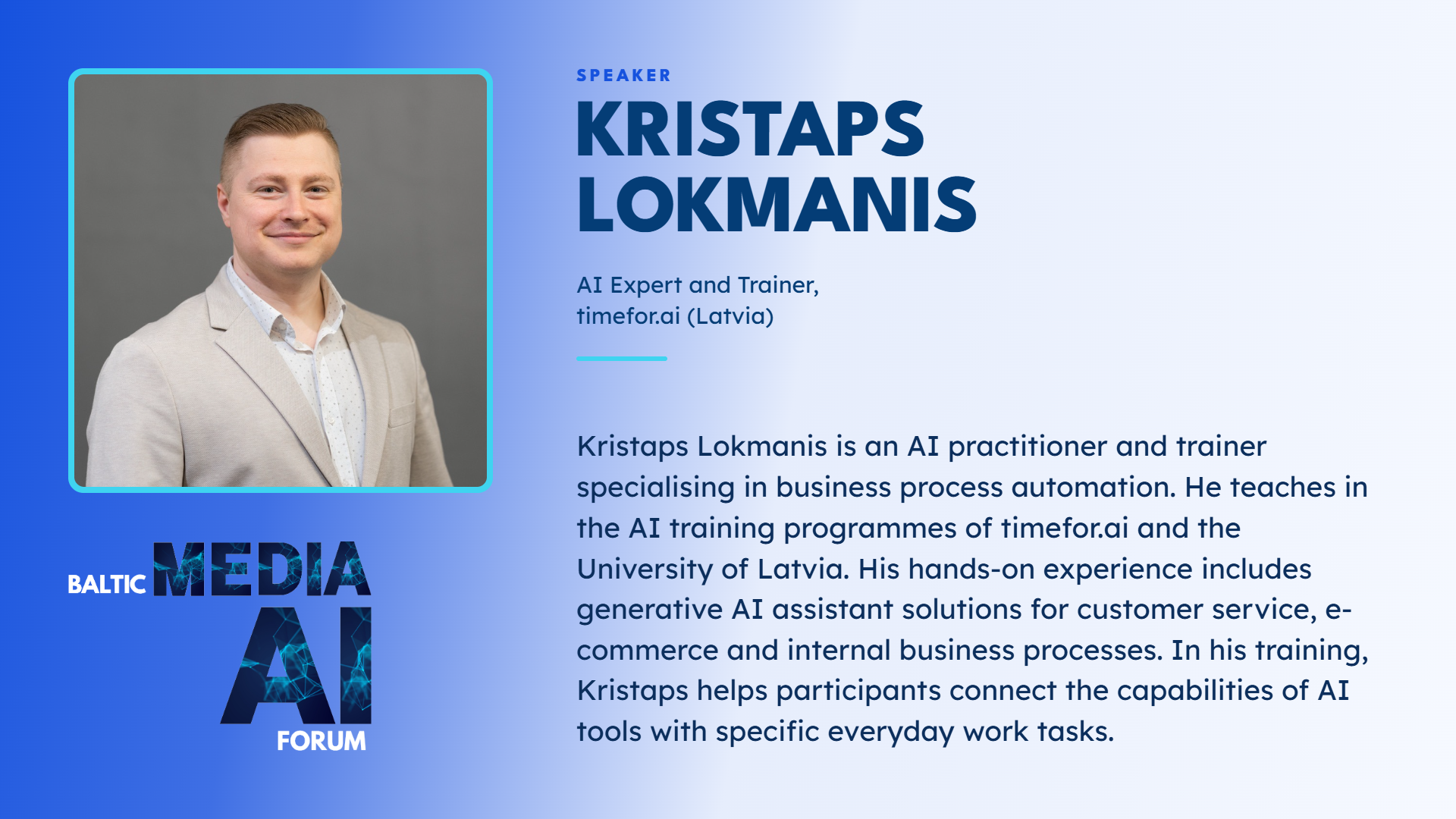
Led by Kristaps Lokmanis, timefor.ai (Latvia)
12:00–14:00
This practical workshop will introduce participants to AI agents and their potential applications in journalism and media workflows.
Using ChatGPT Work, participants will learn how to create and test an AI research agent capable of gathering information from public sources, comparing findings and preparing structured briefings for editorial review.
The session will focus on defining clear tasks, establishing appropriate boundaries, evaluating sources and identifying information that requires further verification. Particular attention will be paid to responsible AI use, data protection and the importance of maintaining human editorial oversight. Participants will leave with practical experience of testing an AI agent and ideas for integrating similar approaches into their professional work.
Basic familiarity with ChatGPT is recommended, but programming knowledge is not required.
Participants must bring a laptop and have an active ChatGPT Plus subscription with access to ChatGPT Work and its browser capabilities.
Who Should Attend?
The Baltic Media AI Forum 2026 is intended for journalists, editors, newsroom managers, media executives, fact-checkers, media development professionals, researchers and technology specialists interested in the evolving relationship between artificial intelligence and journalism.
The forum will be particularly relevant to media organisations seeking practical approaches to AI adoption, professionals working to counter disinformation and those responsible for developing innovation and digital transformation strategies.
The full programme, including session times and workshop requirements, is available below.
Join the Baltic Media AI Forum 2026 to exchange knowledge, discover practical tools and explore how artificial intelligence can be used responsibly to support independent, innovative and trustworthy journalism.


 25 August - 8 September 2026