


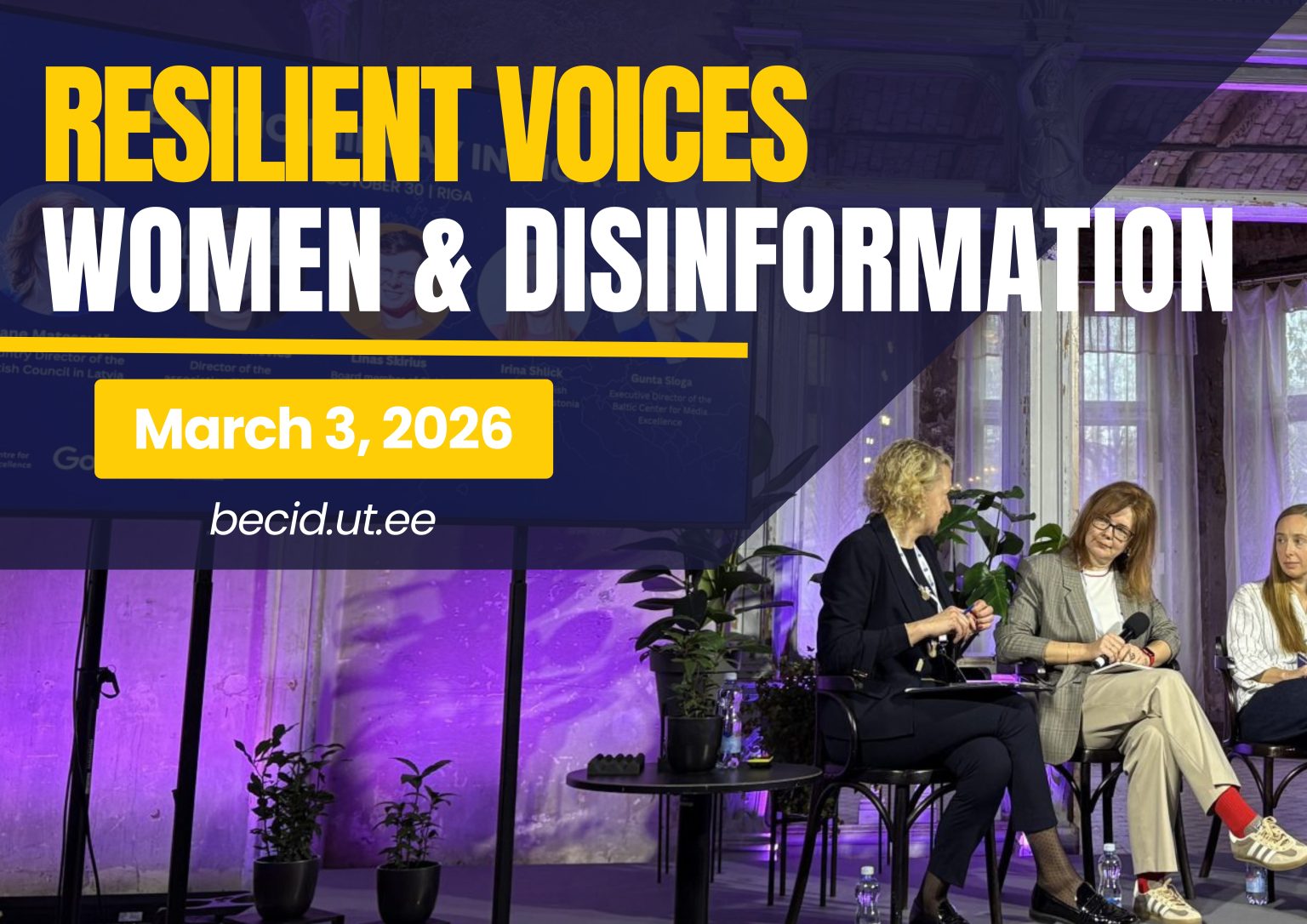
On 3 March 2026, BECID will host the international conferencede “Resilient Voices: Women & Disinformation” in Riga.
The conference focuses on gender-based disinformation and women’s resilience in the information space, bringing together experts, journalists, researchers, policymakers and civil society representatives from the Baltic region and beyond.
Women leaders, activists, politicians, journalists and other public-facing professionals are disproportionately targeted by coordinated harassment, disinformation campaigns and identity-based attacks online. Drawing on the Baltic experience – where hostile information operations are persistent, adaptive and often openly geopolitical – the conference explores how gender and social identities are weaponised to silence voices, polarise societies and undermine trust in democratic institutions.
The conference will examine:
- Gender-based and identity-driven disinformation in the digital space.
- Coordinated online harassment and its impact on democratic participation.
- The role of media, civil society and public institutions in responding to hybrid threats.
- Practical tools and strategies for strengthening resilience.
- Academic and policy perspectives on gender, power and information disorder.
Programme
The conference opens with welcoming remarks setting the context for a day dedicated to democratic resilience, followed by a keynote address by Hanah Lahe, political activist and the youngest Member of Parliament in Estonia.
A panel discussion titled “Weaponizing Social Identities: What the Baltics Can Teach Europe about Targeted Disinformation” will explore how identity-based hybrid threats operate in practice, particularly in relation to gender, civic engagement and political participation, and what lessons the Baltic states offer for recognising and responding to these challenges across Europe.
The second part of the conference will focus on practical perspectives through case studies and applied tools. Representatives of civil society, public media and state institutions will present real-world experiences of coordinated harassment, disinformation campaigns and institutional pressure.
In the afternoon, the programme will continue with a research-focused session presenting current academic insights on gender-based disinformation. The day will conclude with a summary of key takeaways and conclusions.
The programme features speakers from civil society, public institutions, media organisations and academia across the Baltic region.
Practical Information
Date: 3 March 2026
Time: 10:30–16:00
Venue: Wellton Riverside Spa Hotel, 11. Novembra krastmala 33, Riga
Language: English
Participation is free of charge, but registration is required.

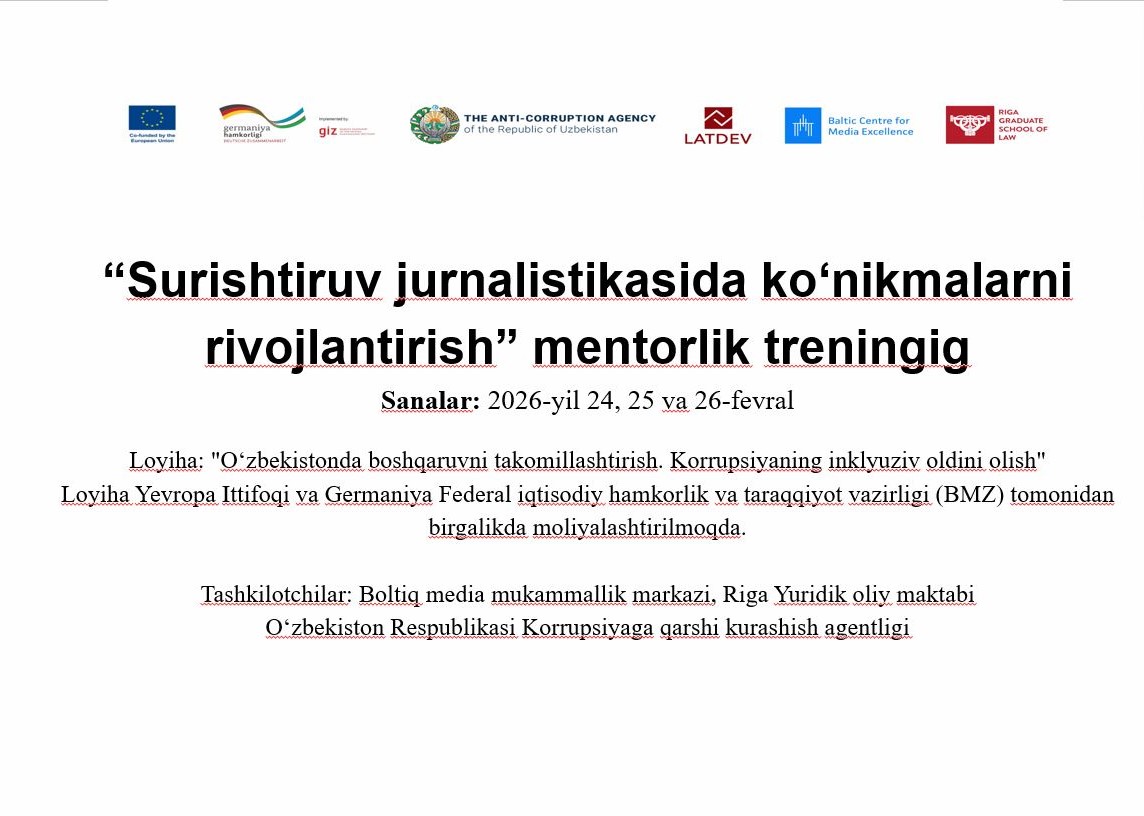
 24 - 26 February 2026
