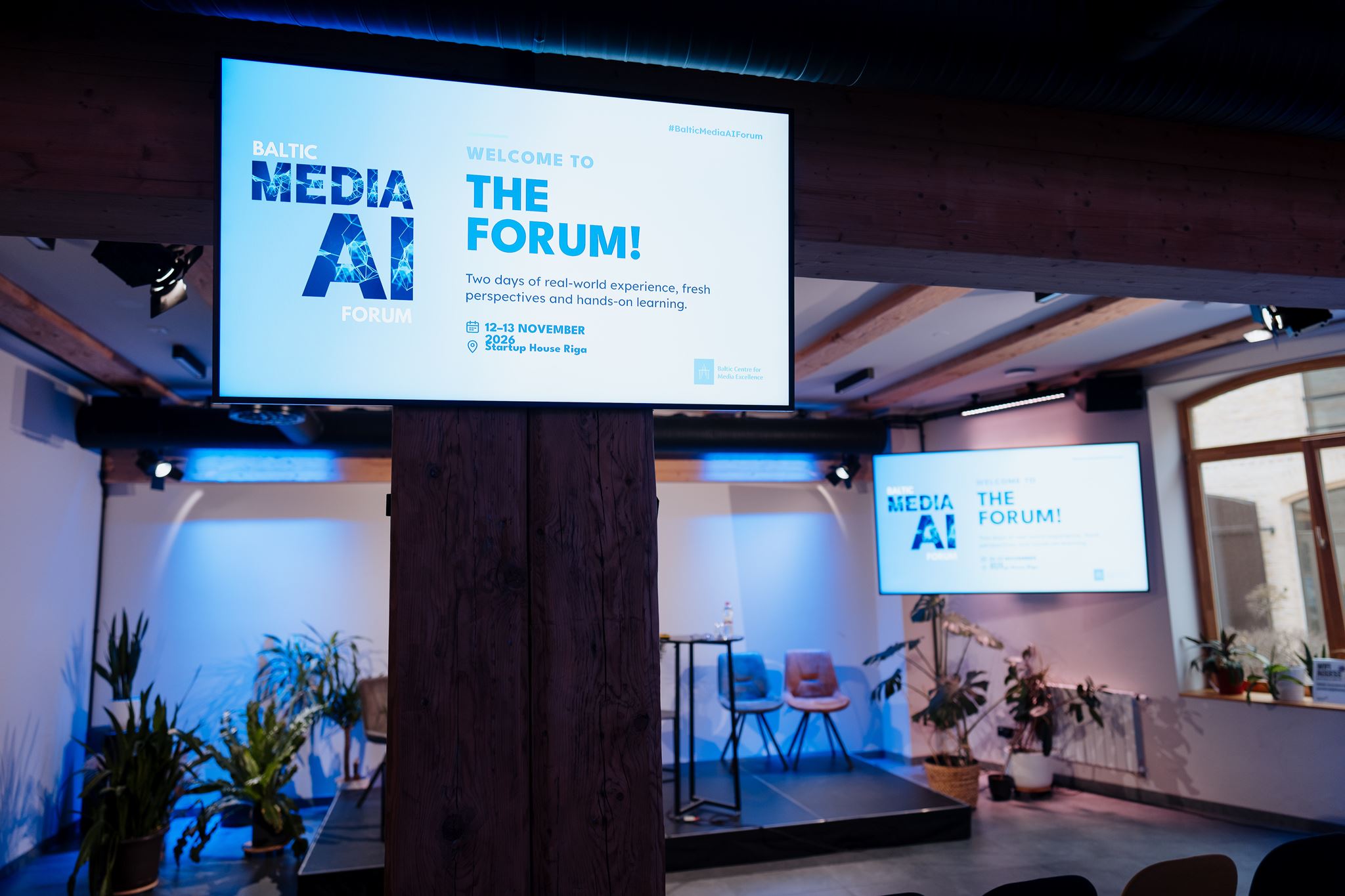












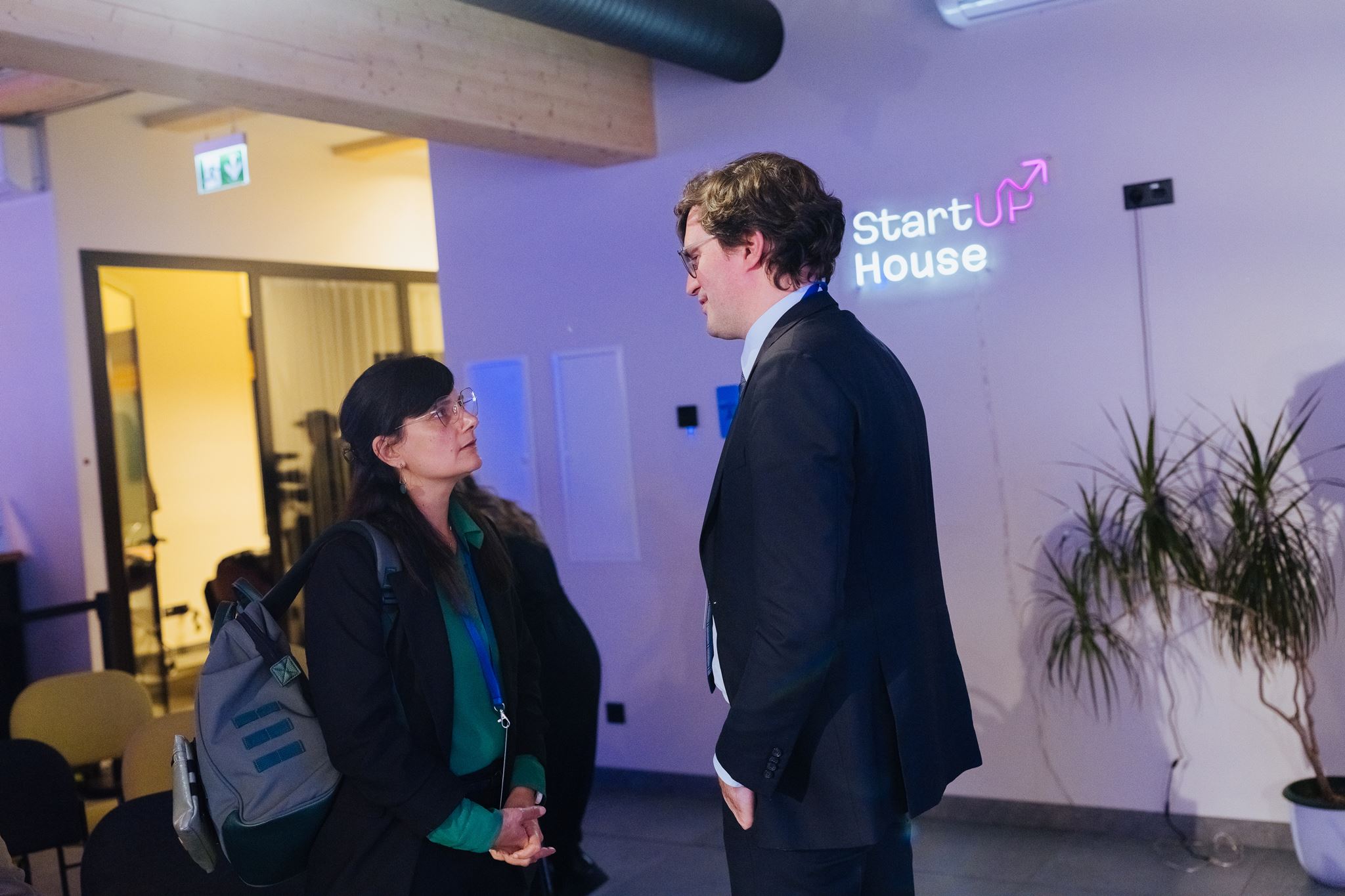


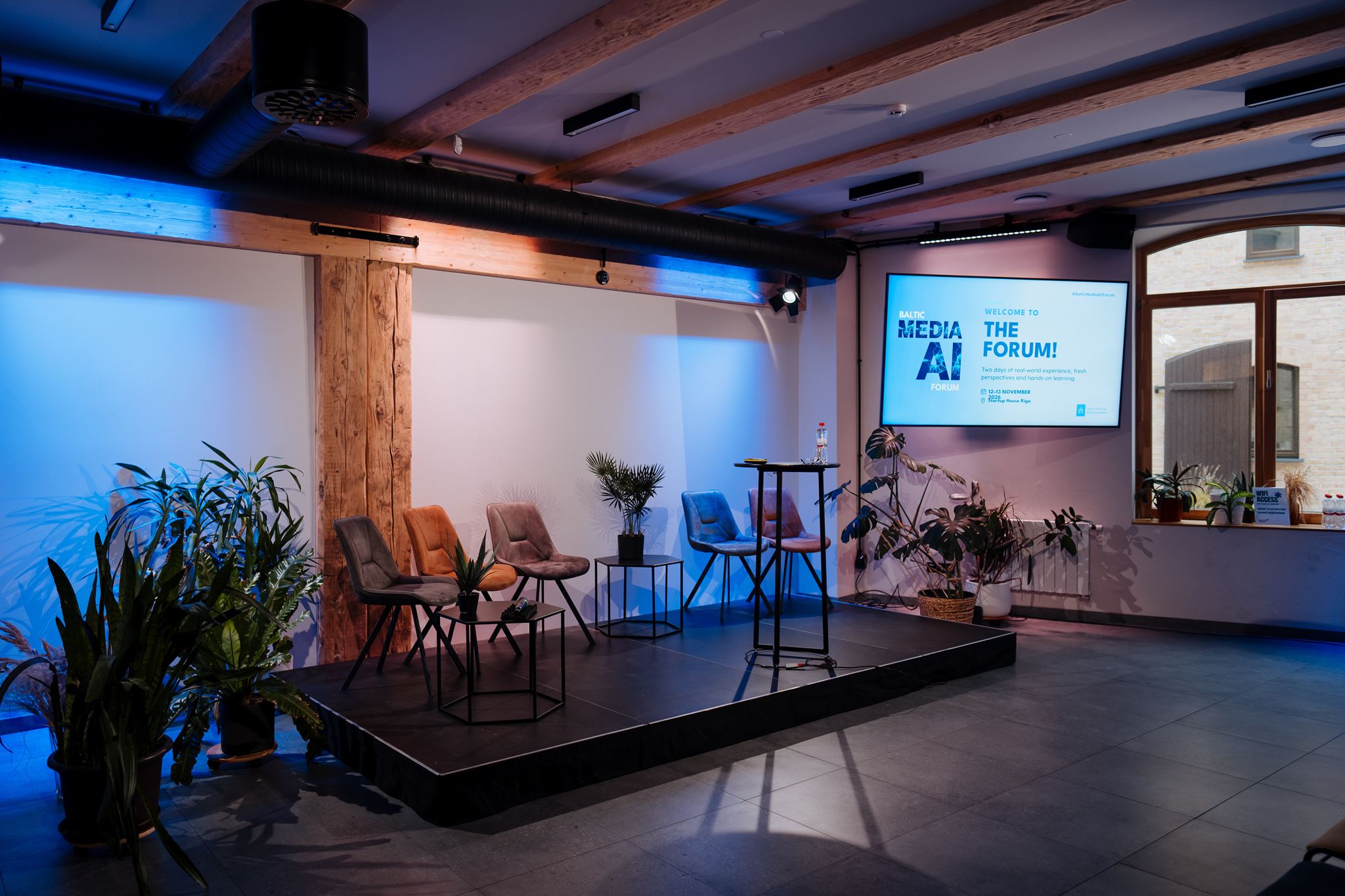
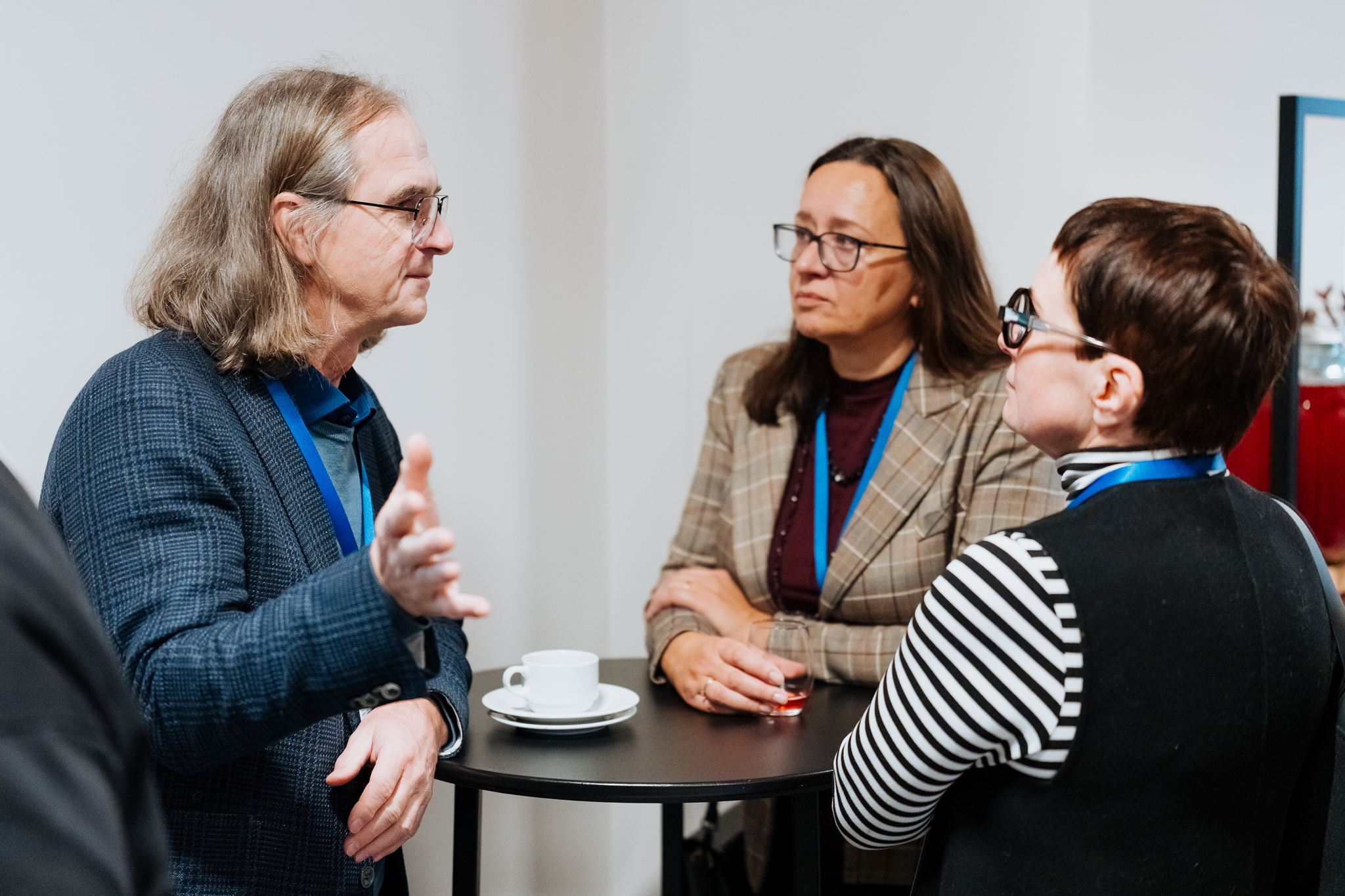
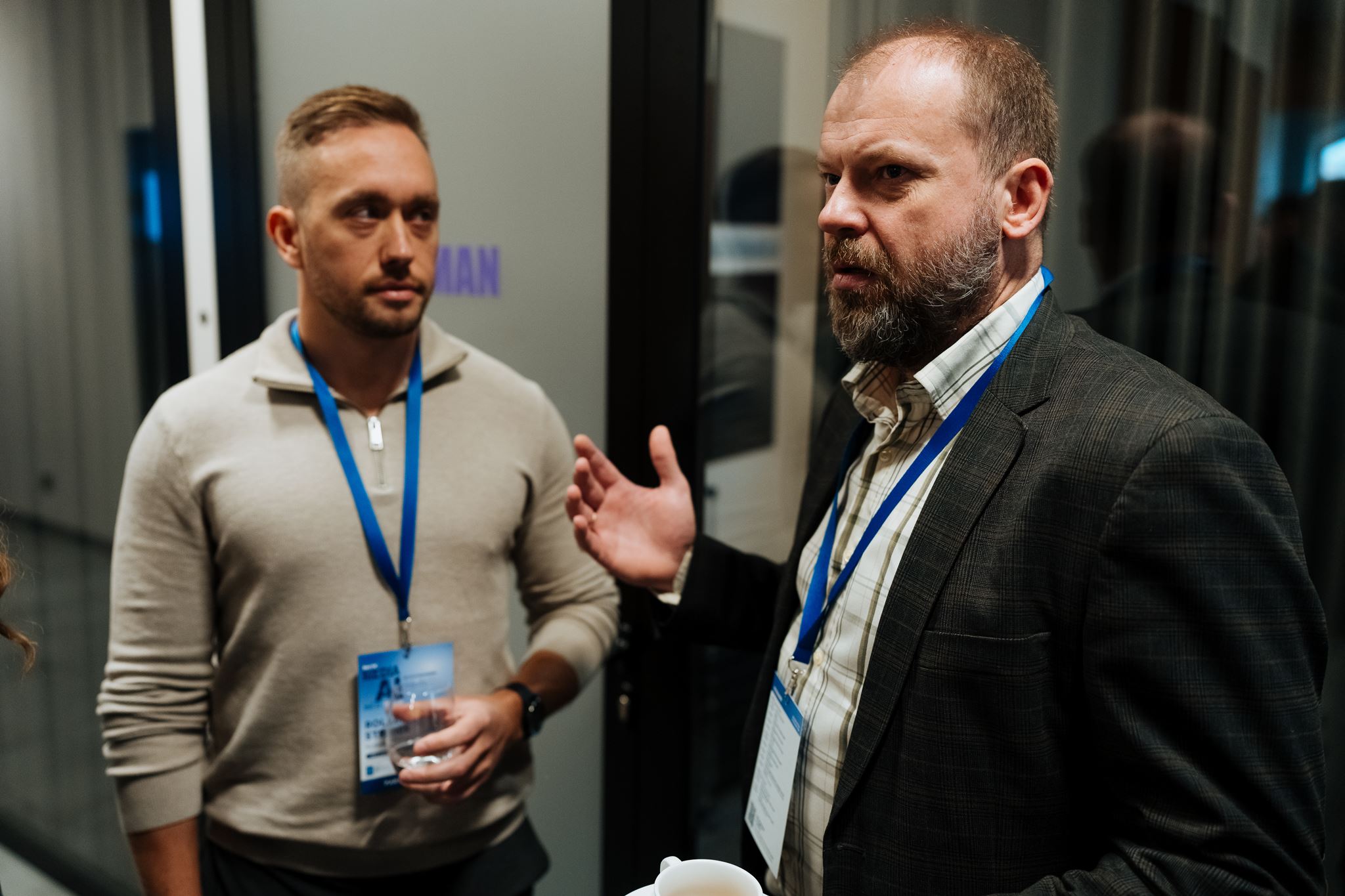
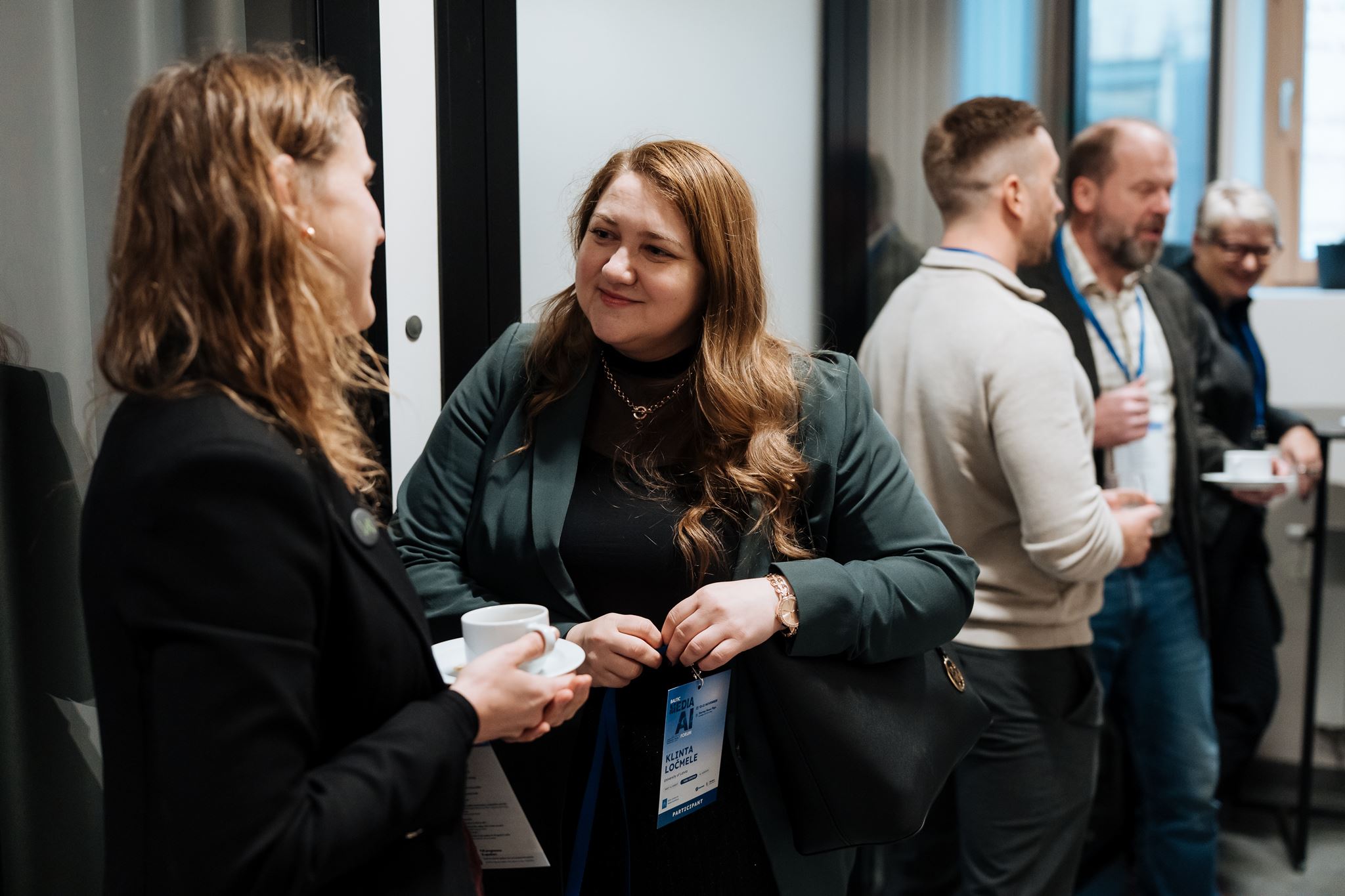

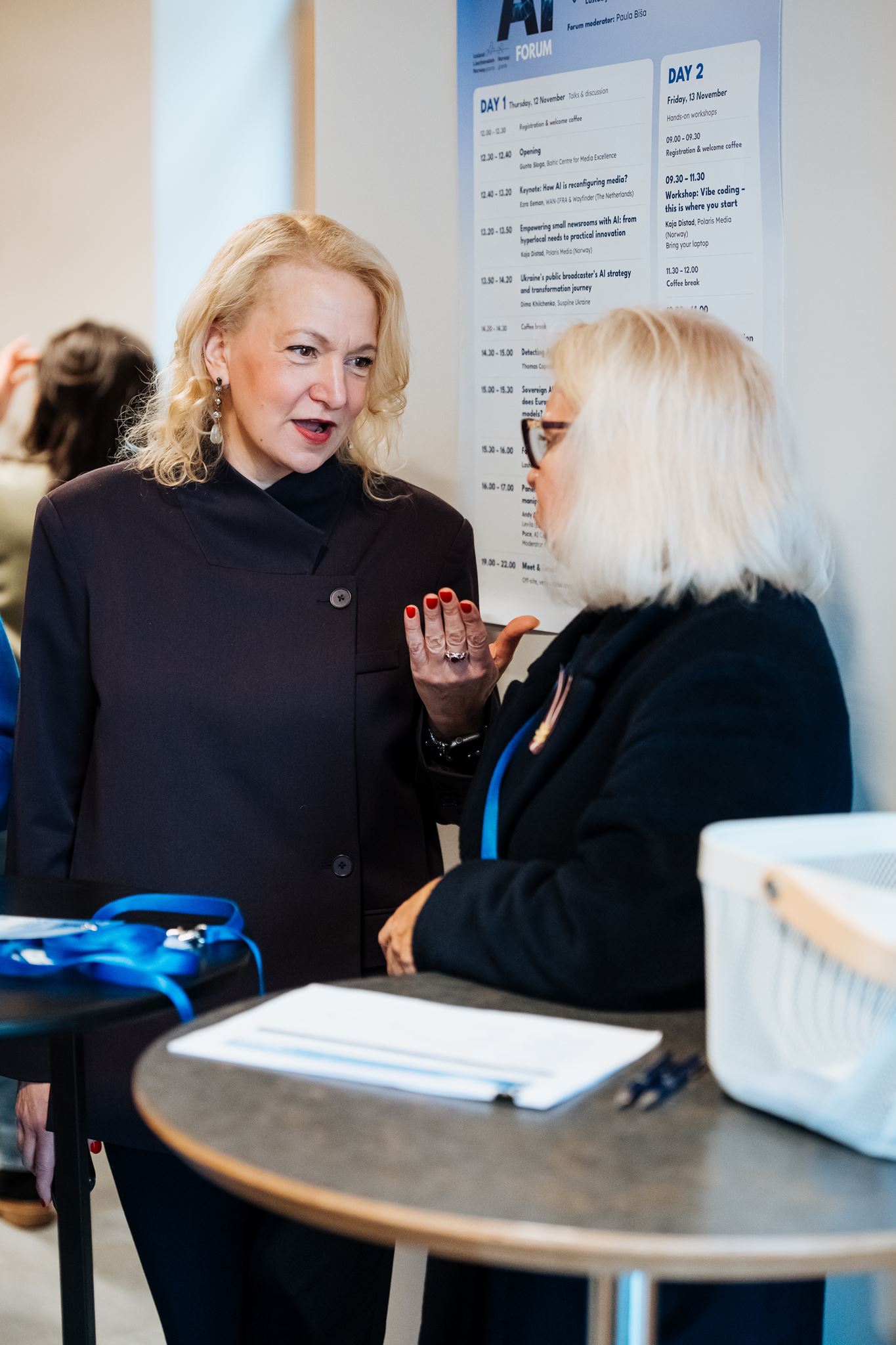
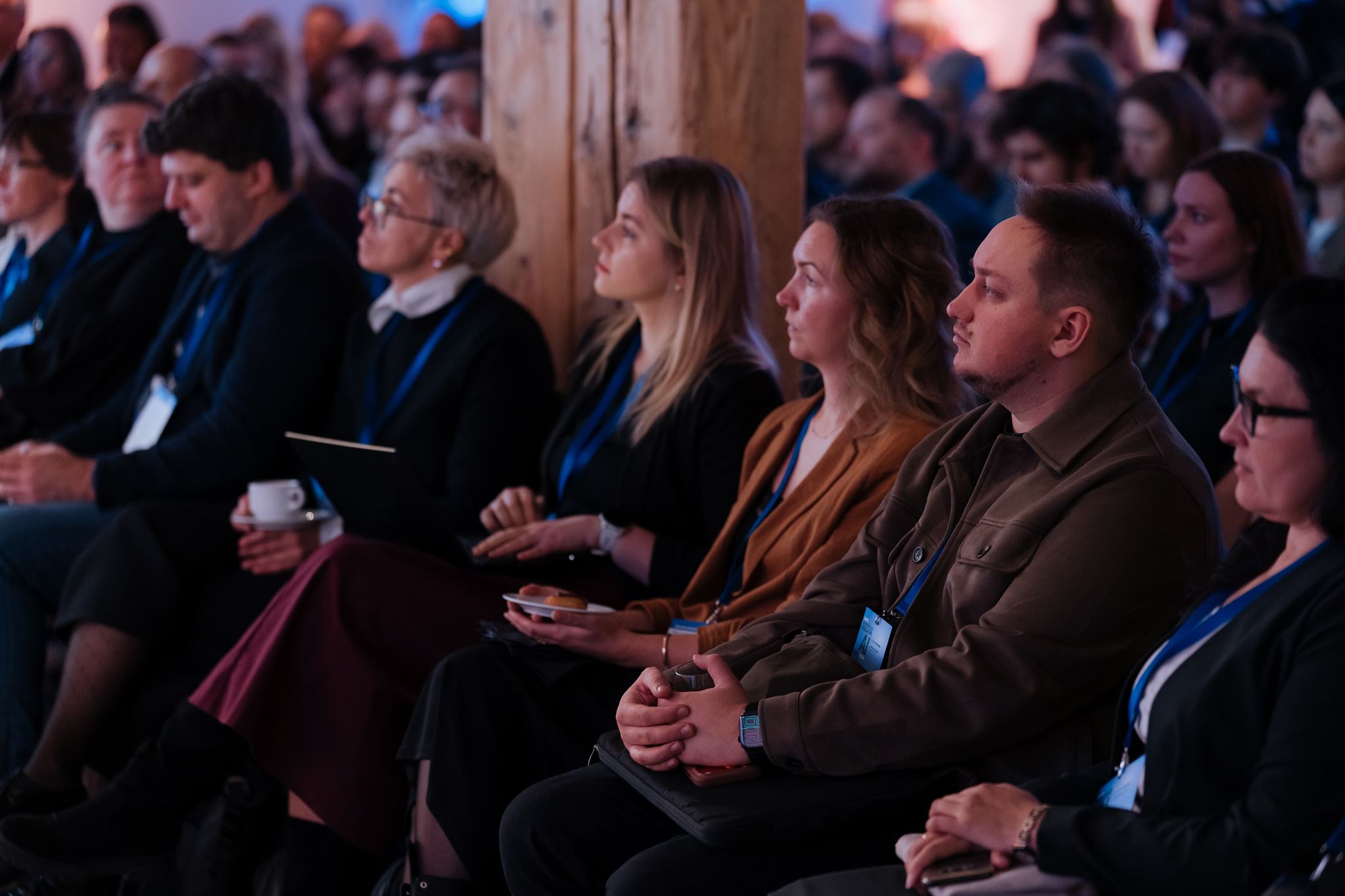


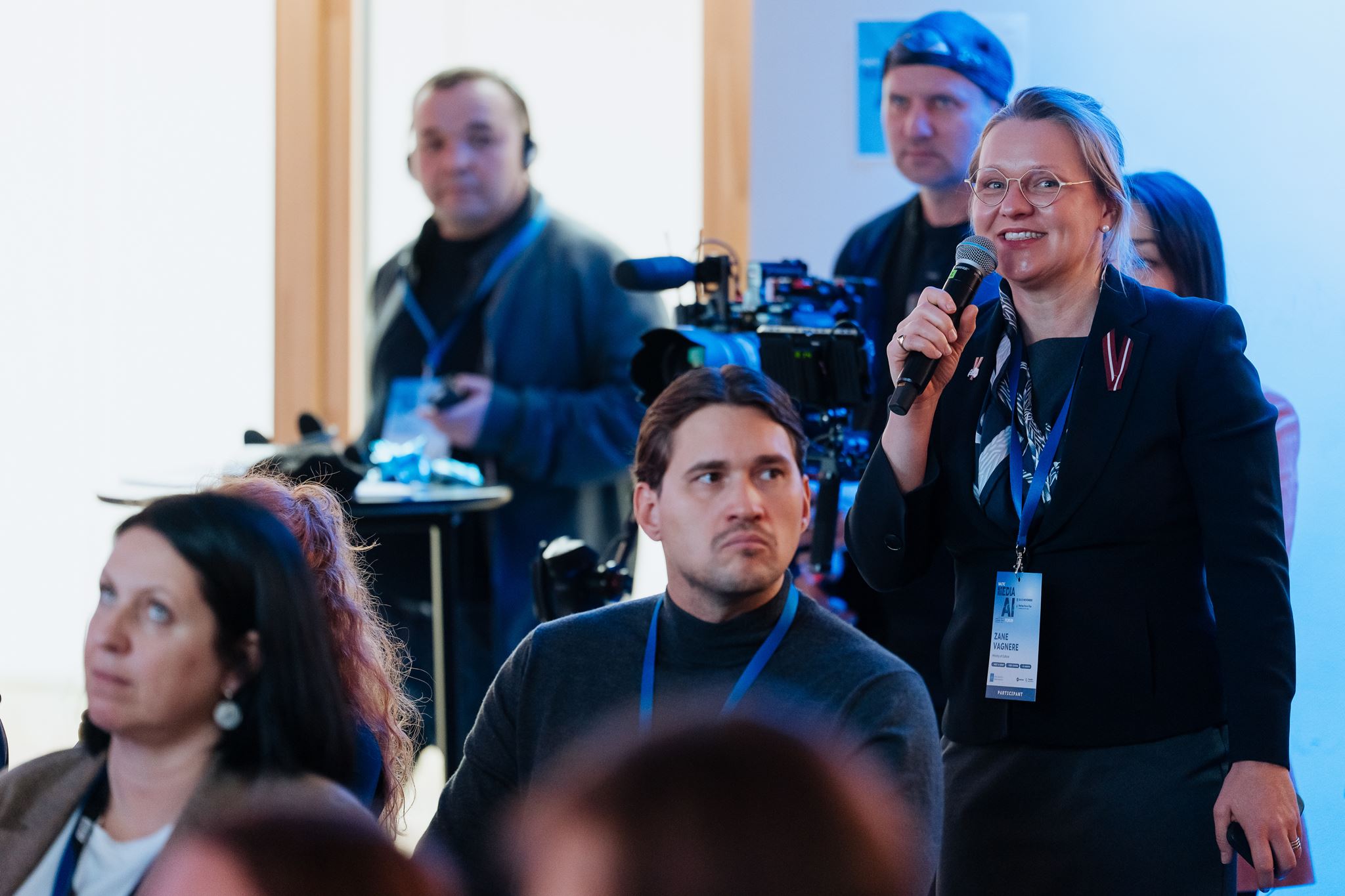
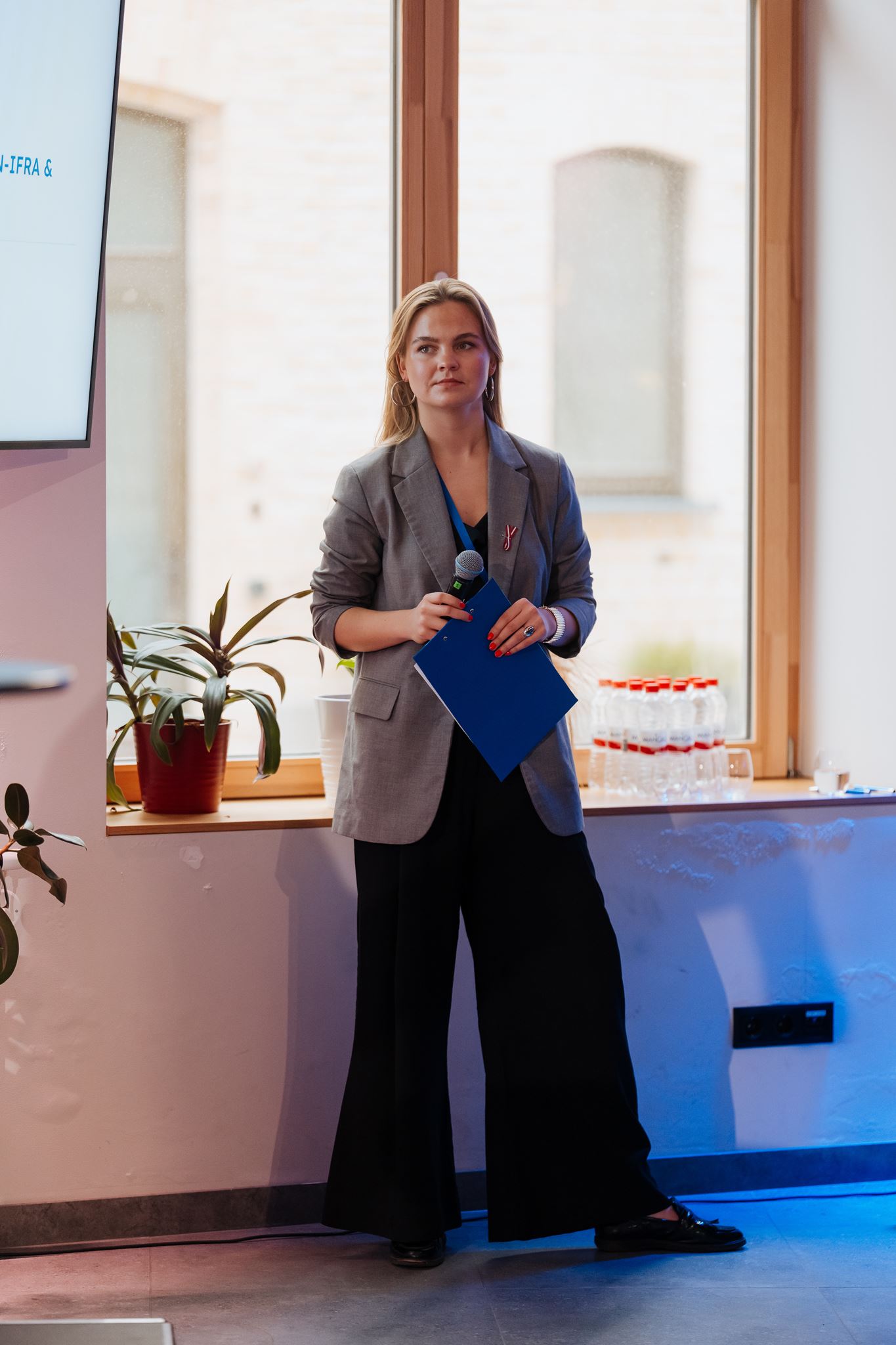
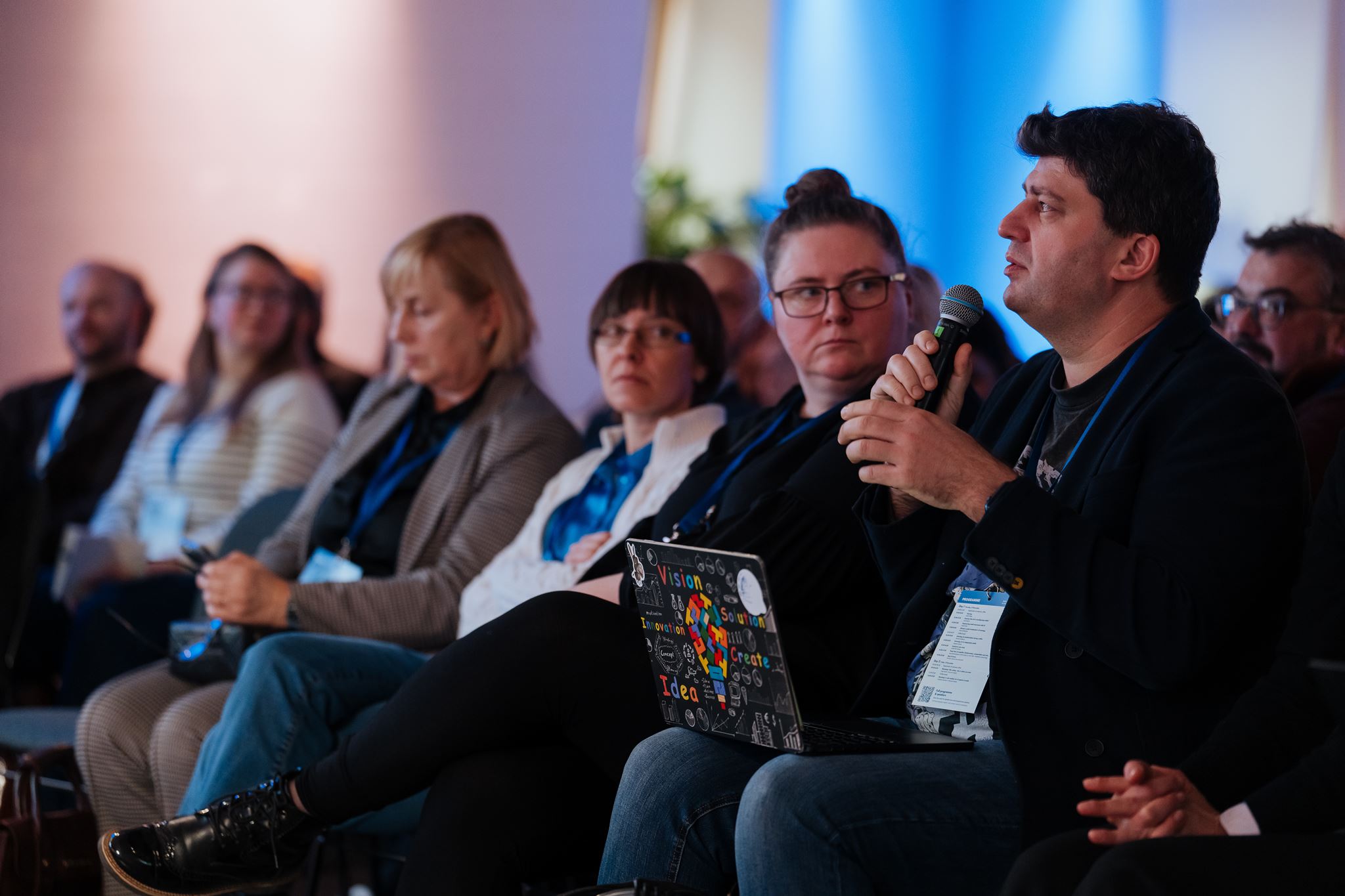




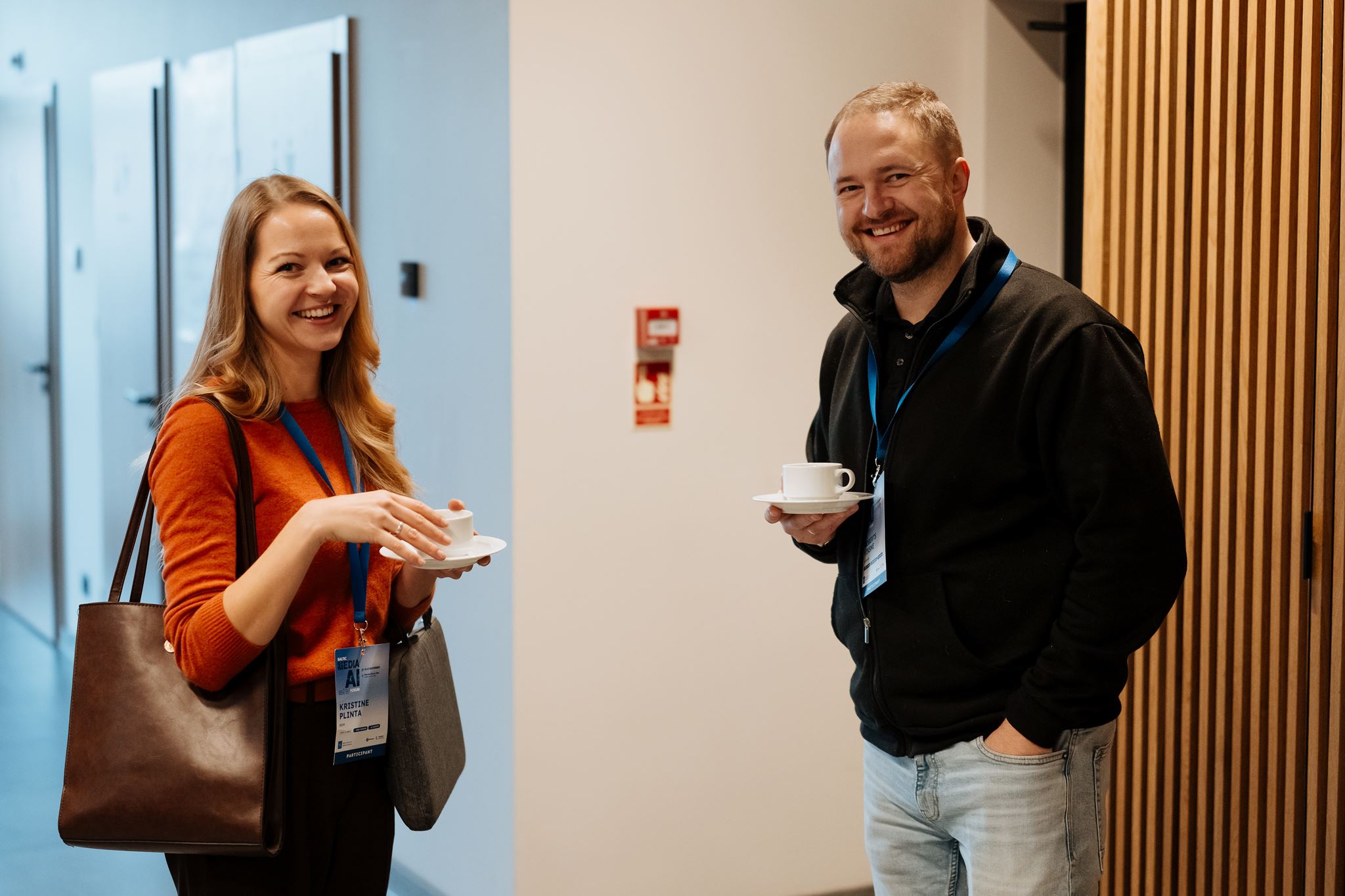
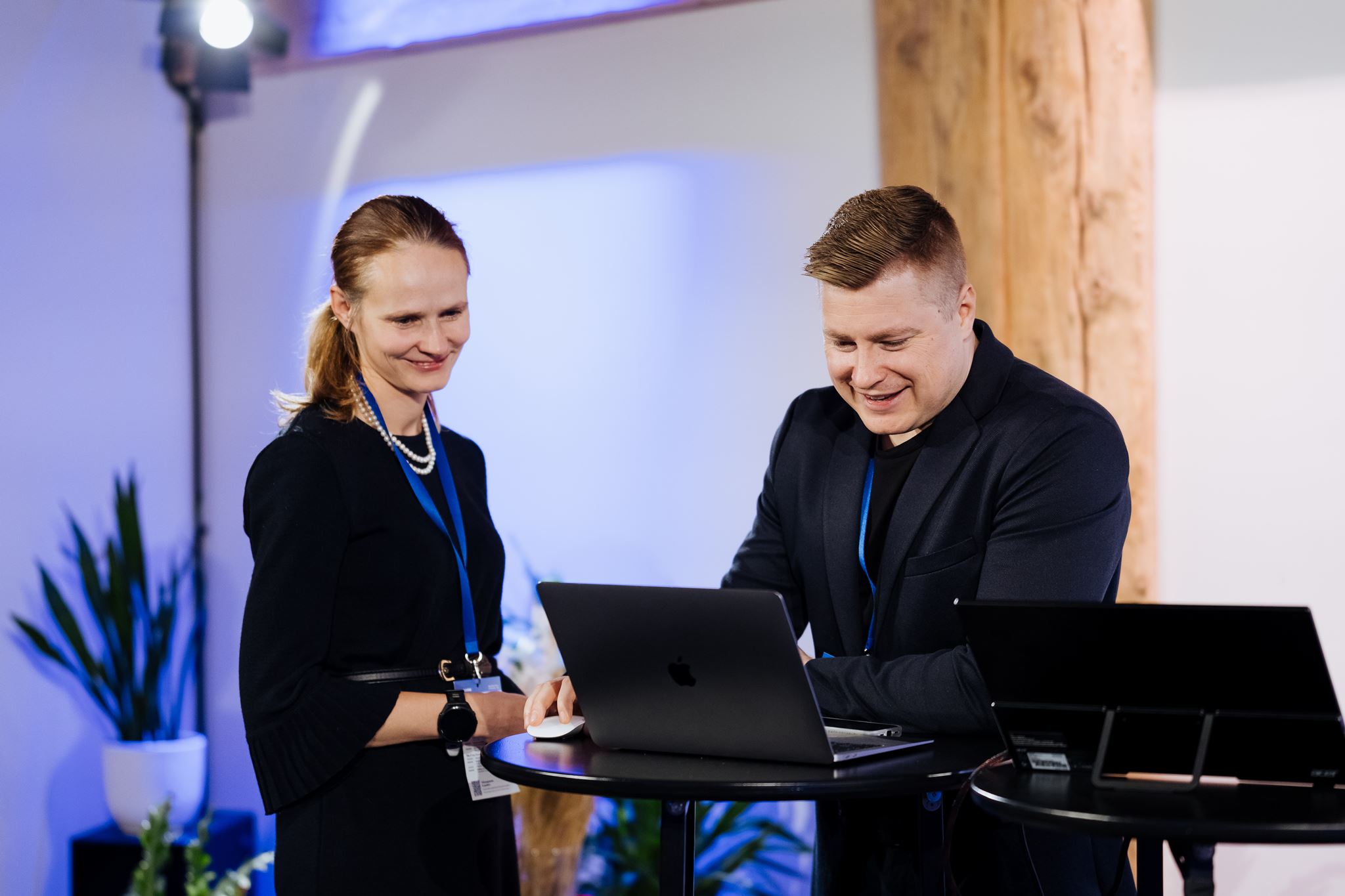

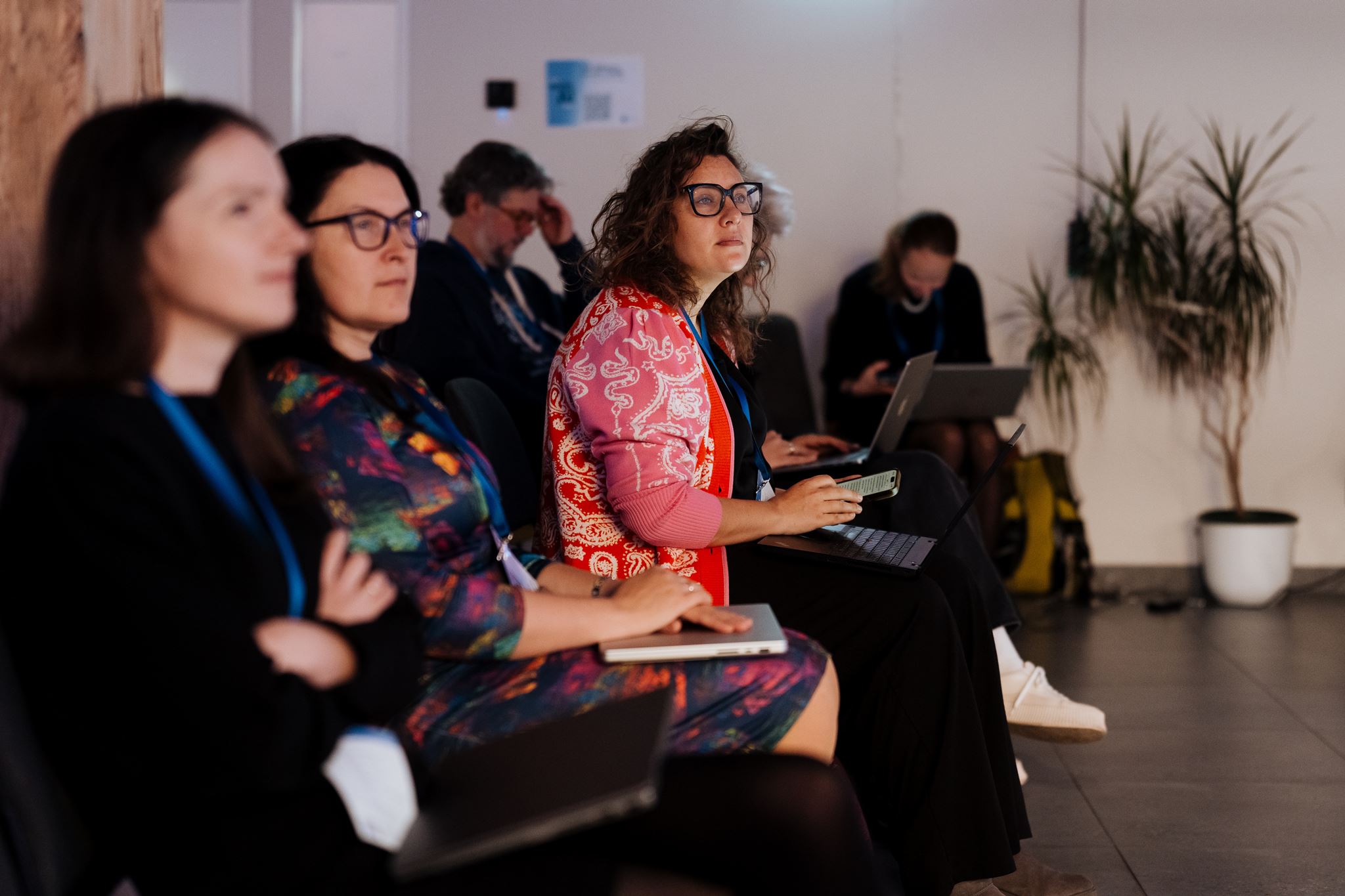
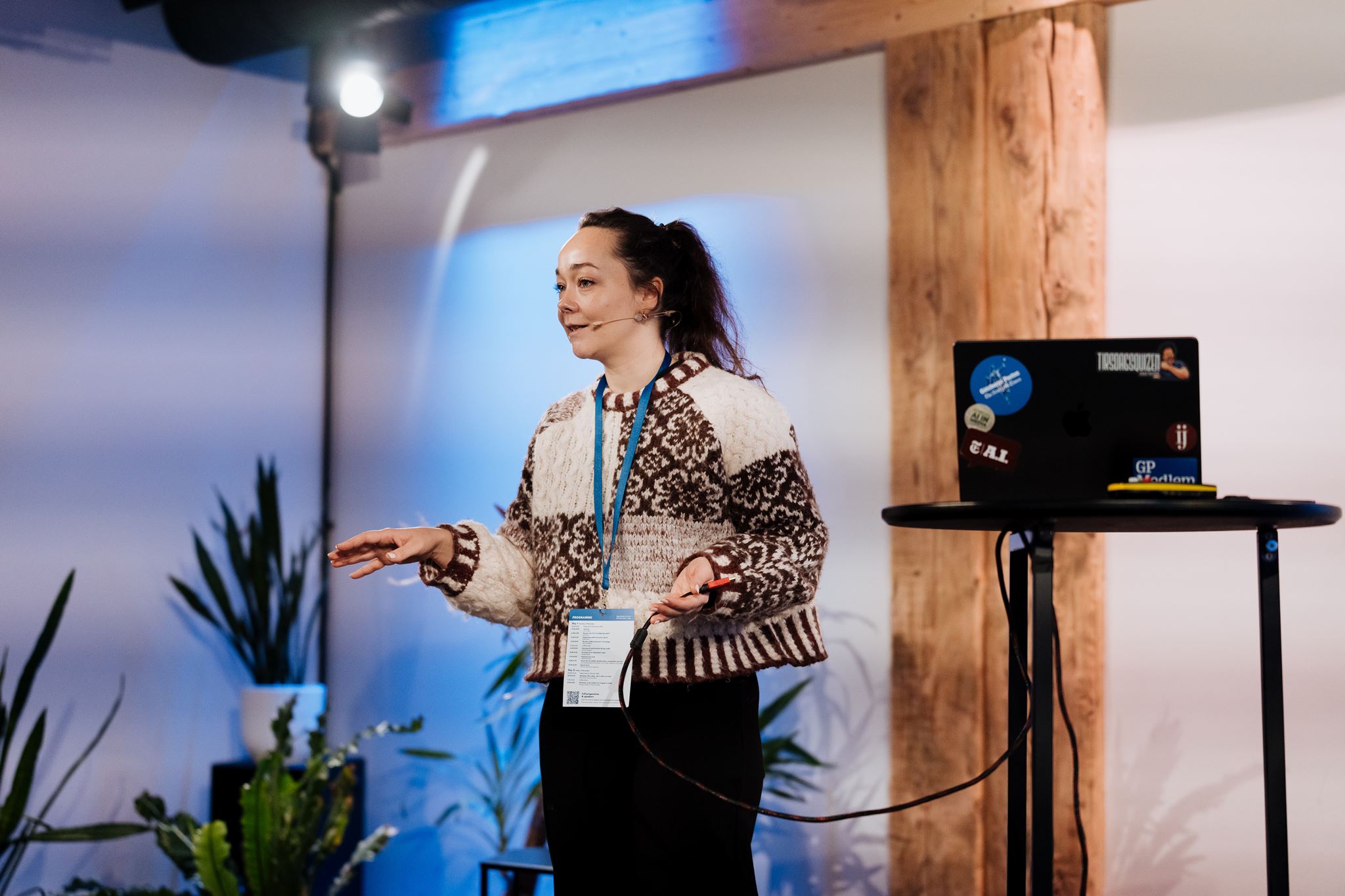

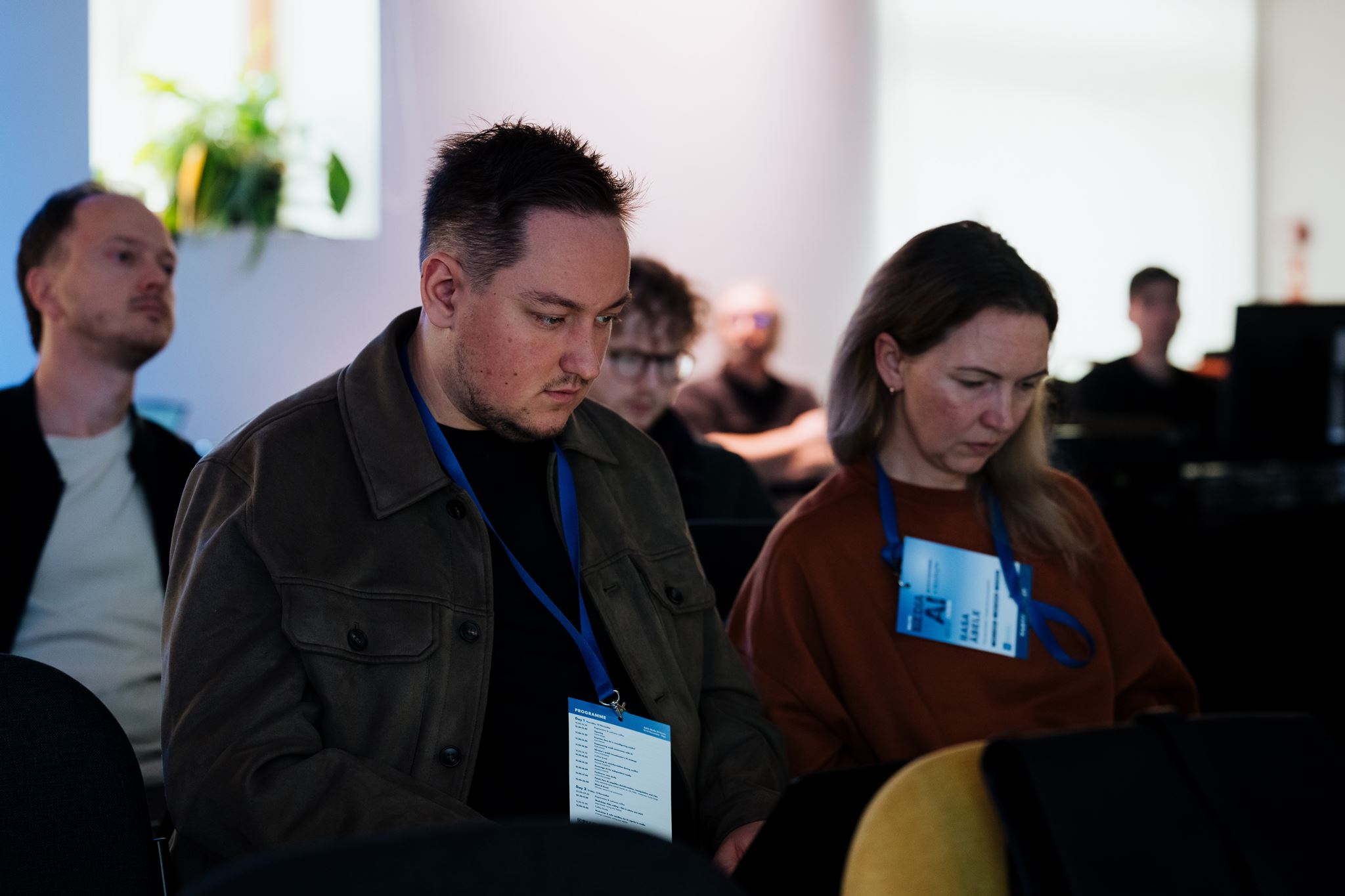


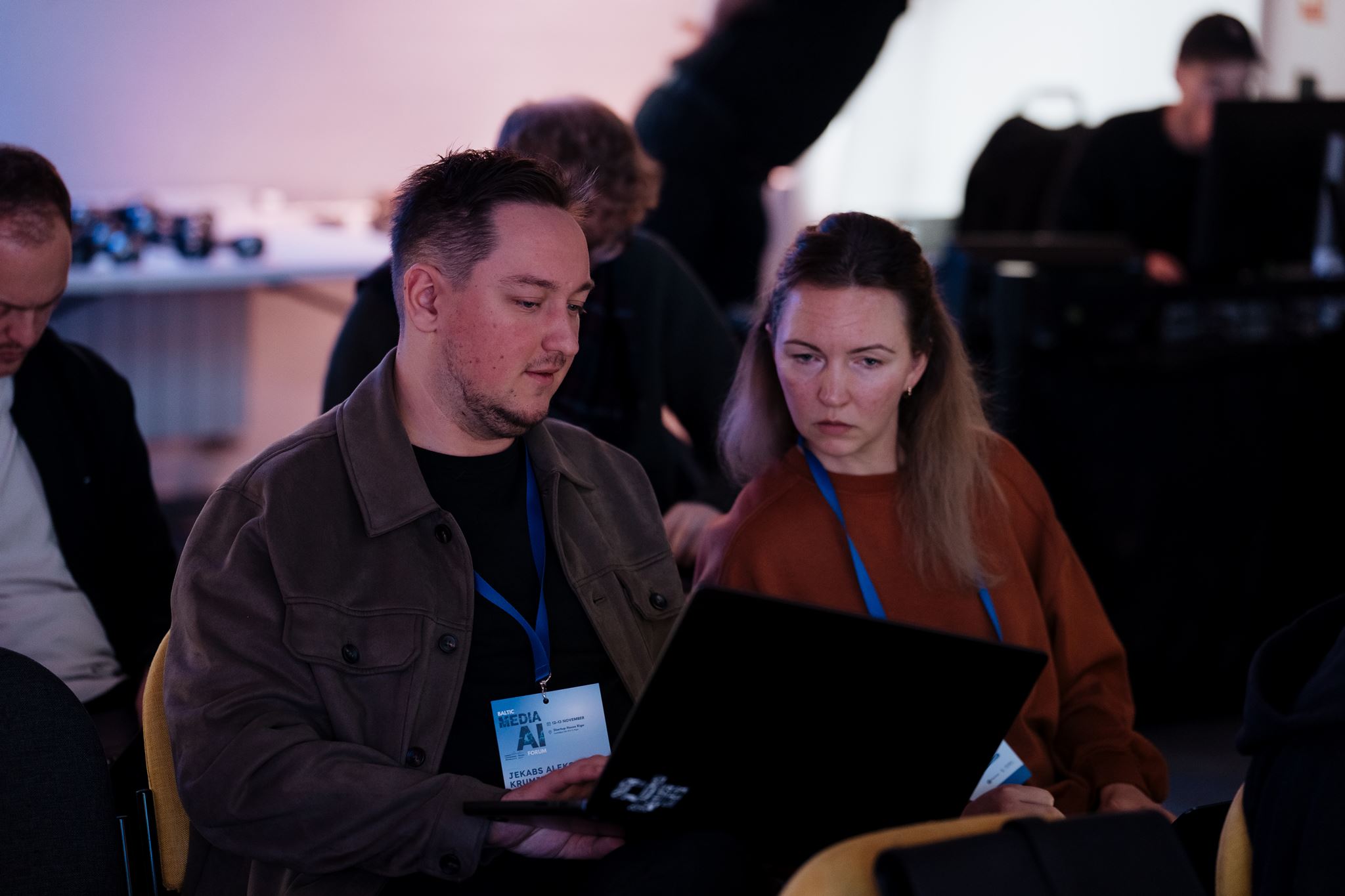
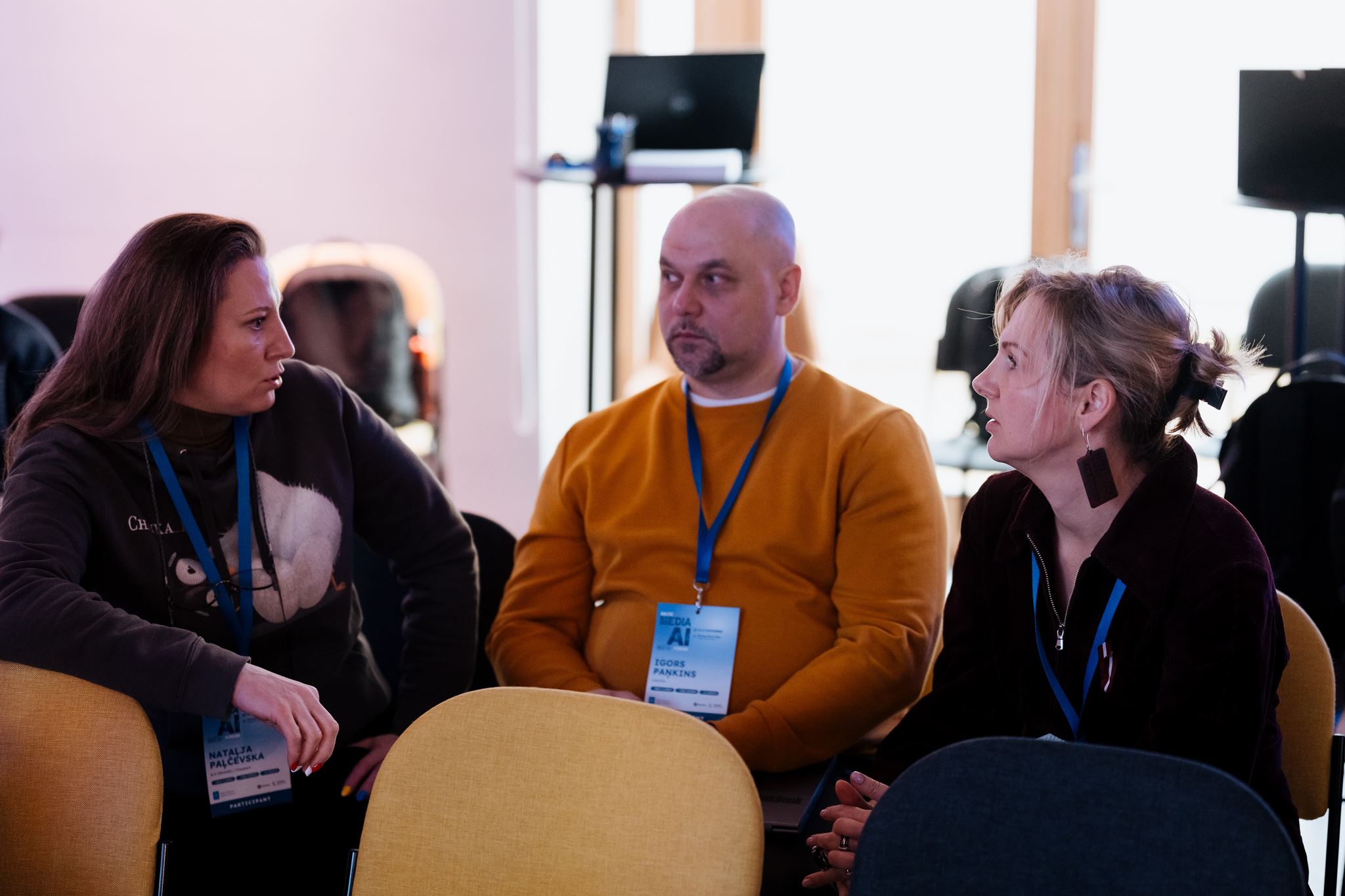

How can newsrooms make the most of artificial intelligence without compromising the values that make journalism trustworthy? This question brought media professionals, technology experts and innovators from across Europe to Riga on 12–13 November for the Baltic Media AI Forum 2026, organised by the Baltic Centre for Media Excellence (BCME).
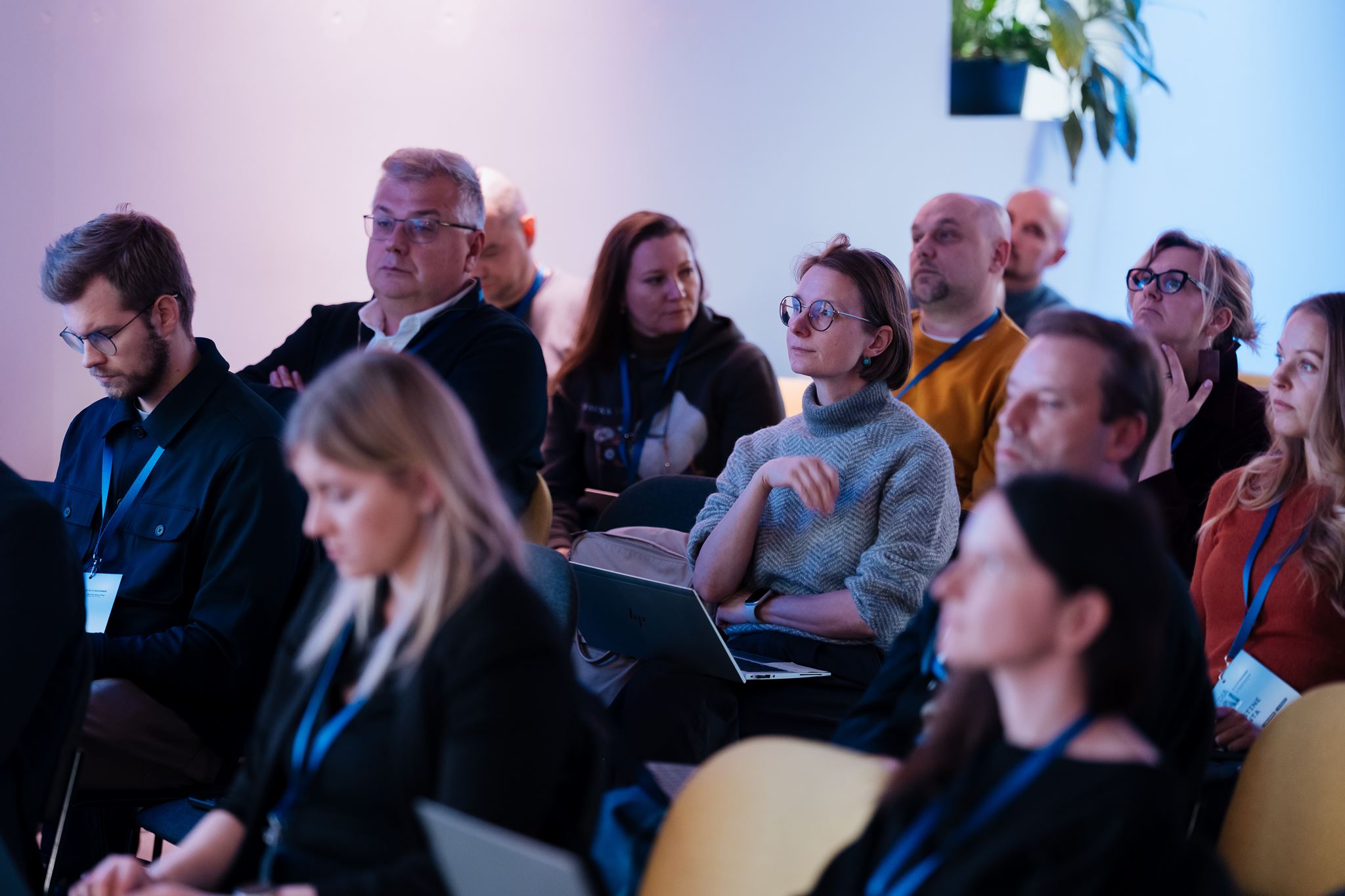
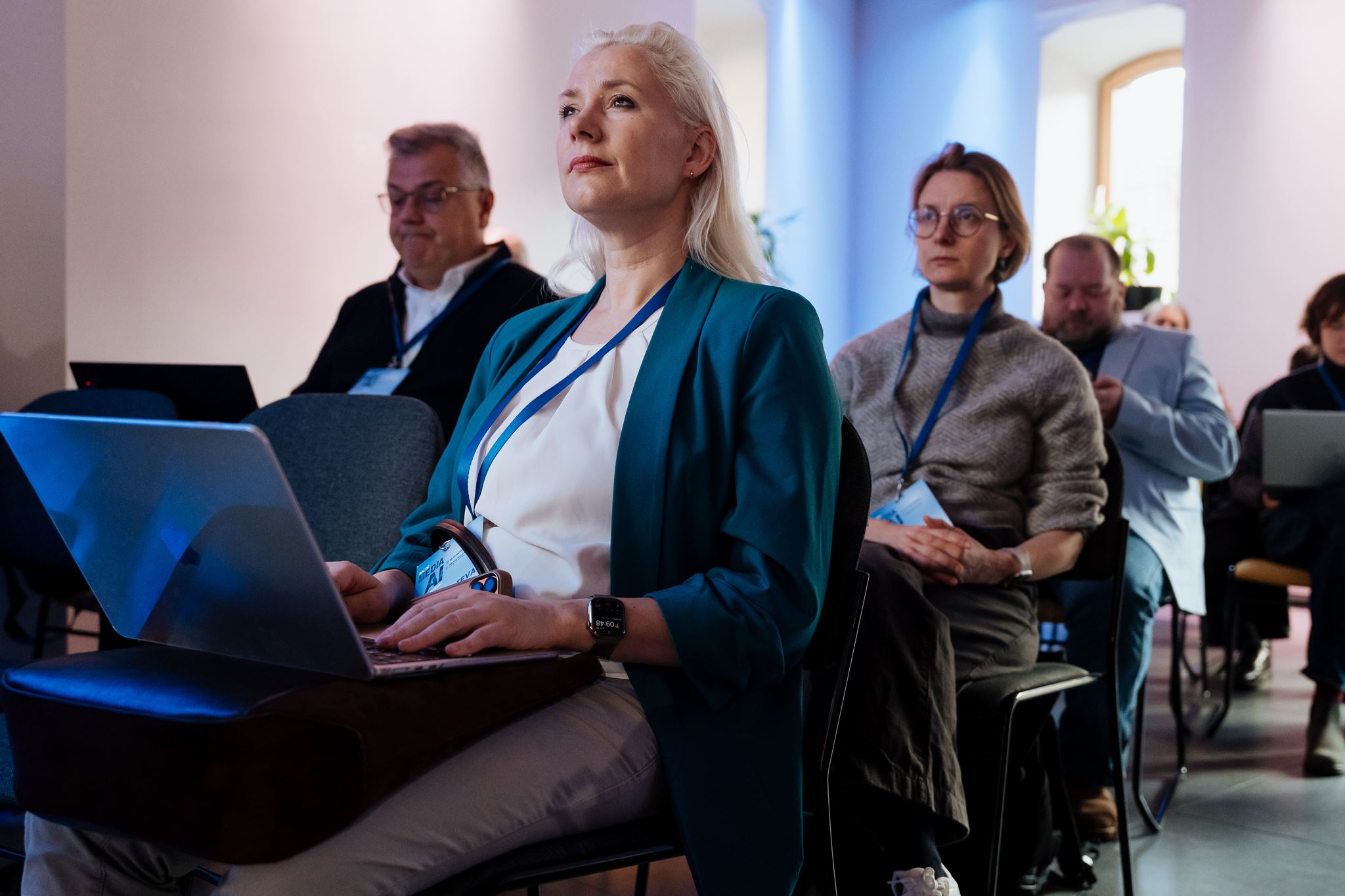
Over two days at Startup House Riga, participants explored how AI is reshaping journalism, from changing audience habits and newsroom workflows to new challenges in fact-checking, disinformation and editorial independence. The forum combined international experience, practical case studies, critical discussions and hands-on workshops.
One message emerged throughout the event: AI is no longer a distant possibility for the media industry. It is already changing how information is produced, discovered and consumed. The challenge now is to make informed decisions about where it can genuinely help journalism and where human judgement remains essential.
Beyond hype and fear: Making AI work for journalism
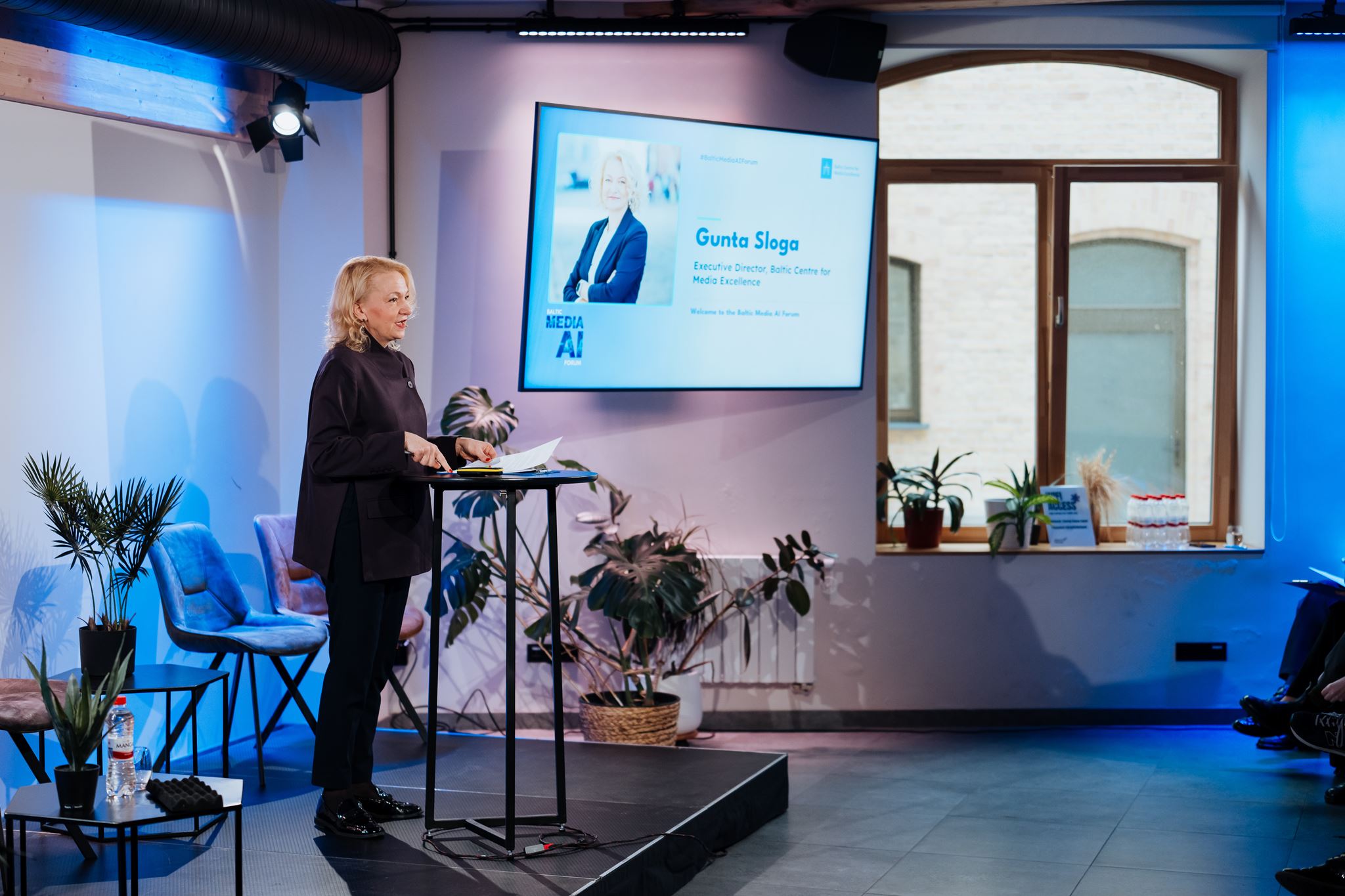
Opening the forum, Gunta Sloga, Executive Director of BCME, placed the conversation about AI within the wider challenges facing independent media: financial sustainability, changing audience behaviour and growing pressure on public trust.
For BCME, she emphasised, adopting AI is not simply about modernisation or efficiency. It is also about strengthening the resilience and long-term viability of independent journalism.
As Gunta noted, the initial period of enthusiasm and scepticism surrounding AI is giving way to a more mature phase: one focused on practical, responsible use rather than hype or panic.
This perspective set the tone for the forum.
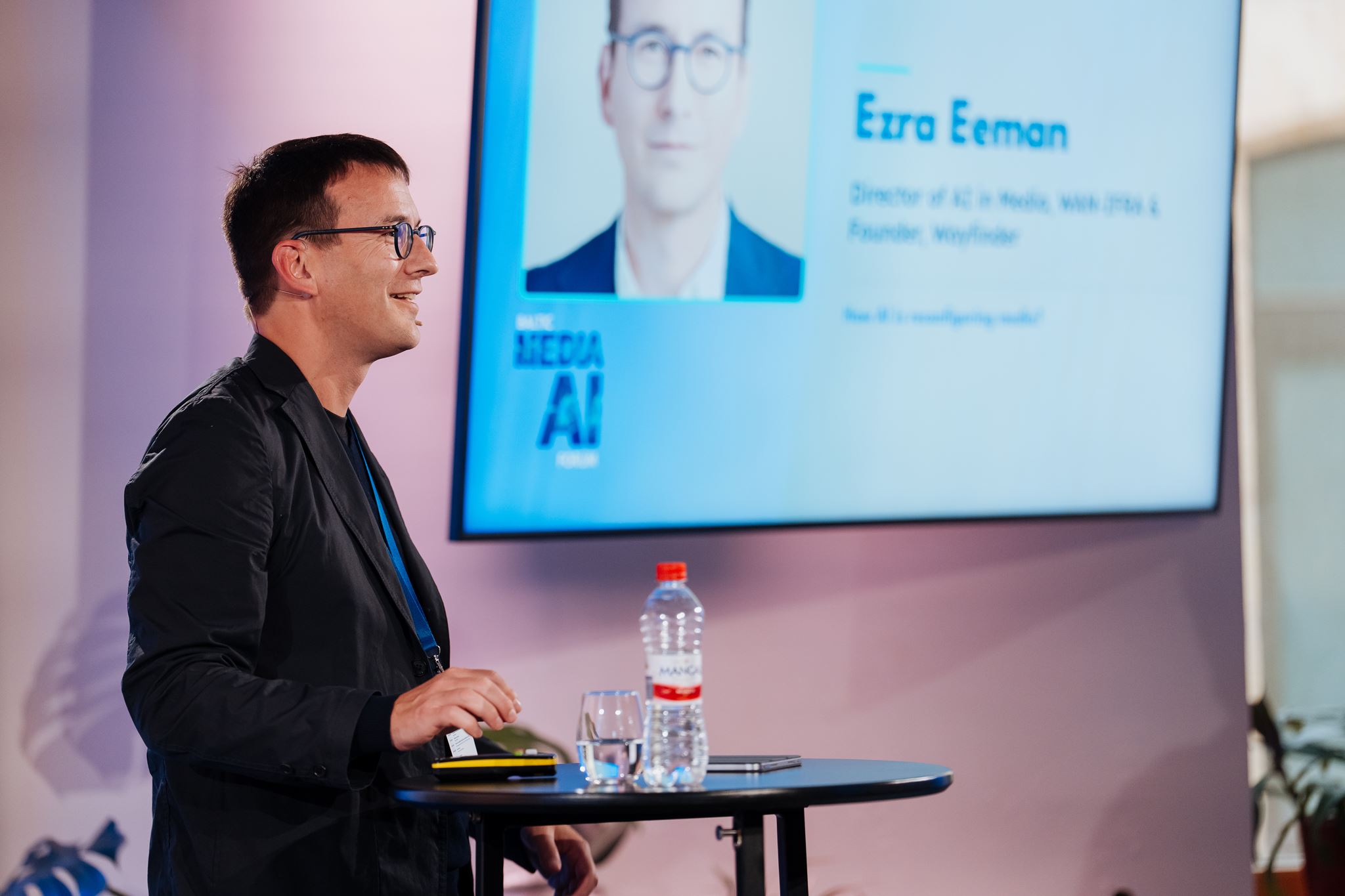
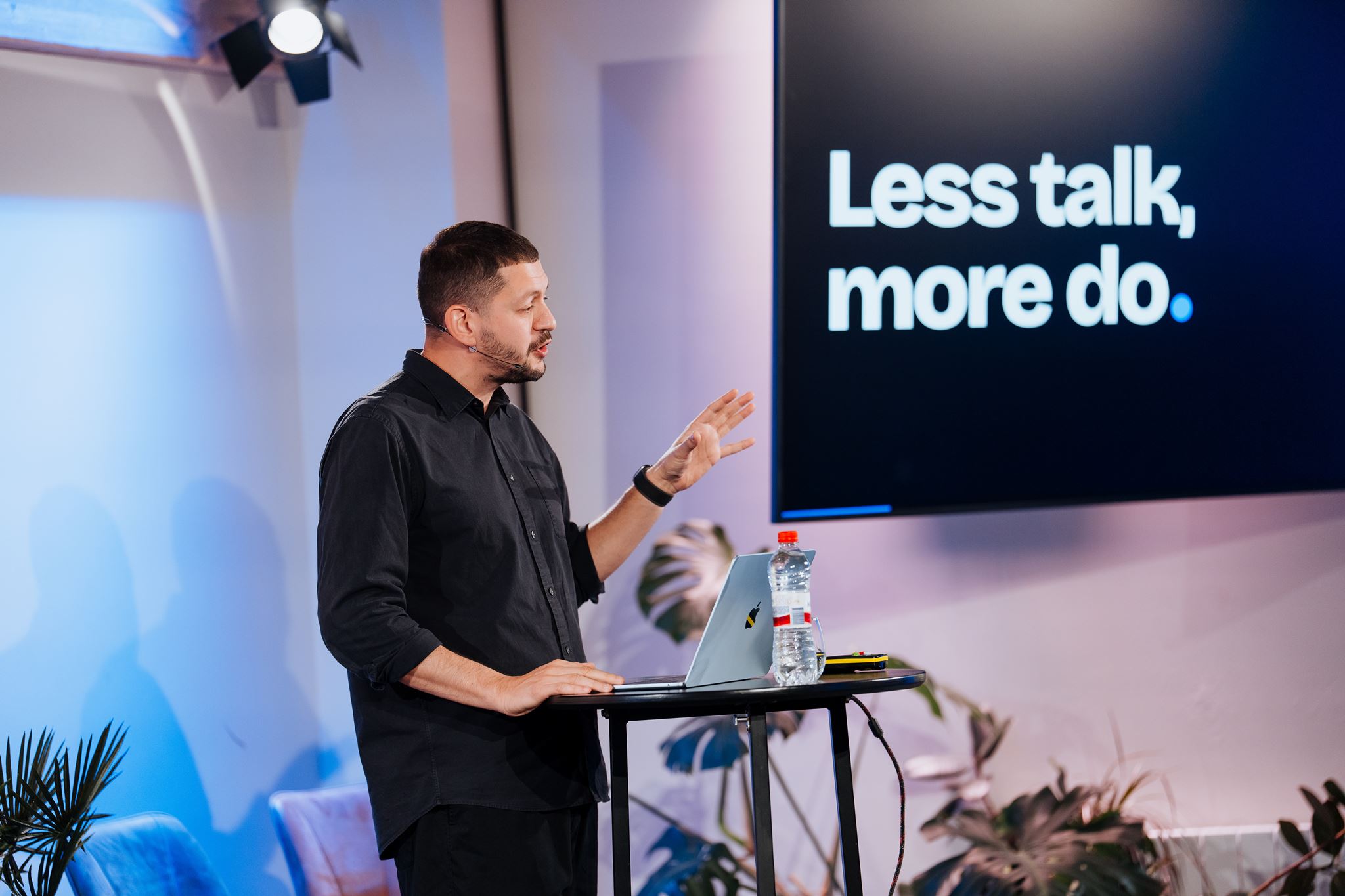
In his opening keynote, Ezra Eeman, Director of AI in Media at WAN-IFRA and founder of Wayfinder, explored how AI is reconfiguring the media landscape.
AI-powered assistants are becoming part of people’s everyday information habits, creating new challenges for publishers whose traditional relationships with audiences have depended on search engines, websites and social media platforms.
Ezra encouraged media organisations to think beyond individual AI tools and consider the broader transformation of their operations, products and business models. As AI agents become more capable of carrying out complex tasks, newsrooms will need to reconsider not only how work is done, but also how teams, responsibilities and services are organised.
The key question is no longer simply which AI tools journalists should use. It is how journalism can remain relevant, valuable and trusted in an increasingly AI-driven information environment.
Innovation does not have to start with a big budget
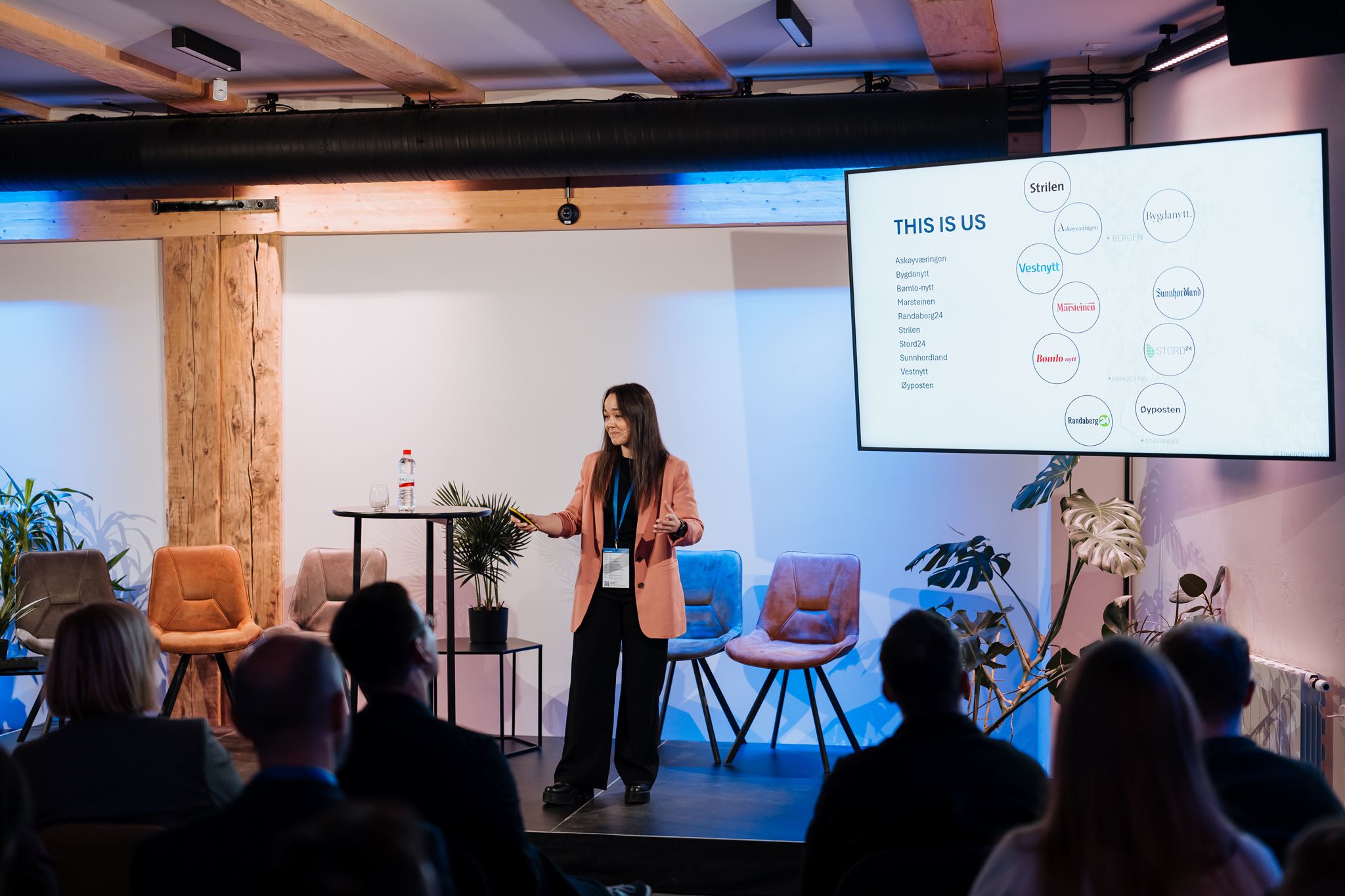
One of the forum’s most encouraging examples came from Norway.
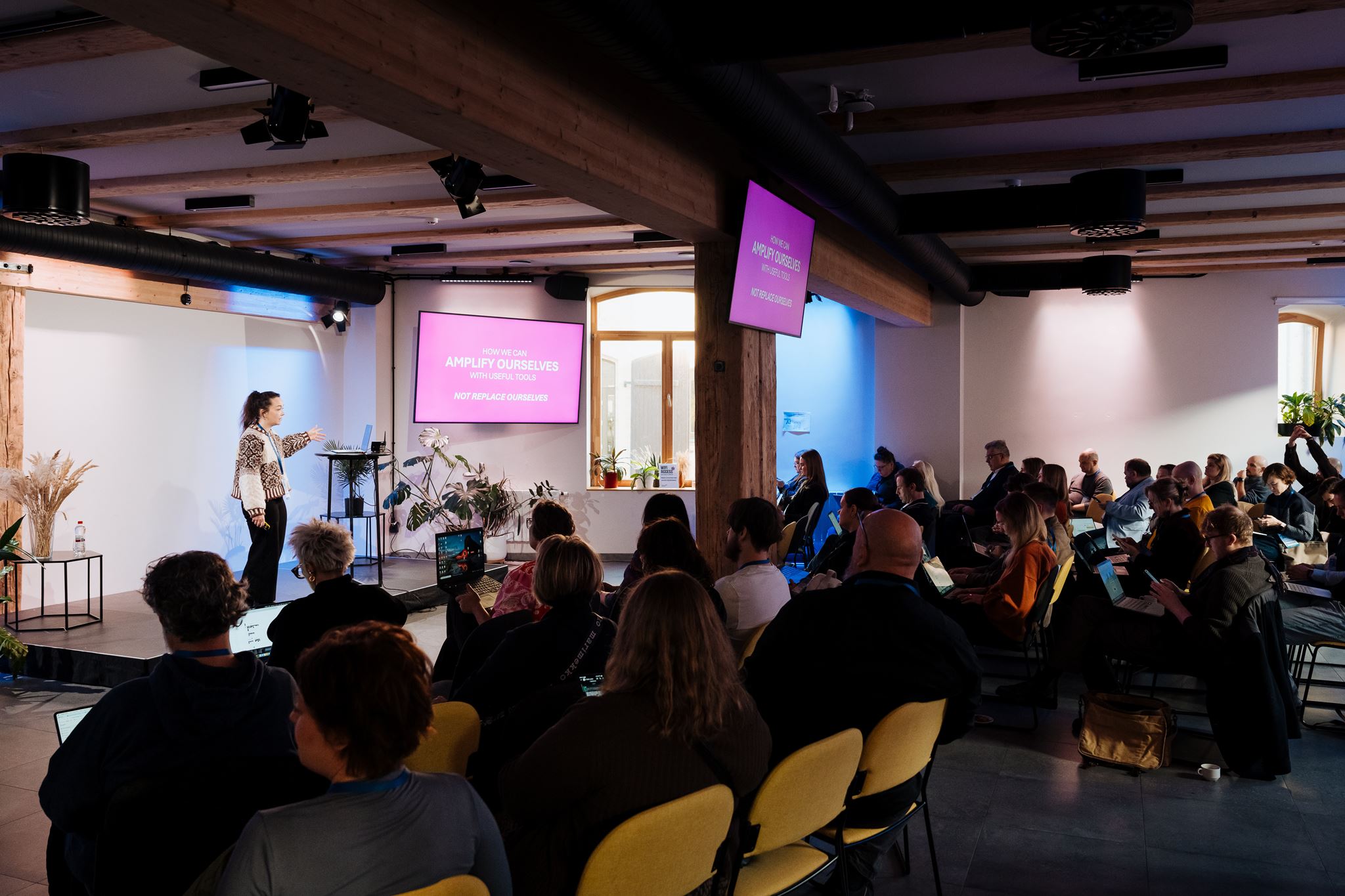
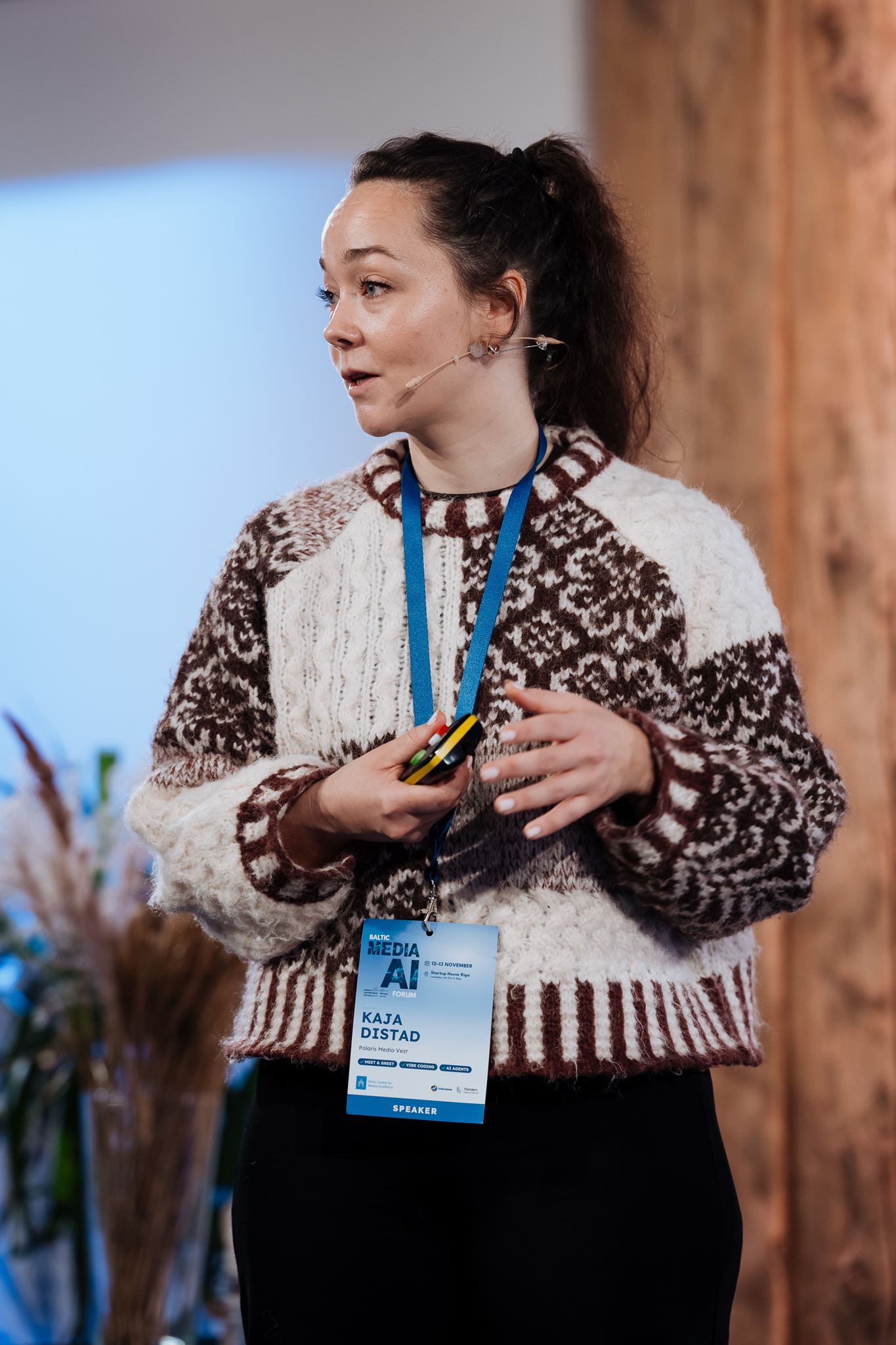
Kaja Distad, Head of Editorial Innovation at Polaris Media Vest and AI & Innovation Driver at Polaris Media, demonstrated how smaller newsrooms can become active participants in AI innovation, even without large technical teams or extensive resources.
Drawing on practical experience from regional journalism, she showed how AI can help journalists develop useful digital products, improve workflows and respond to specific local audience needs.
A central part of this approach is involving journalists themselves. Rather than introducing technology from the top down, Polaris Media has focused on building AI knowledge across its newsrooms and encouraging staff to experiment with solutions to everyday problems.
Kaja’s examples demonstrated that innovation does not always require ambitious, large-scale projects. Sometimes it begins with a journalist identifying a problem and finding a faster, more accessible way to solve it.
The discussion also highlighted the value of collaboration: smaller newsrooms can achieve considerably more when they share knowledge, experience and technological resources.
Lessons from Ukraine: Digital transformation under pressure
Dima Khilchenko, Managing Board Member and CTO/CPO of Ukraine’s public broadcaster Suspilne Ukraine, brought another important perspective to the forum.
His presentation examined Suspilne’s AI strategy and broader digital transformation, offering insight into how a public service media organisation can develop new technological capabilities while operating under the extraordinary pressures of war.
Ukraine’s experience provided a powerful reminder that innovation is not only about competitiveness. For public interest media, it is also connected to adaptability, organisational resilience and the ability to continue serving audiences in difficult circumstances.
The presentation reinforced a broader theme of the forum: technology is most valuable when it supports a clearly defined journalistic mission.
When seeing is no longer believing
The afternoon programme turned to one of the most pressing challenges facing journalism: the growing sophistication of AI-generated misinformation.
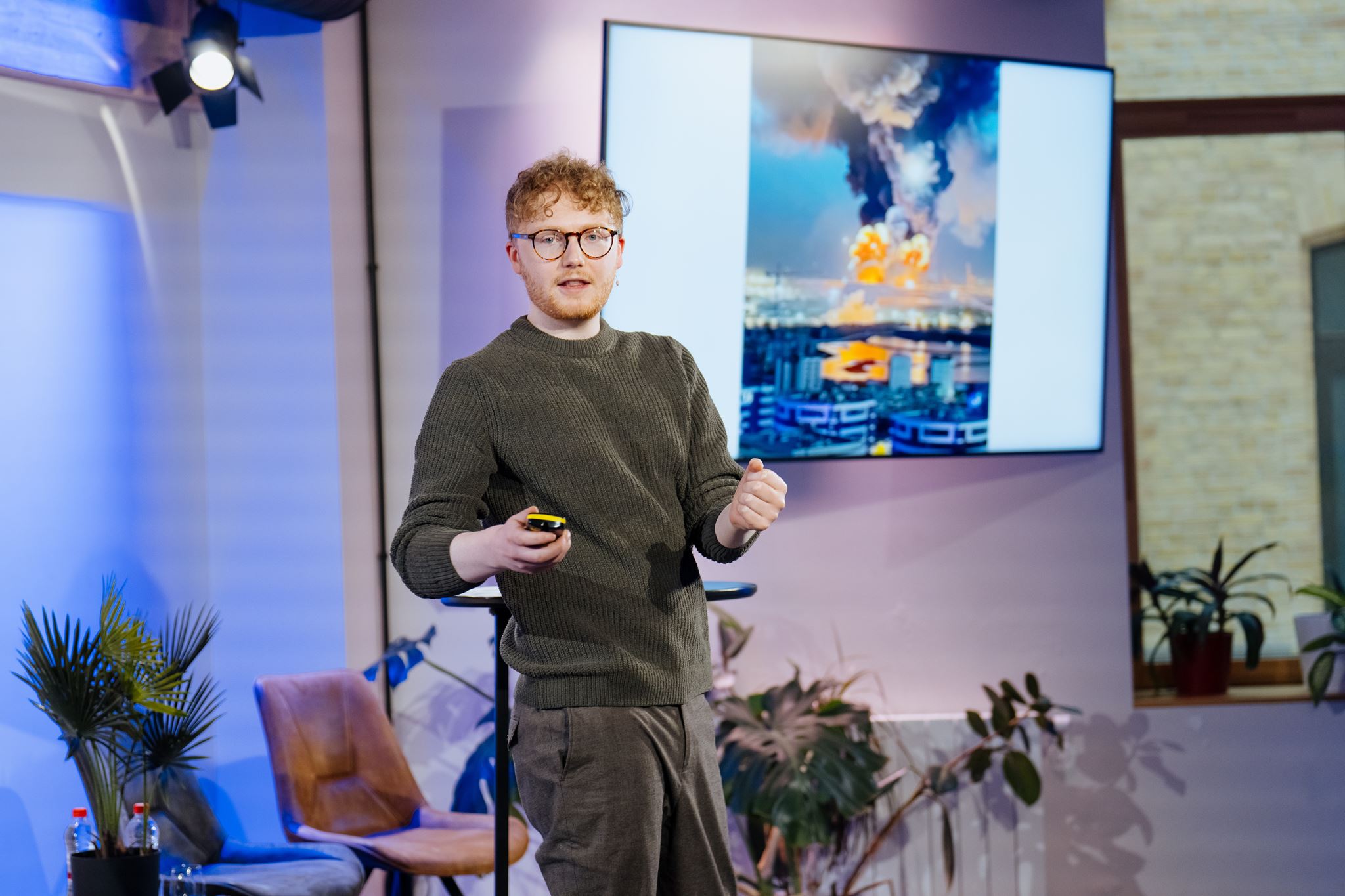
Thomas Copeland, journalist with BBC Verify, offered a practical look at how journalists investigate potentially manipulated images and videos, particularly in the context of conflicts.
Using real verification examples, he explained why identifying AI-generated content requires more than spotting unusual visual details or relying on automated detection tools.
BBC Verify’s approach combines several techniques, including digital watermark checks, reverse image searches, tracing content to its earliest available source and consulting relevant experts.
Copeland also highlighted an important complication: not every misleading image or video is AI-generated. Authentic material can be recycled, taken out of context or presented as evidence of an event that never happened.
For journalists, the lesson is clear. Verification remains a careful process of gathering evidence, questioning sources and understanding context. AI detection tools can support that work, but they cannot replace it.
Why Europe needs its own AI capabilities
The forum also examined a strategic question: who controls the technologies that European media increasingly depend on?
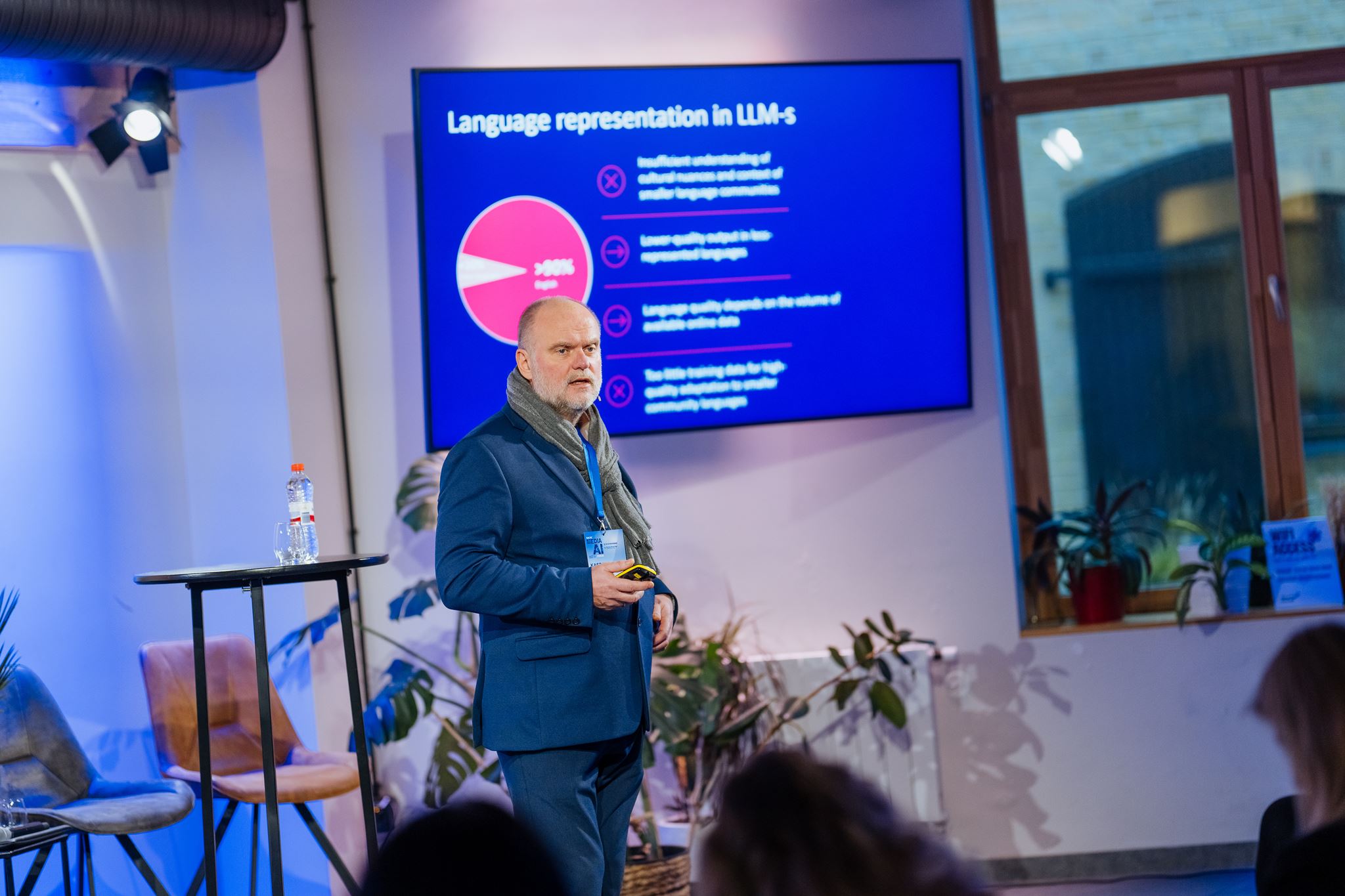
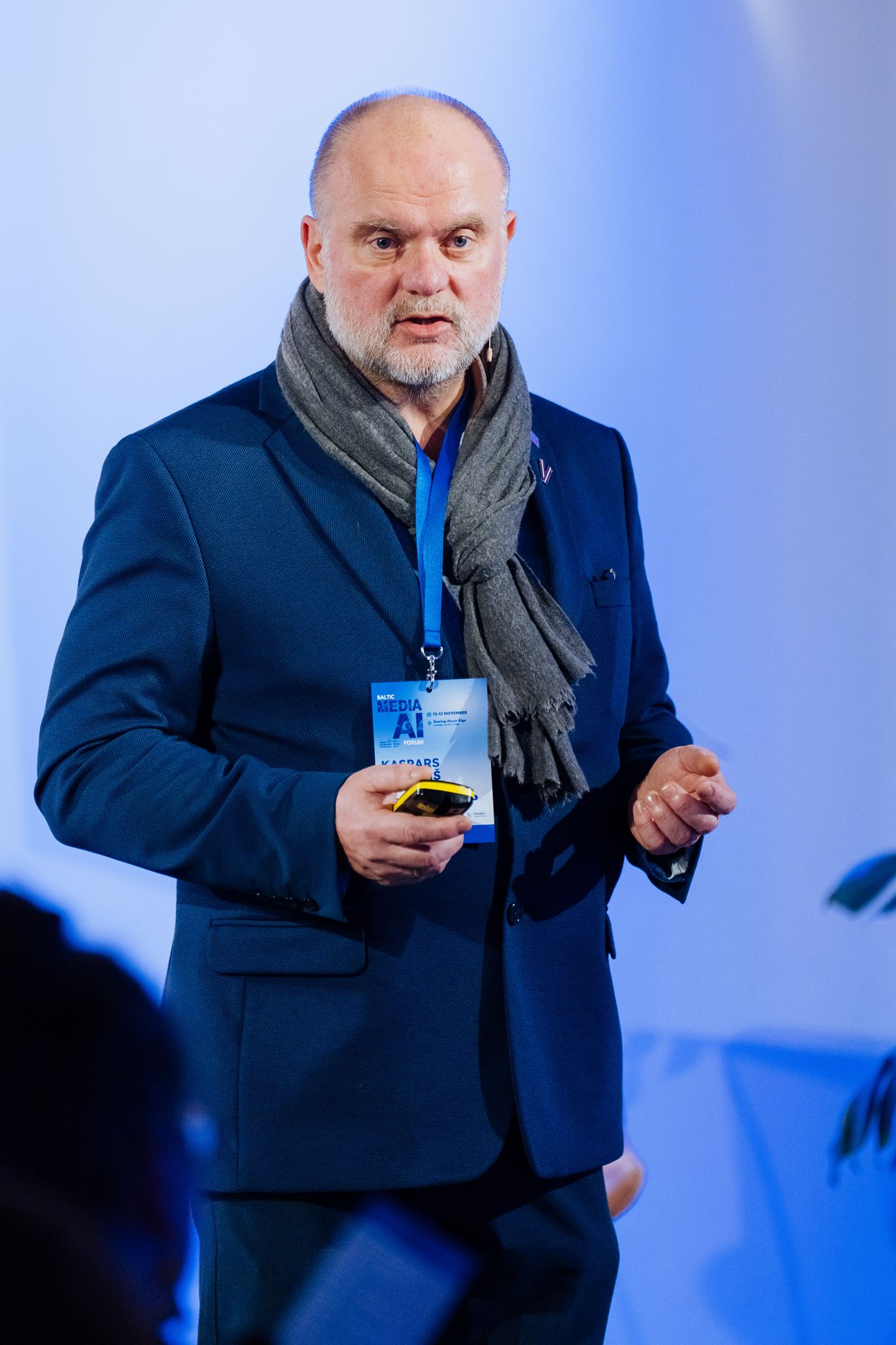
Kaspars Kauliņš, Business Development Director at Tilde, discussed the importance of sovereign AI and European large language models.
His presentation explored the risks of relying heavily on AI systems developed and controlled outside Europe, particularly when access to these technologies can be affected by commercial or geopolitical decisions.
For smaller language communities, including the Baltic countries, technological independence also has a linguistic and cultural dimension. AI systems need to understand local languages and contexts if they are to serve European societies effectively.
The discussion demonstrated that AI sovereignty is not merely a technical ambition. It is closely connected to security, independence and the ability to develop digital services that reflect European needs and values.
Can AI help journalists fight misinformation?
While AI is creating new opportunities for manipulation, it can also become part of the solution.
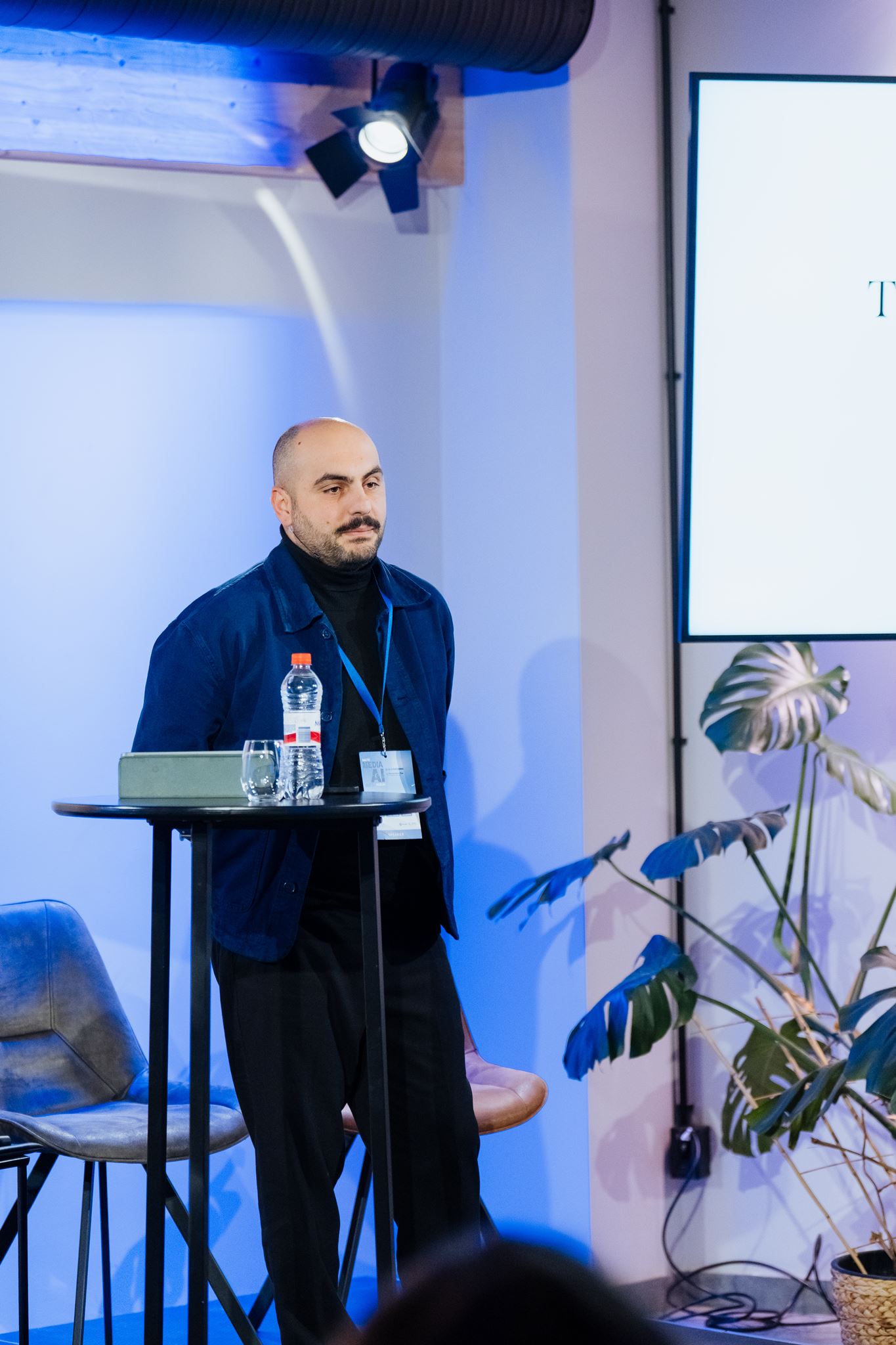
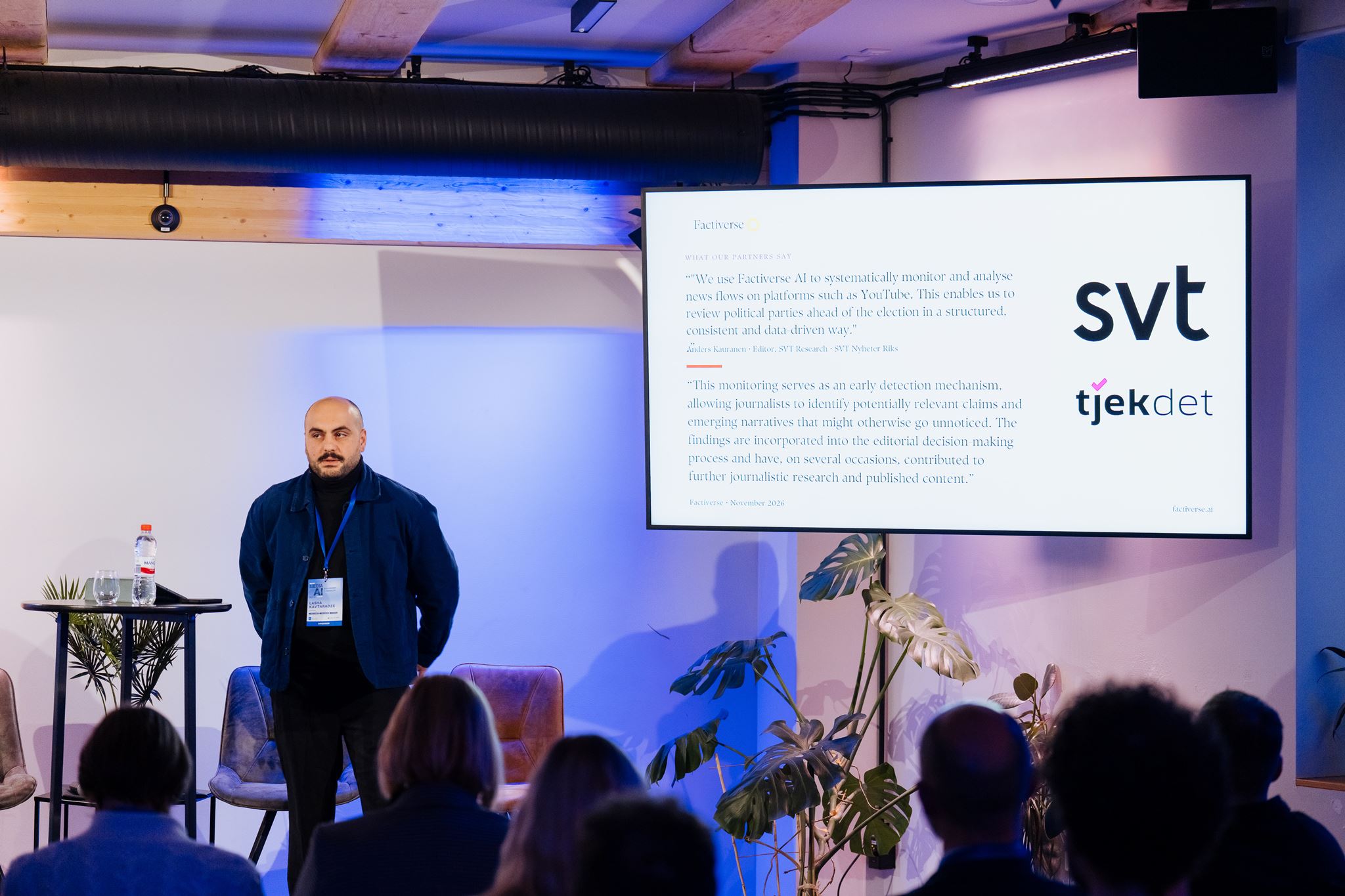
Lasha Kavtaradze, Senior Researcher at Factiverse, presented examples of how AI-powered verification tools can support journalists in checking claims and monitoring large volumes of information.
He demonstrated how Factiverse’s technology can identify factual claims and help users find sources that support or challenge them.
An important principle behind this approach is that the technology does not make the final editorial judgement. Instead, it helps journalists access relevant evidence more efficiently, leaving them responsible for evaluating the sources and reaching conclusions.
Examples from Nordic newsrooms illustrated the potential value of these tools when journalists need to monitor more content than they could realistically review manually.
The presentation offered a useful counterpoint to concerns about AI-generated misinformation: responsibly designed AI tools can also strengthen the capacity of newsrooms to investigate questionable claims.
AI, disinformation and society: A challenge beyond technology
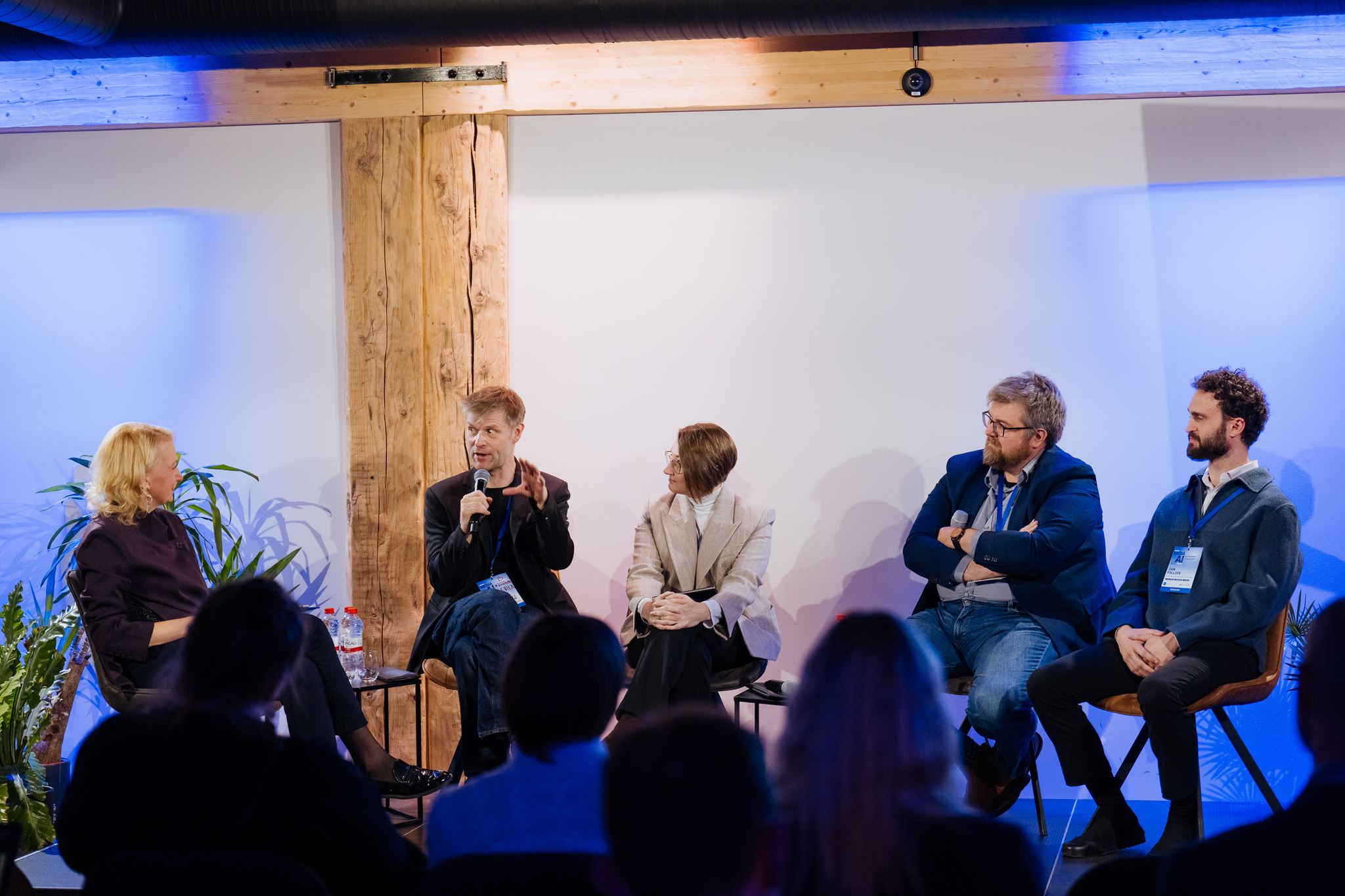
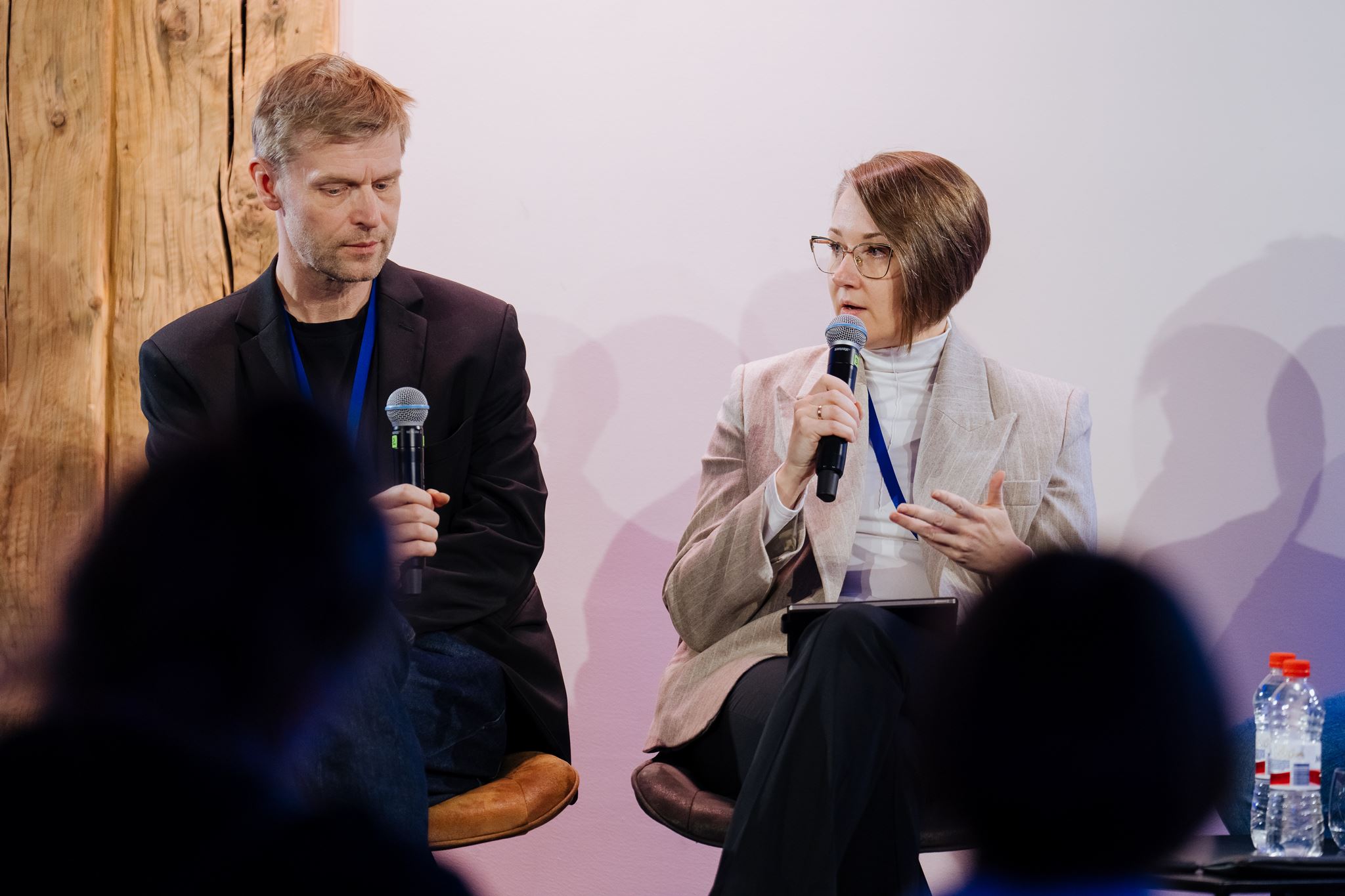
The first day’s programme concluded with a panel discussion, “How AI Amplifies Disinformation, Manipulation and Risks for Media and Society.”
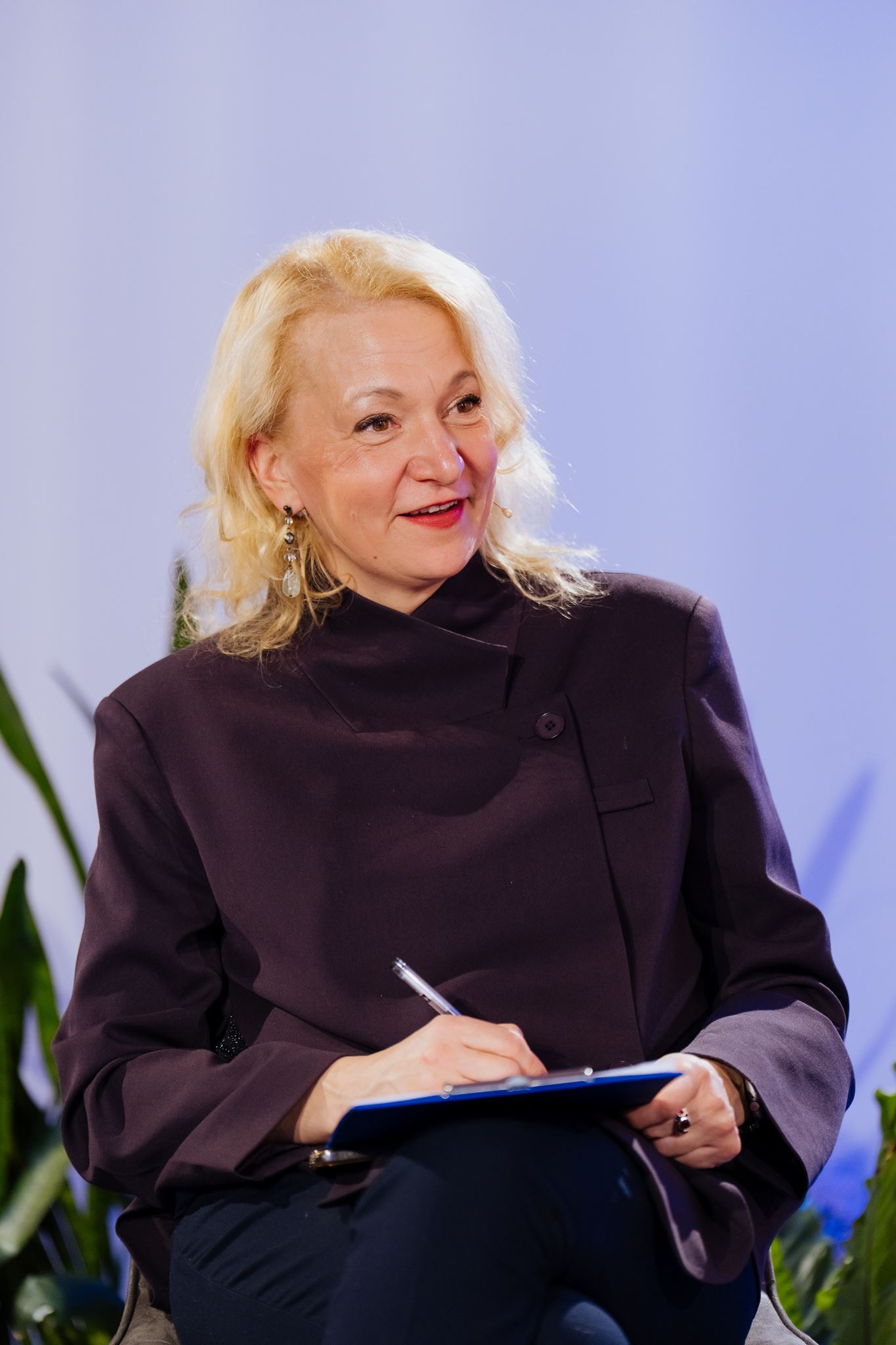
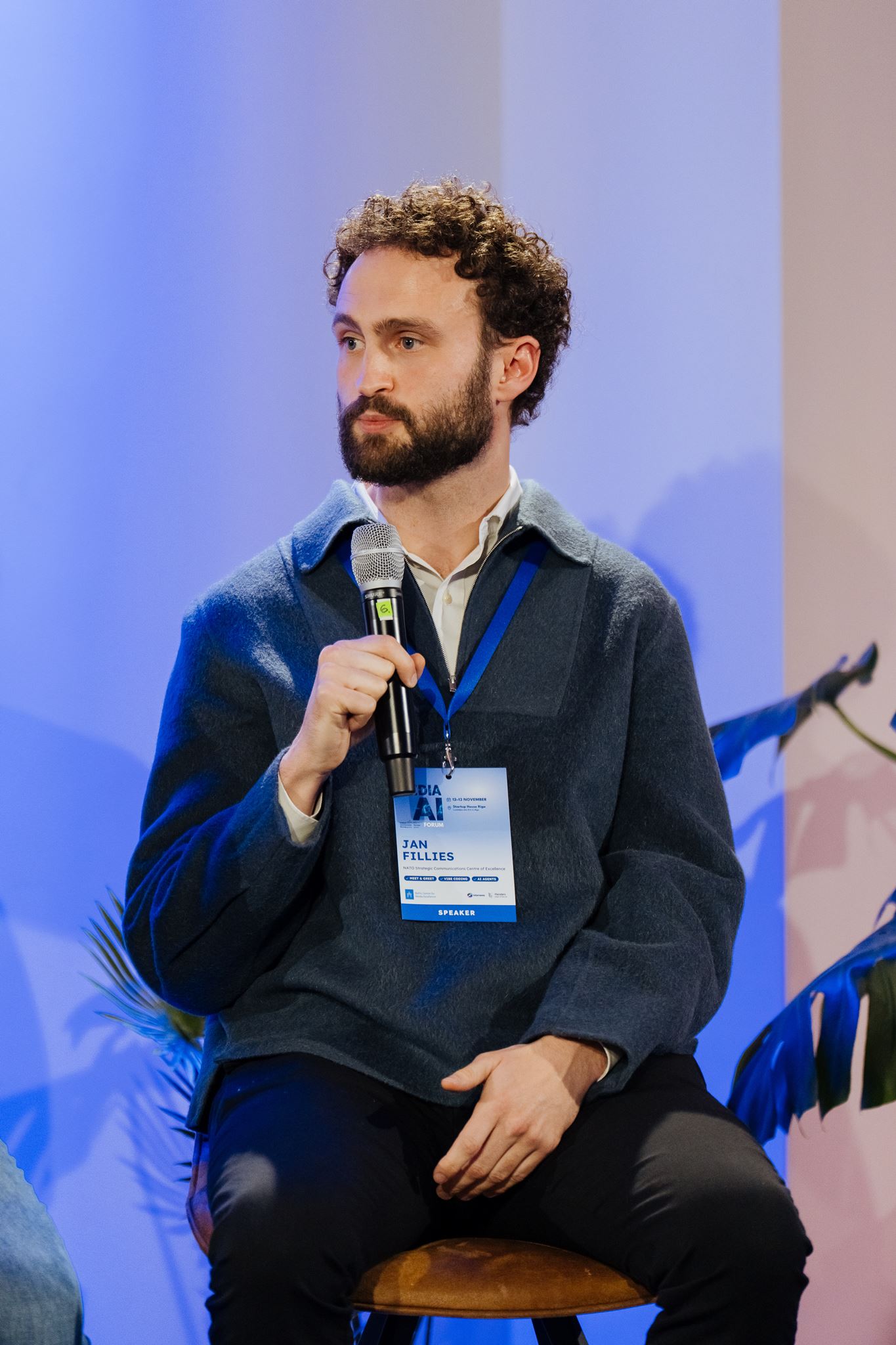
Moderated by Gunta Sloga, the discussion brought together Andy Demeulenaere, General Coordinator of Mediawijs in Belgium; Dr. Jan Fillies, Senior Expert at the NATO Strategic Communications Centre of Excellence; Guna Puce, Director of Latvia’s Artificial Intelligence Center; and Daniel Vaarik, founder of Estonia’s Levila.
The conversation moved beyond technological threats to examine how AI interacts with existing problems in the information environment: polarisation, declining trust, manipulation and the growing influence of major technology platforms.
One concern raised during the discussion was the increasing use of AI-generated answers as a source of information. Unlike traditional search results, AI summaries can make it harder for users to recognise where information originates and whether its sources are reliable.
The panellists also reflected on the role of media literacy, the importance of reaching different generations and the need for stronger connections between journalists and their communities.
Although perspectives differed on the scale of the risks and the most effective responses, the discussion ended on a constructive note.
Technology alone cannot rebuild public trust. Strong journalism, informed citizens, meaningful public conversations and direct relationships with communities remain essential.
From discussion to practice: Two hands-on workshops
The second day of the forum shifted the focus from understanding AI to working with it.
In the “Vibe Coding: This Is Where You Start” workshop, Kaja Distad introduced participants to a new way of creating digital tools using natural-language instructions rather than traditional programming.
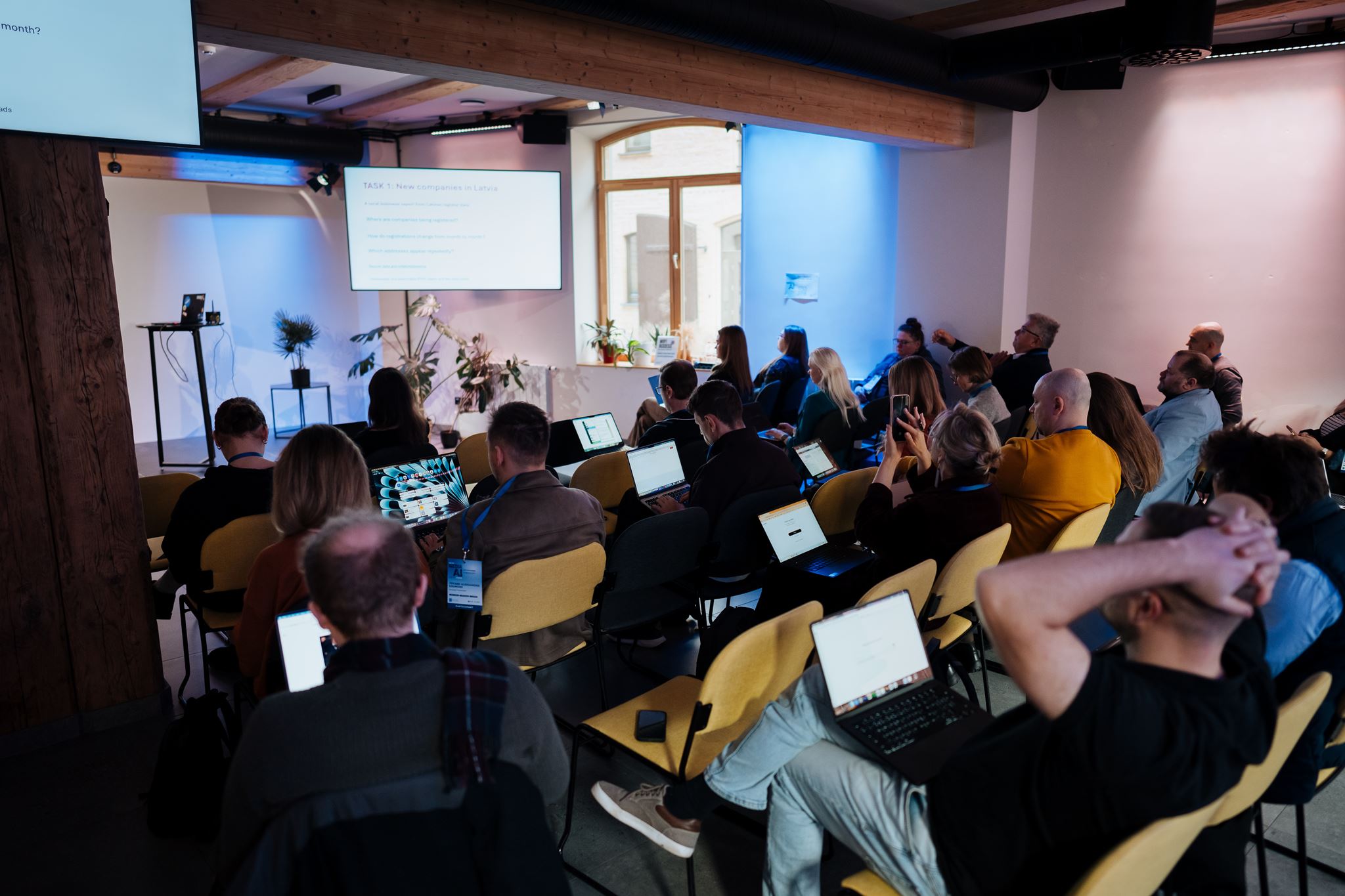
Participants explored how AI can help build interactive data visualisations, simple applications and other digital experiences that can be useful in journalism.
The workshop demonstrated how tasks that previously required specialised coding knowledge are becoming more accessible to reporters and editors.
At the same time, Kaja emphasised the importance of editorial responsibility, data protection and verification. An AI-generated application may be quick to create, but its accuracy, security and suitability for publication still require human oversight.
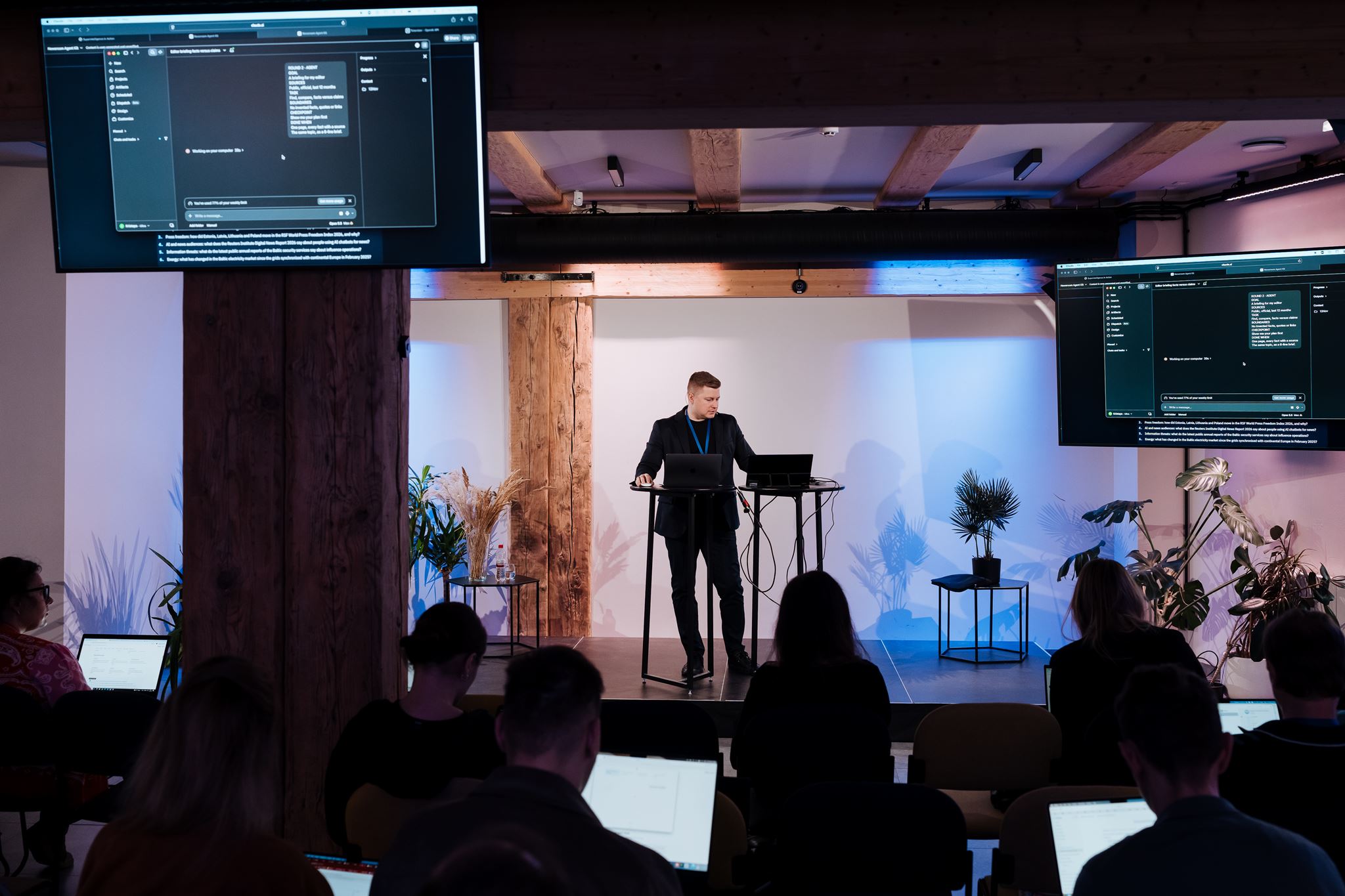
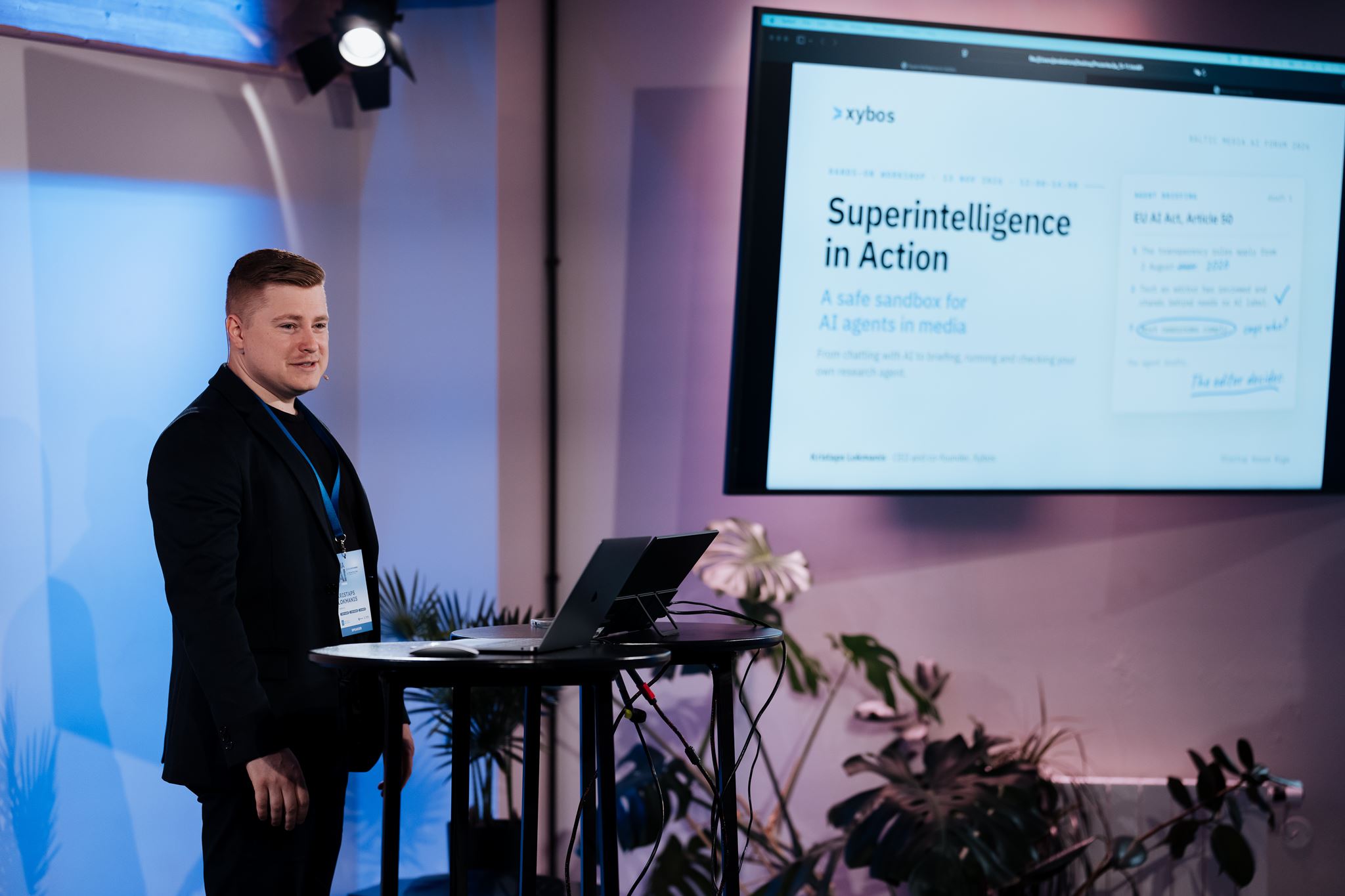
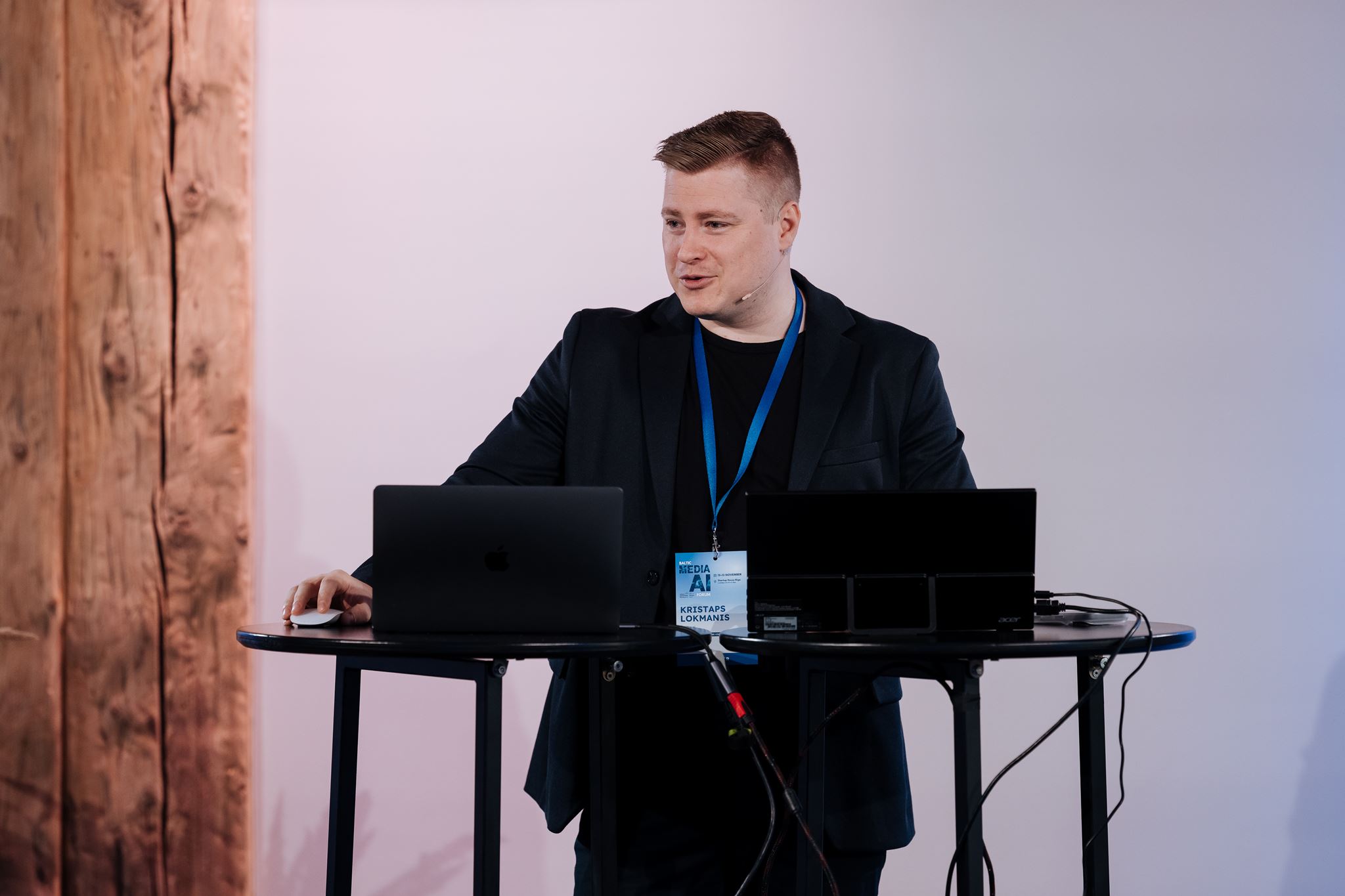
The second workshop, “Superintelligence in Action: A Safe Sandbox for AI Agents in Media,” was led by Kristaps Lokmanis, an AI expert and trainer at timefor.ai.
Participants explored the possibilities of AI agents – systems capable of carrying out multi-step tasks such as researching a topic, collecting information, comparing sources and preparing structured briefings.
Through demonstrations and practical exercises, the workshop examined how journalists can move beyond simple chatbot conversations towards more complex AI-assisted workflows.
It also highlighted the limitations of these systems. AI agents can make mistakes, misinterpret instructions or produce convincing but unreliable results. Clearly defined tasks, careful source evaluation, appropriate access permissions and human supervision are therefore essential.
Both workshops reinforced a valuable lesson: experimenting with AI is becoming easier, but using it responsibly requires professional judgement.
The future of journalism remains a human responsibility
Across the two days, the Baltic Media AI Forum 2026 brought together different perspectives on a rapidly evolving technology.
Some speakers focused on innovation and the opportunities AI creates for smaller newsrooms. Others examined the threats posed by manipulation, technological dependence and the erosion of trust. Practical sessions showed what journalists can already build and automate while also making clear why editorial safeguards matter.
Despite these different perspectives, a common understanding emerged.
AI can help journalism become more efficient, innovative and accessible. But it cannot take responsibility for accuracy, editorial decisions, public trust or the protection of journalistic sources. Those responsibilities remain with people.
For BCME, the forum also reaffirmed the importance of international cooperation and knowledge-sharing. Media organisations across the Baltics and beyond face many of the same challenges, and they have much to gain from learning together.
We thank all our speakers, participants and partners for contributing to two days of open discussion, practical learning and valuable connections.
We are especially grateful to our supporters – Internews, EEA and Norway Grants Latvia, the Embassy of Belgium, and the Delegation of Flanders in Poland, Lithuania, Latvia and Estonia – whose support helped make the Baltic Media AI Forum 2026 possible.